
Four Ford Fiestas have appeared in unexpected places across Plymouth. Look through their windows and you’ll discover they are anything but ordinary. Meet Intertidal, a remarkable new artwork by David Cotterrell that brings the changing rhythm of Plymouth’s tide into the heart of the city.
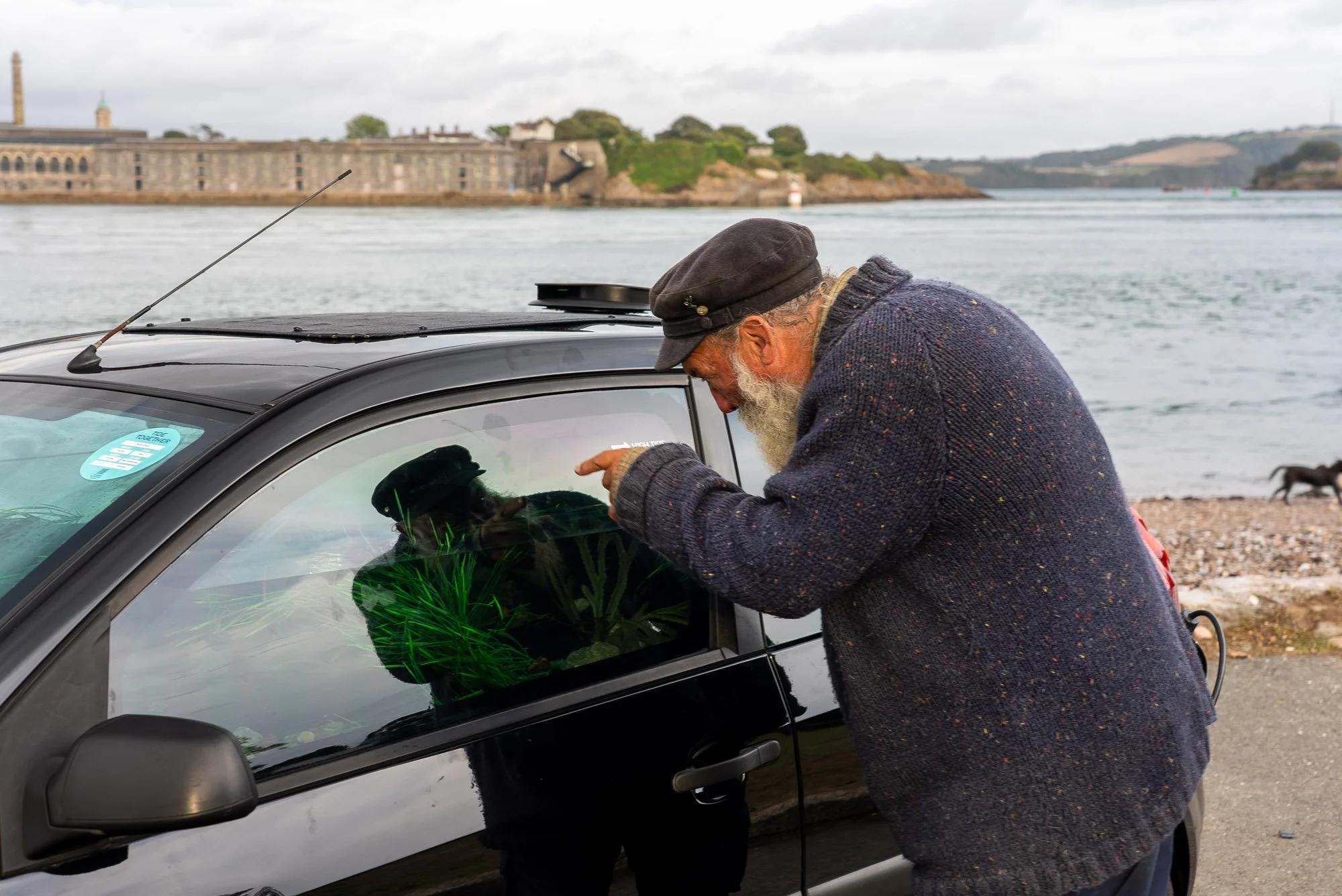
Photo: Joe Fisher of pbmedia
If you happen across a Ford Fiesta at Tinside, Mount Batten, outside The Box or beside the ferry landing at Mount Edgcumbe over the coming days, look twice.
Look through the windows.
Look at the markings on the glass. Look at the number plate. Look at what is happening inside.
Because this is no longer really a car at all.
It is Intertidal, a major new public artwork by internationally recognised British artist David Cotterrell, and the first major commission to be revealed as part of Sea for Yourself.
Four ageing Ford Fiestas have been radically re-engineered to become tidal instruments. Their engines and much of what once made them functioning cars have gone. In their place is an extraordinary hidden system of reservoirs, pumps, sensors, batteries, filtration, electronics and digital controls.
And then there is the thing you can't miss.
The water.
As the tide changes, the level of the water visible inside each car changes too.
In other words, these familiar objects are now operating according to an entirely different set of rules.
The rules of the tide.
A machine for making the tide visible
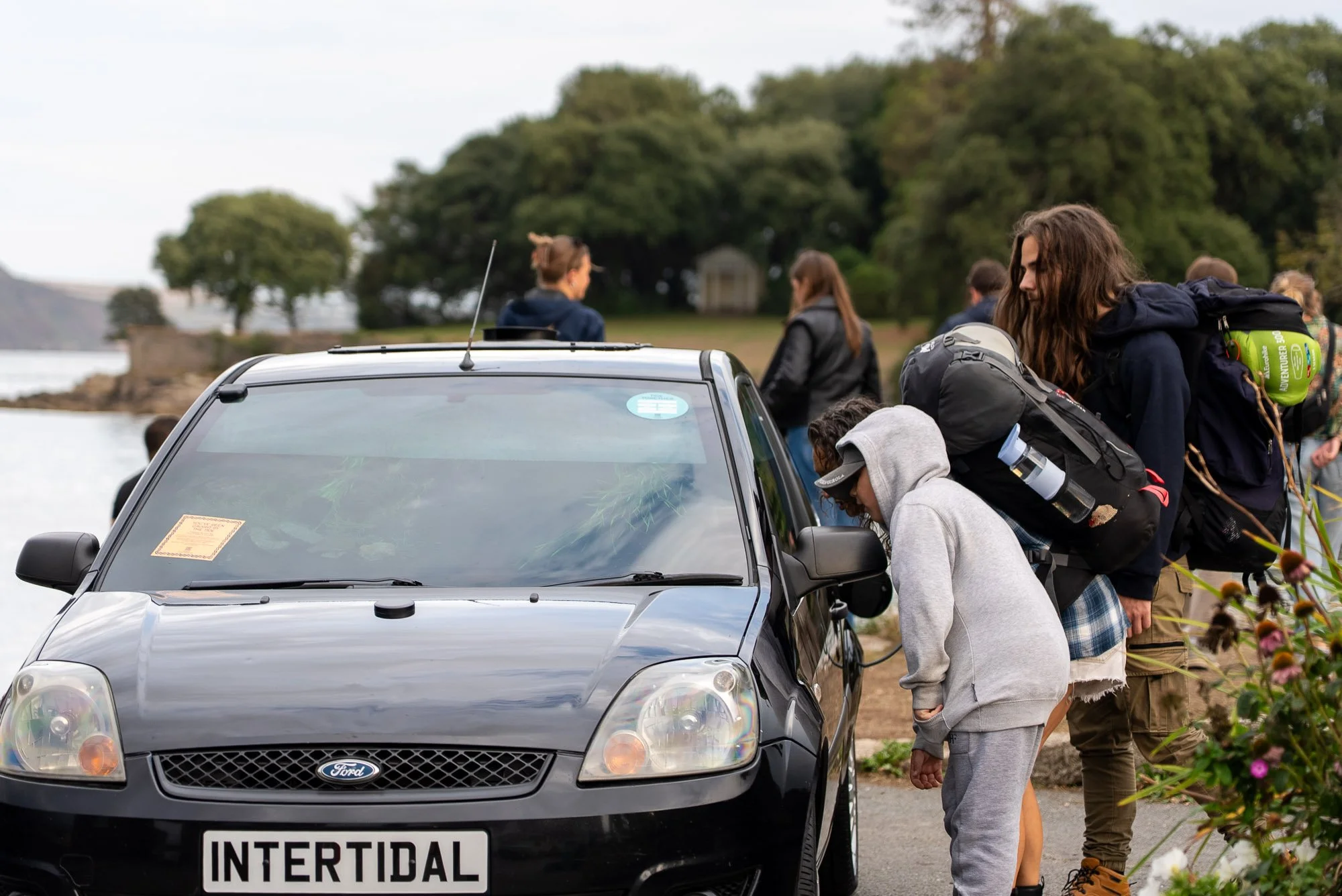
Photo by Joe Fisher of pbmedia
Plymouth is a city profoundly shaped by the sea.
It influences our landscape, wildlife, weather, history, culture, economy and the ways generations of people have lived and worked here. Yet it can also be surprisingly easy to move through the city without noticing the natural systems operating around us.
Intertidal brings one of those systems somewhere we don't expect to encounter it.
Each car uses information about its location and the changing tide. Digital systems interpret that information and pumps move water between hidden and visible parts of the artwork, translating data into something physical.
You don't need to understand any of that technology when you first encounter it, though.
You might simply wonder why there's water inside a Ford Fiesta.
And that's rather the point.
David Cotterrell said:
“The tide is constantly changing Plymouth, but most of the time we barely notice it. By placing that movement inside something as ordinary as a car, I wanted to create a moment that feels both familiar and completely unexpected. If someone stops, looks twice and begins to wonder where the sea really ends and the city begins, then the artwork is doing what I hoped it would.”
Why a Ford Fiesta?
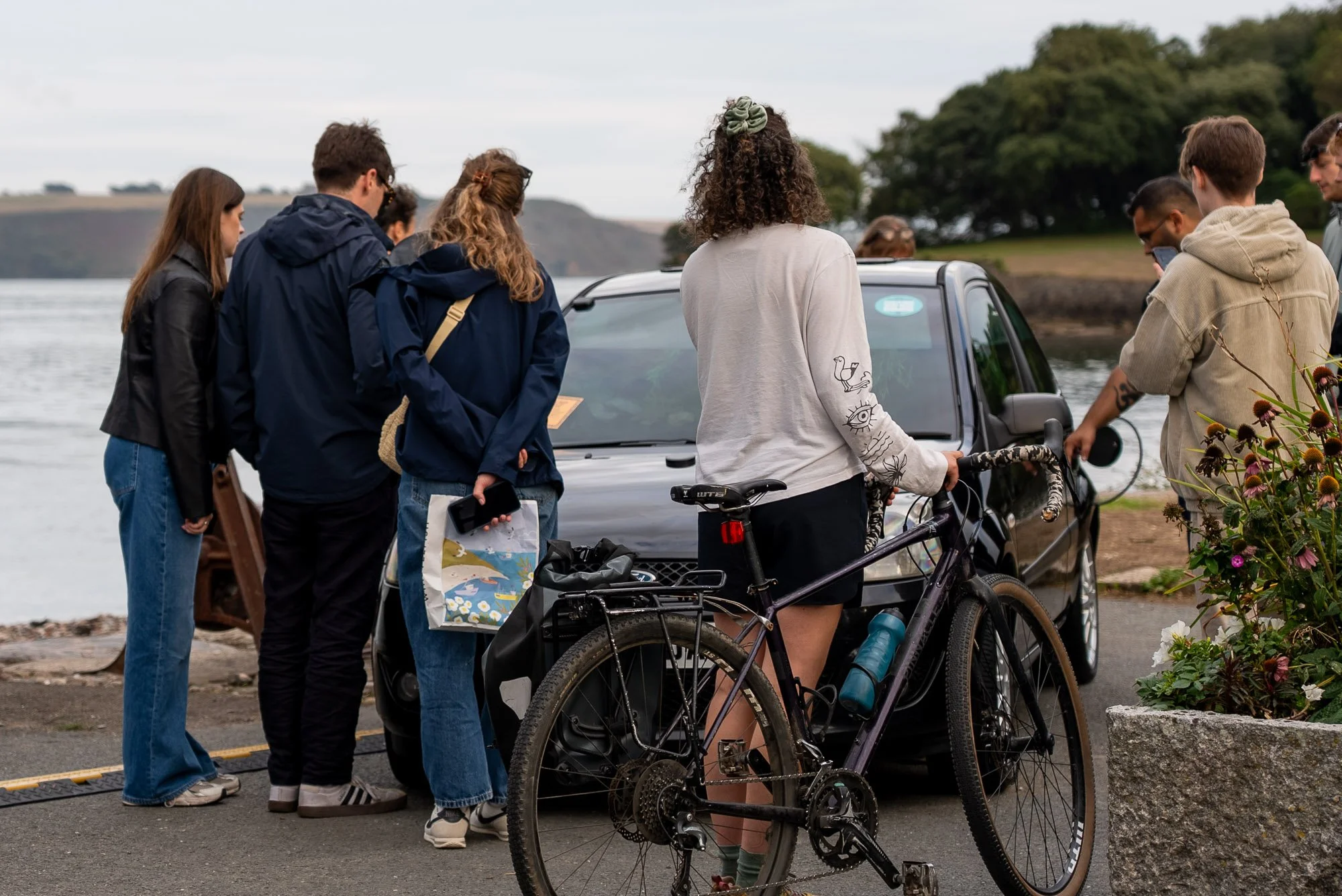
Photo by Joe Fisher of pbmedia
There is something deliberately ordinary about the object David has chosen.
For decades, Ford Fiestas were part of the everyday visual landscape of Britain. We drove them, parked beside them and passed them in streets and car parks without giving them much thought.
Intertidal plays with that familiarity.
From a distance, you might not notice anything unusual at all. It is only as you approach that the familiar begins to become strange.
A car is also an object designed to move through a landscape. Intertidal changes that relationship. Parked in one place, its internal environment instead responds to a much larger natural movement taking place around it.
The work asks us to consider where the boundary between land and sea really lies.
Does the influence of Plymouth Sound end at the shoreline?
Or does the sea extend much further into the life, infrastructure and imagination of the city?
That question sits at the heart of Intertidal:
Where does the sea really stop?
How do the Intertidal cars actually work?
Behind the apparent simplicity of water rising and falling inside a car is a remarkable story of experimentation, engineering and collaboration.
The approximately 25-year-old vehicles were deliberately selected with their new purpose in mind. Each was stripped back, with its engine, fuel system, interior and mechanical components removed to create space for an entirely new internal architecture.
The cars were then rebuilt with specially fabricated tanks and structural reinforcement capable of safely carrying the considerable weight of the water and equipment inside.
Hidden filtration, pumps, valves, sensors, batteries, controls and electrical systems were incorporated into the vehicles.
The digital technology is equally important.
Each car can establish where it is and access tidal information for its location. Onboard software compares the water level inside the artwork with the tidal information it receives and instructs the pumps accordingly.
Information becomes movement.
Data becomes something you can see.
A Ford Fiesta becomes a tidal instrument.
Creating that transformation has brought together an unusual group of artists, engineers, fabricators, programmers and marine and tidal specialists, with expertise and support from TR2 at Theatre Royal Plymouth, the Marine Biological Association, Plymouth Marine Laboratory, Blackwater Marina, Toby Savage Design, EVParts and digital developer Ashley Hancock, among others.
It is a collaboration that crosses art, engineering, marine knowledge and digital technology – disciplines which rarely find themselves meeting inside a Ford Fiesta.
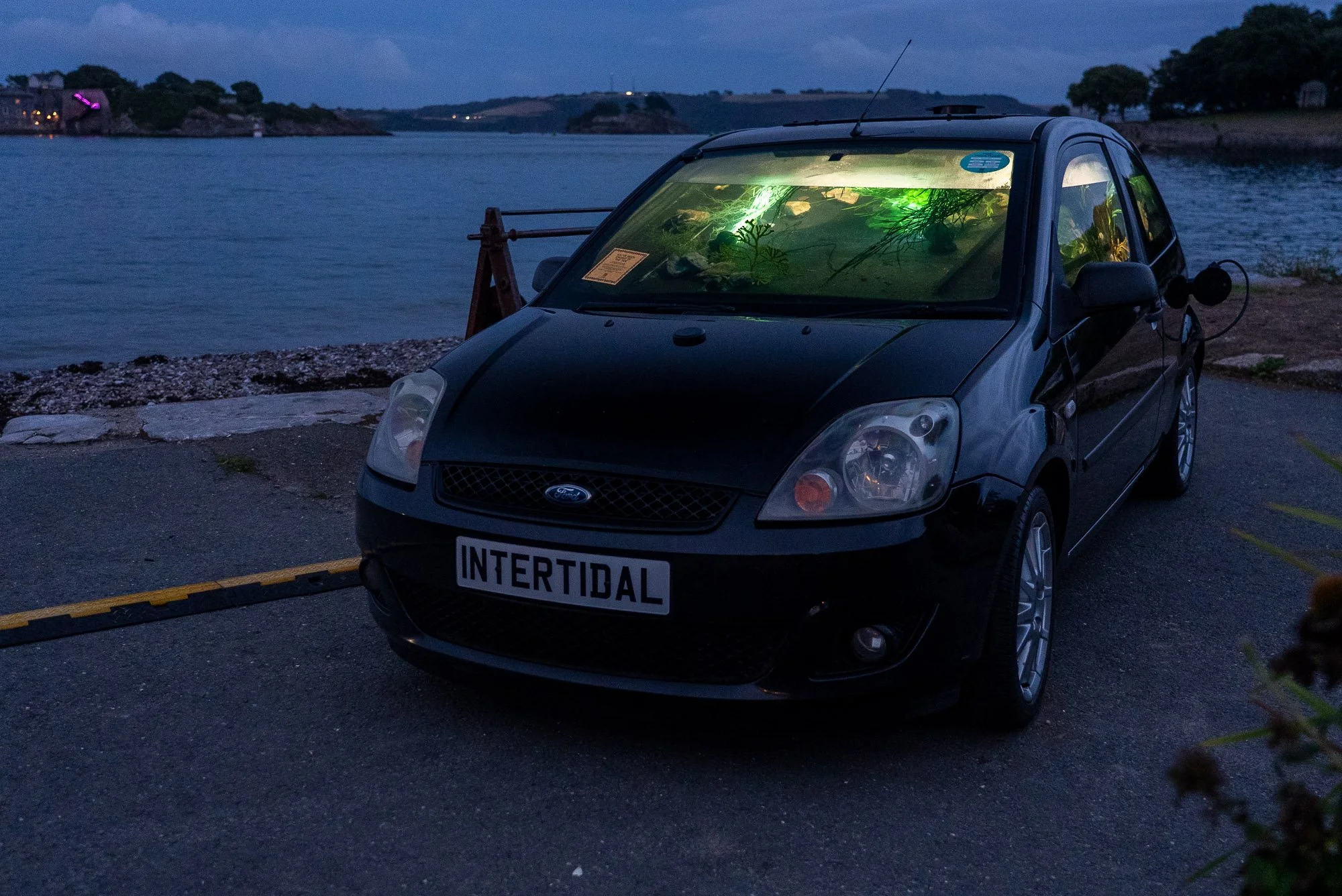
Photo by Joe Fisher of pbmedia
Where can I find the cars?
The first four Intertidal cars have now appeared at:
Tinside – Plymouth Hoe
Mount Batten Car Park – Mount Batten
The Box – Tavistock Place
Mount Edgcumbe – beside the Plymouth Boat Trips ferry landing
And these are only their first stops.
Throughout September and October, the cars will move to new locations, taking Intertidal into different communities and landscapes.
That means encountering one now won't necessarily be the same as encountering it somewhere else – or even returning to the same car at a different time of day.
If you find one at low tide, come back later.
Look again.
See what has changed.
[Find the latest Intertidal car locations]
The artwork is only the beginning
Finding one of the cars is intended to spark curiosity.
Tide Together is what happens next.
Created around Intertidal, Tide Together is a programme of conversations, activities, creative experiences and learning opportunities that gives people different ways to explore the ideas opened up by the artwork.
You don't need to know anything about tides, marine science, contemporary art or engineering to take part.
You might want to understand how the Moon moves our oceans.
You might be fascinated by the engineering hidden inside the cars.
You might want to explore the wildlife found between high and low tide.
Or perhaps the artwork makes you think about your own memories of Plymouth Sound – swimming, fishing, ferry journeys, rockpooling, storms, beaches or simply looking out to sea.
Tide Together creates space for all of those conversations.
Pull up a chair at a Tide Café
One of the simplest ways to get involved is through a Tide Café.
These free, informal gatherings bring people together with artists and people who know about different aspects of the sea and tides.
There is no lecture and no knowledge required. Instead, they're an opportunity to have a cup of tea or coffee, eat some cake and join a conversation.
What does the tide mean to Plymouth?
What do we notice about it?
What don't we notice?
And what stories do we carry about the sea?
Tide Cafés are taking place at locations including Market Hall in Devonport, Efford Library and the East End, with artist and facilitator Sophie Mellor helping to get the conversations flowing.
And yes – the tea, coffee and cake are free too.
[Discover Plymouth's Tide Cafés]
Make, write, experiment and explore
Tide Together is also spreading across the city through a programme created with artists, cultural organisations and community partners.
At SeaFest, families can turn the Moon into a moving picture by creating their own zoetropes and explore the relationship between the Moon and our tides.
Hidden Tides: Mapping the Sea Within the City, led by Rosemarie Corlett at Royal William Yard, invites people to explore the less obvious places where the sea enters our lives through creative writing.
Plymouth Scrapstore's Where Land and Sea Meet activities use making and creativity to investigate the intertidal world.
It Takes a Village is exploring Intertidal through STEAM Stay and Play sessions, with activities spanning science, technology, engineering, art and maths.
Further artist and community activity is developing across Plymouth throughout the life of the project.
[See all Tide Together events and activities]
Take Intertidal into the classroom
There is also a dedicated Tide Together Key Stage 2 learning resource, created to help children investigate some of the questions behind Intertidal.
It explores tides, the Moon, Plymouth's intertidal environment and the connections between art, science, engineering and technology.
Designed to be flexible for schools, families and home educators, activities can be explored together or individually and encourage children to observe, experiment, make and ask questions of their own.
Digital learning resources and animation help make some of the science behind the project easier to explore.
Go beneath the bonnet
If seeing Intertidal leaves you wondering how on earth did they actually build that?, we've got you covered too.
The story of transforming four old Ford Fiestas into working tidal instruments is documented through a specially created technical guide, taking you beneath the bonnet and into the fabrication, electronics, software, tanks, filtration and systems hidden within the artwork.
There is also a dedicated digital experience where the technically curious can go deeper into the information and data behind Intertidal.
Sea for Yourself
Intertidal is the first major commission to be revealed through Sea for Yourself, an ambitious cultural programme connecting people with Plymouth Sound National Marine Park through creativity, participation and digital innovation.
Rather than simply telling people that the National Marine Park is important, Sea for Yourself is creating different ways to encounter it.
Sometimes that might be through science.
Sometimes through stories or making.
And sometimes it might begin with discovering a Ford Fiesta in a place you weren't expecting it and wondering why the water inside appears to have moved.
Hannah Harris, CEO of Plymouth Culture, said:
“The overall ambition of Sea for Yourself is to use creative digital projects to help connect and reconnect residents to the sea. This first commission is extremely ambitions in scale and also because it works across so many subject areas from art and digital to science and engineering. The aim of the project is to build curiosity by bringing the sea into the city so we can start conversations about the tide, helping people build a deeper relationship to Plymouth Sound National Marine Park.”
Intertidal forms part of Sea for Yourself, made possible with funding from The National Lottery Heritage Fund, thanks to National Lottery players, and Arts Council England's Place Partnership Fund.
Their support is enabling Plymouth Culture and its partners to use art, creativity, participation and digital innovation to create new ways for people and communities to connect with Plymouth Sound National Marine Park, its marine heritage and the extraordinary environment on their doorstep.
So, what should you do if you find one?
Stop.
Look through the windows.
See where the water is.
Look for the high and low tide markers and the details hidden around the car.
Scan the QR code to find out more.
Then, perhaps, come back later.
Because while the car may still be parked in exactly the same place, Intertidal won't necessarily be the same artwork you saw before.
The tide will have moved.
And perhaps, after encountering it, the boundary between Plymouth and its sea might feel a little less certain too.
