
Intertidal: David Cotterrell brings the rhythm of the sea into Plymouth’s cultural landscape
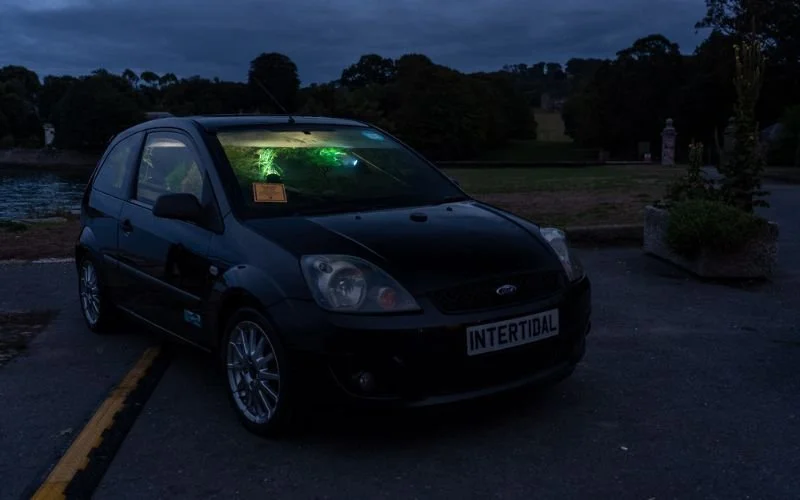
A major new public artwork by internationally recognised installation artist David Cotterrell has arrived in Plymouth, transforming four ordinary Ford Fiestas into tidal instruments and creating an extraordinary encounter between contemporary art, technology, engineering and the sea.
What happens when an artist takes one of the most familiar objects in the British urban landscape and makes it behave according to the rhythms of the natural world?
That is the compelling proposition at the heart of Intertidal, a major new commission by internationally recognised British installation artist David Cotterrell, now appearing across Plymouth.
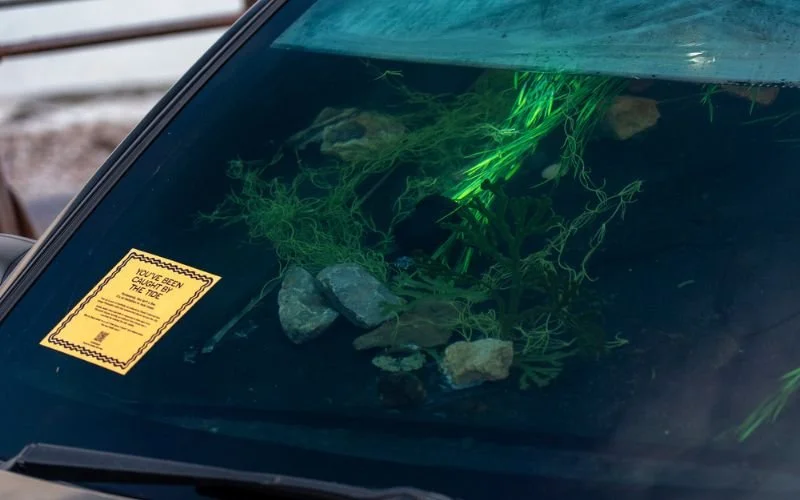
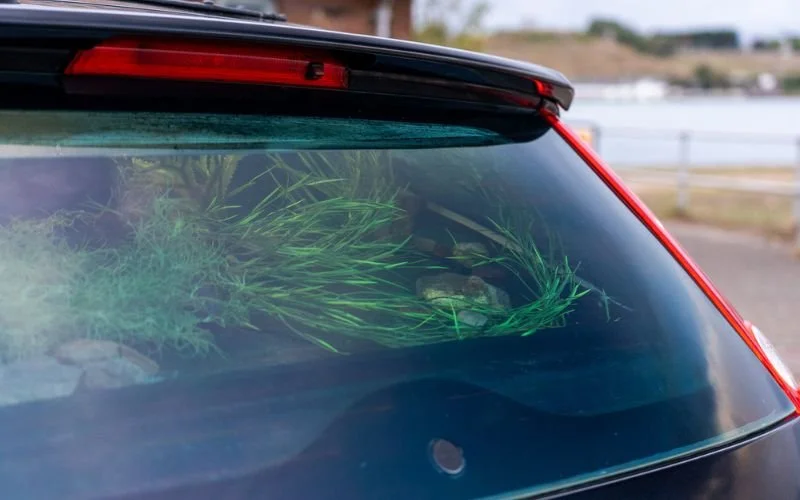
Four ageing Ford Fiestas have been radically transformed. Their engines and conventional systems have been removed and an entirely new internal architecture created in their place.
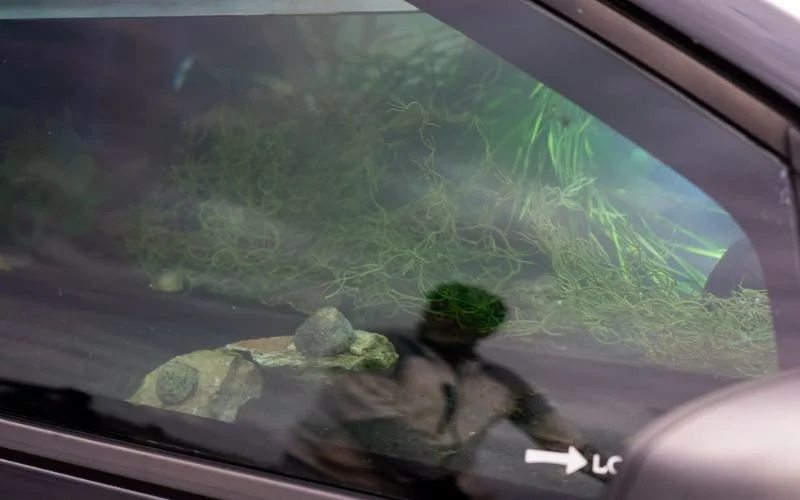
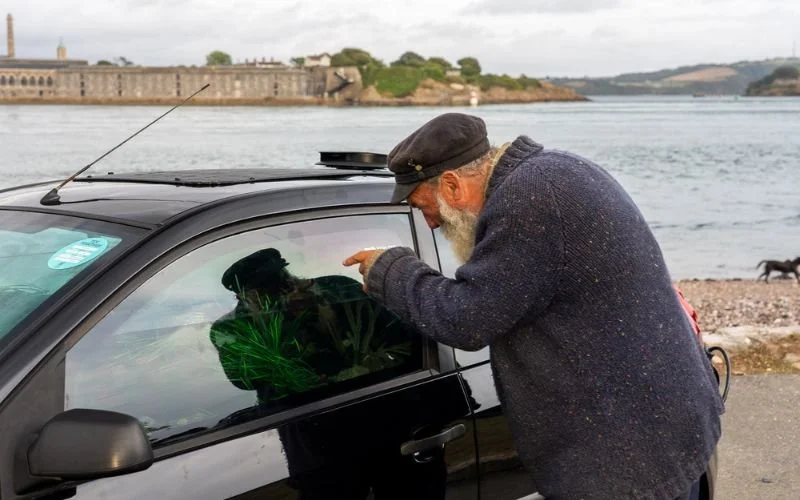
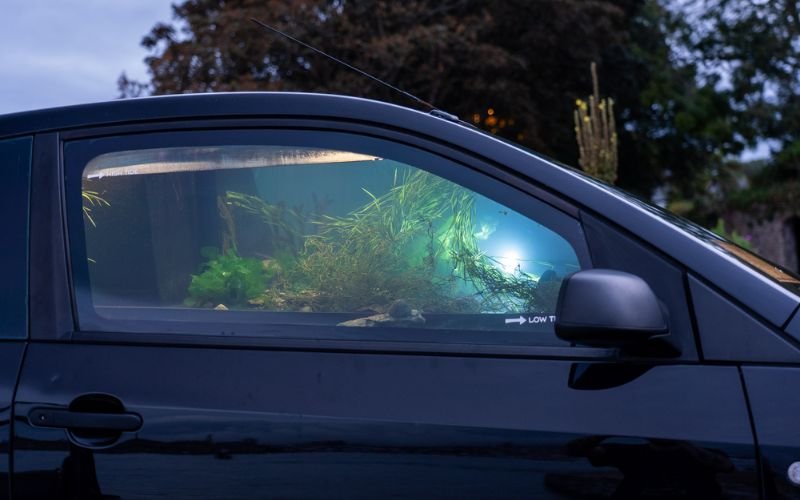
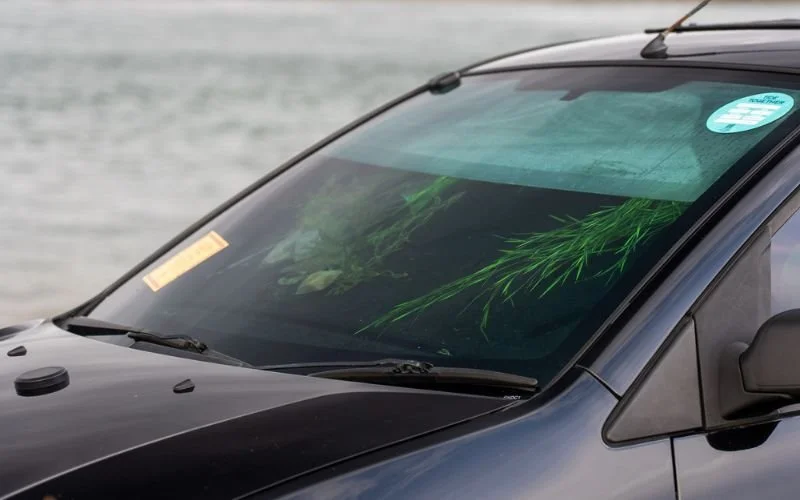
Inside are reservoirs, pumps, sensors, filtration, batteries, software and digital controls. Water fills the visible interior of each vehicle, rising and falling in response to tidal information.
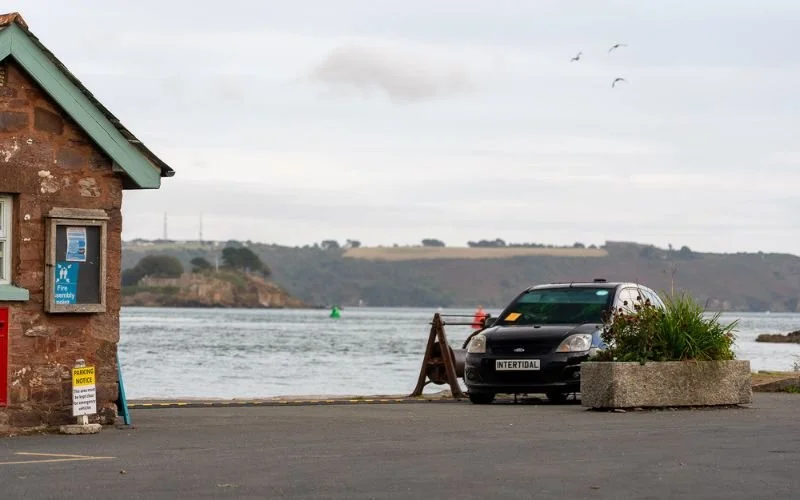
From a distance, they remain remarkably familiar.
Get closer and that familiarity begins to unravel.
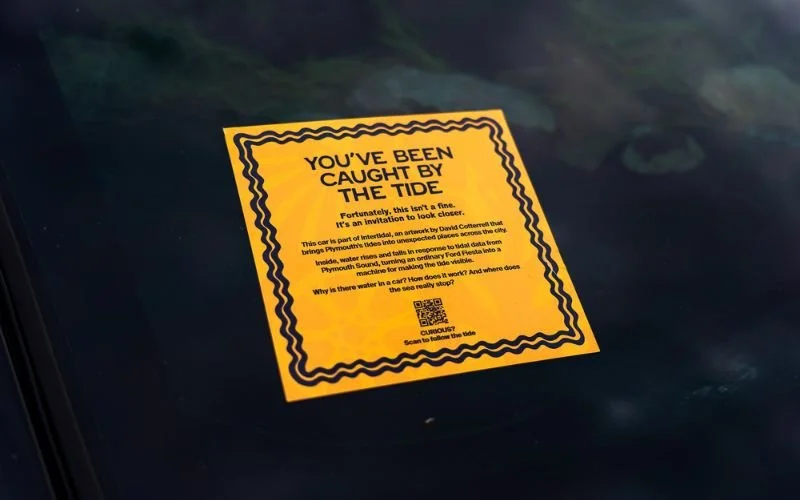
Intertidal is a machine for making the tide visible.
Making the familiar strange
The choice of a Ford Fiesta is important.
For decades, these cars have been embedded within Britain's everyday visual landscape. They are functional, familiar and largely unremarkable – objects we might pass hundreds of times without stopping to look.
Cotterrell disrupts that familiarity.
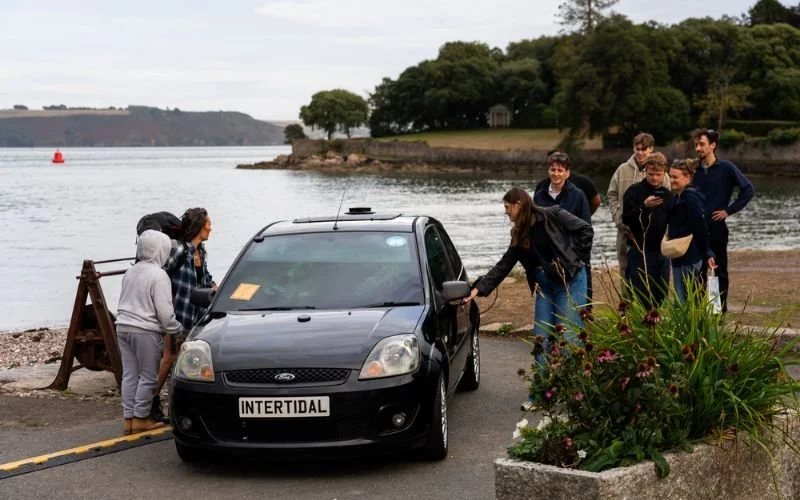
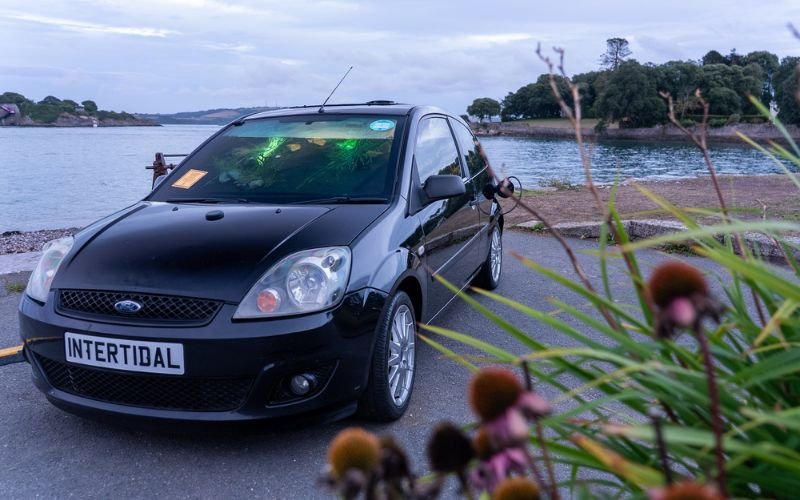
Rather than creating an object that announces itself immediately as public art, Intertidal can initially disappear into its surroundings. A car appears to be parked beside a road, museum, ferry landing or public space.
Only on closer inspection does its transformation become apparent.
The vehicle is no longer governed primarily by the systems for which it was manufactured. Instead, its behaviour is being determined by something far larger and older: the changing tide.
In doing so, Cotterrell brings two apparently separate systems into conversation – the constructed environment of the city and the natural rhythms of Plymouth Sound.
It creates an encounter that is at once absurd, beautiful and quietly disorientating.
As David Cotterrell explains:
“We live alongside the tide, but it’s remarkably easy to stop noticing it. I wanted to take that familiar rhythm and place it somewhere it doesn’t belong – inside an object we barely give a second glance. There’s something wonderfully strange about encountering an ordinary car and realising that it is quietly responding to the sea. My hope is that moment of surprise makes people pause, look again and perhaps notice the connections between Plymouth and the water that's all around us.”
Where does the sea really stop?
At the heart of Intertidal is a deceptively simple question:
Where does the sea really stop?
For a coastal city, the boundary between land and water can appear obvious. There is a shoreline. There are harbour walls, beaches, rivers and quays.
But Plymouth's relationship with the sea is much more complex.
The water has shaped the city's geography, communities, economy, ecology, culture and identity. Its influence reaches far beyond the point at which the waves apparently end.
Intertidal makes that relationship physical.
Rather than asking audiences to go to a gallery to encounter an artwork about the sea, Cotterrell brings its rhythm into the fabric of the city.
The tide appears where it shouldn't.
And that displacement invites us to reconsider both the object in front of us and the place in which we have encountered it.
Public art outside the expected places
Intertidal is the first major commission to be revealed through Sea for Yourself, the cultural programme led by Plymouth Culture in partnership with Plymouth Sound National Marine Park and Plymouth City Council.
Its arrival represents an important aspect of Plymouth's developing cultural story: ambitious contemporary work does not have to be contained within traditional cultural buildings.
Intertidal deliberately moves. Its first locations span Tinside, Mount Batten, Tavistock Place outside The Box and Mount Edgcumbe, placing the work within very different physical and social contexts.
During September and October, the four cars will continue to move through Plymouth. Each relocation changes the encounter.
Against the architectural backdrop of The Box, beside the ferry at Mount Edgcumbe, close to the water at Tinside or sitting within the everyday landscape of Mount Batten, the same object inevitably begins to carry different associations.
That mobility also creates opportunities for people who may never intentionally seek out contemporary art to encounter an ambitious artwork as part of their everyday lives.
Hannah Harris, CEO of Plymouth Culture, said:
“The overall ambition of Sea for Yourself is to use creative digital projects to help connect and reconnect residents to the sea. This first commission is extremely ambitious in scale and also because it works across so many subject areas, from art and digital to science and engineering. The aim of the project is to build curiosity by bringing the sea into the city so we can start conversations about the tide, helping people build a deeper relationship to Plymouth Sound National Marine Park.”

An artwork that could only exist through collaboration
There is another significant story beneath Intertidal's apparently simple visual proposition.
Realising it has required an unusually broad collaboration between contemporary art, theatre production, marine science, engineering, fabrication, programming and digital technology.
The original approximately 25-year-old Fiestas were stripped back and rebuilt for an entirely different purpose. Bespoke tanks and systems had to be designed. Structural challenges had to be solved. Electronics, software, pumps, filtration and sensors had to work together reliably.
The technical infrastructure is considerable, but its purpose is not spectacle for spectacle's sake.
Technology becomes a material within the artwork.
Tidal information is interpreted digitally and translated into physical movement. An invisible dataset becomes something audiences can see changing before them.
Expertise and support have come from organisations and specialists including TR2 at Theatre Royal Plymouth, the Marine Biological Association, Plymouth Marine Laboratory, Blackwater Marina, EVParts, Toby Savage Design and digital developer Ashley Hancock.
For Seb Soper, Head of Project Development at TR2, Theatre Royal Plymouth, that unusual process has extended the theatre-making expertise of the TR2 team into a completely different context:
“Working with David and Plymouth Culture has presented us with a distinctly different space in which to tell a story. Our team at TR2 are renowned for offering creative support and solutions to present all kinds of work, in all manner of spaces. Not only here in Plymouth but all over the UK and internationally.
“However, we usually would work in the familiar confines of a theatre or opera house, so we have all found this project particularly exciting, fascinating and challenging. David’s orchestration has proven a real collaborative and imaginative experience, as is always the case when making great work.”
That interdisciplinary approach is one of Intertidal's strengths. An artistic question that sounds almost impossibly simple – could a car rise and fall with the tide? – has required multiple forms of knowledge to make it real.
Culture as a way of understanding place
Intertidal also demonstrates the particular ability of culture to approach familiar subjects differently. Plymouth Sound can be understood scientifically, environmentally, historically, economically and recreationally. Art doesn't replace any of those perspectives. It creates another.
Cotterrell does not ask audiences to absorb a set of facts about tides or to be told why their marine environment matters. Instead, he creates an experience that begins with curiosity.
Why is there water in that car?
Why is it at that level?
Was it like that this morning?
What will happen when the tide changes?
And ultimately:
What does this tell us about the place in which we live?
That ability to begin with surprise rather than instruction is central to the wider ambition of Sea for Yourself.
From encounter to participation
The cultural experience surrounding Intertidal extends beyond the four artworks themselves. Tide Together has been developed alongside the commission to create different ways for audiences to respond to the questions it raises.
Across September and October, artists, cultural organisations, scientists, community organisations, families and residents will participate in a programme encompassing Tide Cafés, creative workshops, writing, making, STEAM activity and learning.
A dedicated Key Stage 2 resource also uses the ideas surrounding Intertidal to bring together art, science, technology, engineering and an exploration of Plymouth's intertidal environment.
The intention is not to explain the artwork away. Instead, the programme allows an encounter with Intertidal to become the beginning of something else: a conversation, an experiment, a creative response or a reason to discover another part of Plymouth Sound.
Investment in ambitious cultural work
Intertidal forms part of Sea for Yourself, an ambitious cultural programme made possible with funding from The National Lottery Heritage Fund, thanks to National Lottery players, and Arts Council England's Place Partnership Fund.
That investment is supporting new ways for communities across Plymouth to connect with Plymouth Sound National Marine Park and its marine heritage through art, creativity, participation and digital innovation.
It also enables artists and cultural organisations to work across disciplines and at a scale that allows genuinely experimental ideas to be developed and tested.
For Plymouth, that matters.
Culture can animate public space, generate conversations about place and identity, connect institutions with communities and create opportunities for artists, scientists, engineers and residents to approach shared questions from entirely different perspectives.
Intertidal embodies that possibility.
