
Passing the pen: Plymouth’s Young City Laureates on poetry, reading and finding your voice
What happens when one young writer reaches the end of her time representing Plymouth and another is just beginning?
As part of Plymouth Reads, our celebration of the National Year of Reading and Plymouth Libraries' 150th anniversary, What’s On Plymouth Culture brought together outgoing Young City Laureate Issy Powell and incoming Young City Laureate Charlotte Lee for a conversation about reading, writing, poetry, creativity and the city they call home.
Both happen to be poets, although the Young City Laureate role isn't exclusively a poetry position; future Laureates could be prose writers or work in other forms.
And while Issy and Charlotte have taken different routes into writing, their conversation revealed something they have in common: neither believes there should be rules about how we read, write or find our own creative voice.
That's something we're particularly interested in during the National Year of Reading.
This October's Take 10 to Read campaign is encouraging people to start with the things they already love. Whether it's novels, poetry, lyrics, comics or audiobooks, the message is simple: whatever you're into, take 10 to read into it.
So, how did two of Plymouth's young writers find their way into words?
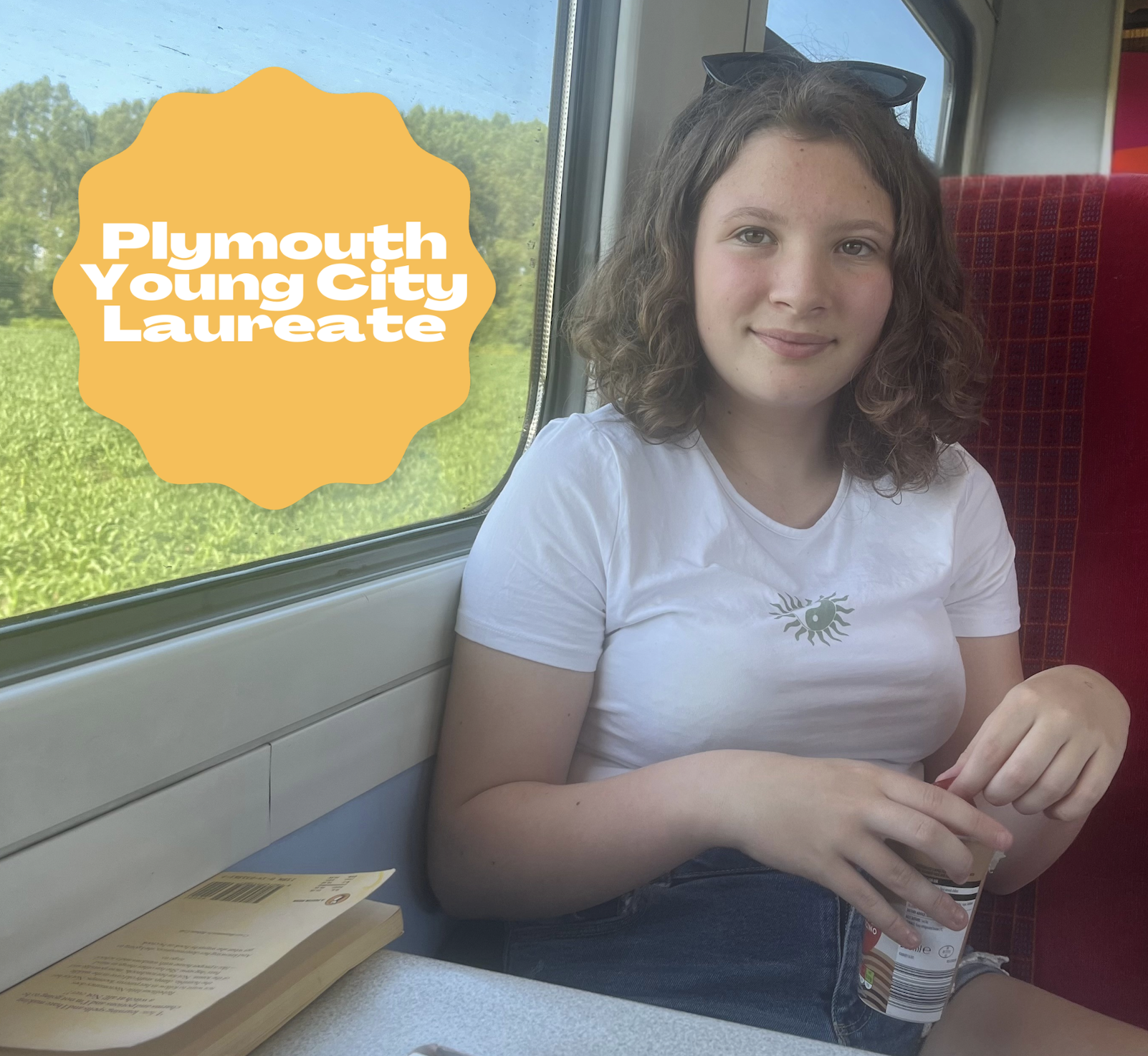
Issy Powell
From childhood books to poetry and songwriting
For Issy, reading came first. “I loved reading as a kid. I was obsessed with reading until I left primary school,” she says. “Then I got into poetry more in secondary school and after that it all just took off.”
Charlotte can pinpoint some of her earliest reading memories to the books of Enid Blyton, but her route towards poetry also came through music.
Her brother works in the music industry and watching him experimenting with songwriting inspired Charlotte to try it herself. Eventually, though, she found herself wanting something different.
“I found songwriting to be a bit too literal sometimes,” she explains. “Then I ended up discovering poetry in secondary school and started writing from there.”
That combination of creative influences has stayed with her.
Charlotte also grew up dancing in Plymouth, and says movement has influenced the way she thinks about language and communication.
“The way that language and messages can be conveyed through movement beyond just the basic text” is something she now draws upon in her writing.
It's a useful reminder that becoming a writer doesn't necessarily begin with deciding to become one. Music, dance, performance, books and everyday life can all lead us towards words.
Passing on the Young City Laureate role
When Issy first became Plymouth's Young City Laureate, she thought the job would largely involve writing poems and putting them out into the world.
It became something much bigger. “It turned into meeting a lot of people, talking to many people in the community,” she says.
The role also taught her about herself and the way she expresses her ideas, while writers' events, workshops and opportunities to meet other people working with words became particular highlights.
For Charlotte, that sense of community is one of the things she's most excited about as she takes over. “Writing can feel quite isolated and I don't know many people who are doing the same things that are around me,” she says. “So I'm looking forward to getting in touch with more people.”
There is one aspect she's a little less confident about: performing her own poetry and public speaking. Fortunately, her predecessor has some experience to share. “It's completely fine to mess up,” says Issy.
“If you get a word or pause wrong while performing”, she says, “the important thing is simply to carry on.” It's something she had to learn herself during her time in the role.
Later in their conversation, Charlotte turned interviewer and asked Issy what it had been like leading workshops and performing in front of younger people.
“It's really daunting. It's terrifying when you get up there,” Issy admits.
But what comes afterwards makes it worthwhile.
“You sit down after and you feel so proud of yourself and so excited. And people come up to you and they'll talk to you about your poetry...it's a whole new feeling.”
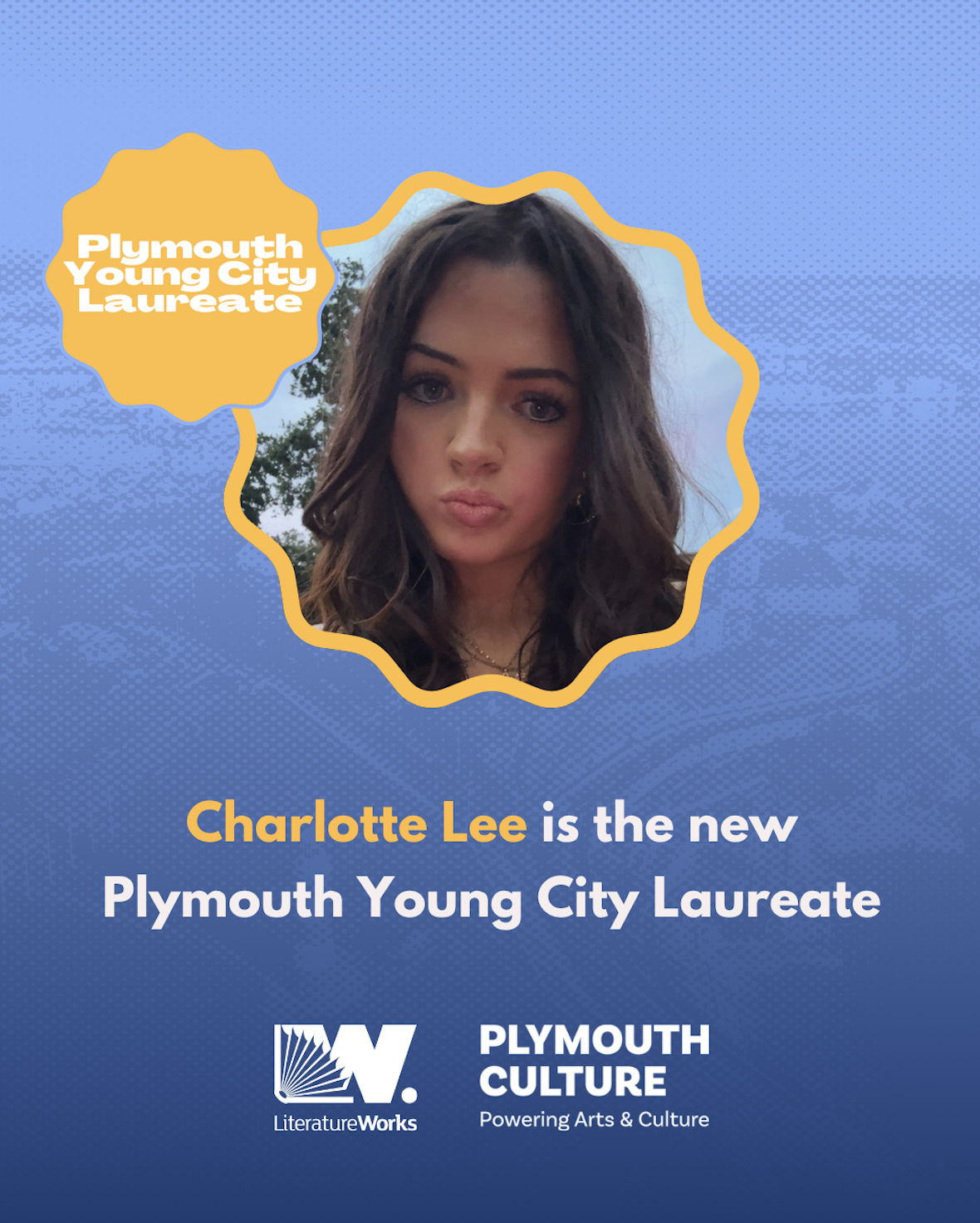
If Plymouth were a poem...
We asked both writers an important, if slightly unusual question.
If Plymouth itself were a poem, what sort of poem would it be?
For Charlotte, it would be experimental. She sees Plymouth as a “liminal space” between its urban cityscape and the countryside and nature that surrounds it, and says she'd use contrasting and juxtaposing imagery to capture that relationship.
Issy's Plymouth poem would be different. “Very messy, but in the charming way that Plymouth is,” she laughs. “There are a lot of different areas in Plymouth and I think they all stand out, but they all do come together. So it would be that messy but almost perfect type of poem.”
It's perhaps not a bad description of the city. Both also share a fascination with watching the people who live here.
Charlotte draws inspiration from Plymouth's natural landscape, but she also loves observing how people interact within the city – the friendliness, divisions and contradictions that somehow coexist.
Issy describes herself as a “massive people watcher” and will invent stories about strangers passing by if she has nothing else to do.
But it's Plymouth's overlooked details that particularly interest her. “There are so many little details not a lot of people notice and so many little treasures that are in the corners of every area,” she says.
While attention often goes to Plymouth's bigger landmarks, Issy likes exploring “the simplicity of small things”. Perhaps that's something writers are particularly good at: noticing the bits of a city the rest of us walk straight past.
Does school make poetry feel too difficult?
If the word poetry immediately transports you back to an English classroom desperately trying to work out what the poet “really meant”, you're not alone. Both Charlotte and Issy remember poetry sometimes feeling that way at school.
“I definitely felt like that,” says Issy. “You are forced to try and learn what people mean and you get quite sick of it in the end.”
Finding poetry for herself changed that. “If you do it your own way, you won't hate it.”
Charlotte had a similar experience studying poetry at GCSE, where she felt there could be an emphasis on learning a particular interpretation. That can make poetry seem unnecessarily inaccessible.
“You think you have to know all the details,” she says, “and it's just not true.” Instead, she believes poetry belongs to everybody.
“The thing I love about poetry is how you can have the same poem have so many different meanings and it can be completely applicable to everyone in a different way. It doesn't have to be definitive.”
So, what actually counts as reading?
That's a question we're asking a lot during Plymouth Reads. One of the central messages of the National Year of Reading is that reading doesn't have to mean sitting down with a huge novel.
Charlotte's relationship with reading has changed as she's grown up. As a child, books were somewhere to escape.
“For me, part of it, especially when I was a kid, was escaping into a fantasy world or something beyond every day,” she says.
Now she also values the different perspectives reading can give her.
“Every time I read a new book, no matter what it's about or what genre, I always come back with a new perspective about how to think within the real world.”
But that doesn't mean sitting down formally with a book.
Charlotte listens to books and podcasts while doing other things, including cleaning her room. “I like how accessible it is today and how it can be quite informal. It doesn't have to mean anything, or it can - but it could just be for enjoyment.”
Issy also remembers disappearing into fantasy worlds through childhood favourites including Harry Potter and Percy Jackson. Going back to childhood books now can be particularly powerful.
“I feel like it's a pathway to your memories,” she says, as well as continuing to offer an escape from everyday teenage and adult life.
So if you've decided you're “not a reader”, perhaps it's worth reconsidering what reading means to you. An audiobook counts. Poetry counts. Lyrics count. Comics count. Ten minutes with something you genuinely enjoy counts.
The vulnerability of putting your words into the world
Writing something personal is one thing. Letting somebody else read it is quite another. For Issy, sharing her early poetry felt particularly vulnerable because so much of it came directly from her emotions.
“If I was feeling a certain way about something, it would go into these really deep pieces,” she explains.
But her experience as Young City Laureate gradually changed the way she thought about that vulnerability.
“Poetry is meant to be emotional and it's meant to evoke emotion as well,” she says. Realising that emotion could create a bond with the people listening made expressing herself easier.
Charlotte doesn't think that vulnerability necessarily disappears – and she isn't sure she'd want it to. Her poetry also draws on her own experiences and she has begun sharing work with friends, people at school and through poetry competitions.
“It does get easier sharing it, but I don't think it gets any less vulnerable,” she says.
“But I don't think I would change it or try to make it any other way.”
Why? Because allowing somebody to see that vulnerability can give them permission to reflect on their own experiences too. “That vulnerability and sharing through poetry or writing generally,” Charlotte says, “makes people human.”
One piece of advice
As their conversation came to an end, we asked Issy to give Charlotte one piece of advice before handing over the Young City Laureate role.
Her answer was immediate. “Take advantage of it.”
“It is such a great role to be in. You're going to love every second of it. I certainly did, and it will fly past you.”
Her advice is to throw herself into every opportunity that comes along. “It's one of the best things that you can do, especially at this age, and it gives you so many more experiences that you won't forget and you'll definitely learn from.”
It feels like pretty good advice for more than just becoming Young City Laureate. Read something. Write something. Share something. Go to the workshop. Try the thing that scares you a little. And don't worry too much about whether you're doing it “properly”.
Plymouth Reads
Throughout the National Year of Reading, What’s On Plymouth Culture is exploring the different ways Plymouth reads, writes and connects through words.
From libraries and bookshops to poetry, audiobooks, comics, writing groups and reading communities, we're interested in making reading feel accessible to everyone – including people who don't currently think of themselves as readers.
Whatever you're into, take 10 to read into it.
Discover our comprehensive guide to where to read, write, browse and fall in love with books in Plymouth:
Find out more about the National Year of Reading:
