
As Plymouth Art Weekender prepares to take over the city from 16–18 October, we catch up with one of the people helping to make it happen. Artist, curator and cultural producer Rhys Morgan has spent years championing Plymouth's creative communities, from grassroots projects and queer arts initiatives to working with major cultural institutions.
But what does it really take to nurture a thriving arts scene, and does Plymouth fully appreciate the extraordinary talent on its doorstep?
We talk to Rhys about challenging traditional ideas of where art belongs, reclaiming maritime history through his award-winning queer sea shanty choir, the importance of bringing artists together and why Plymouth Art Weekender is about far more than a weekend of exhibitions.
With the city preparing to open its studios, galleries, homes and unexpected spaces to visitors, Rhys reflects on the people, places and creative connections that make Plymouth special, and why protecting them matters more than ever.
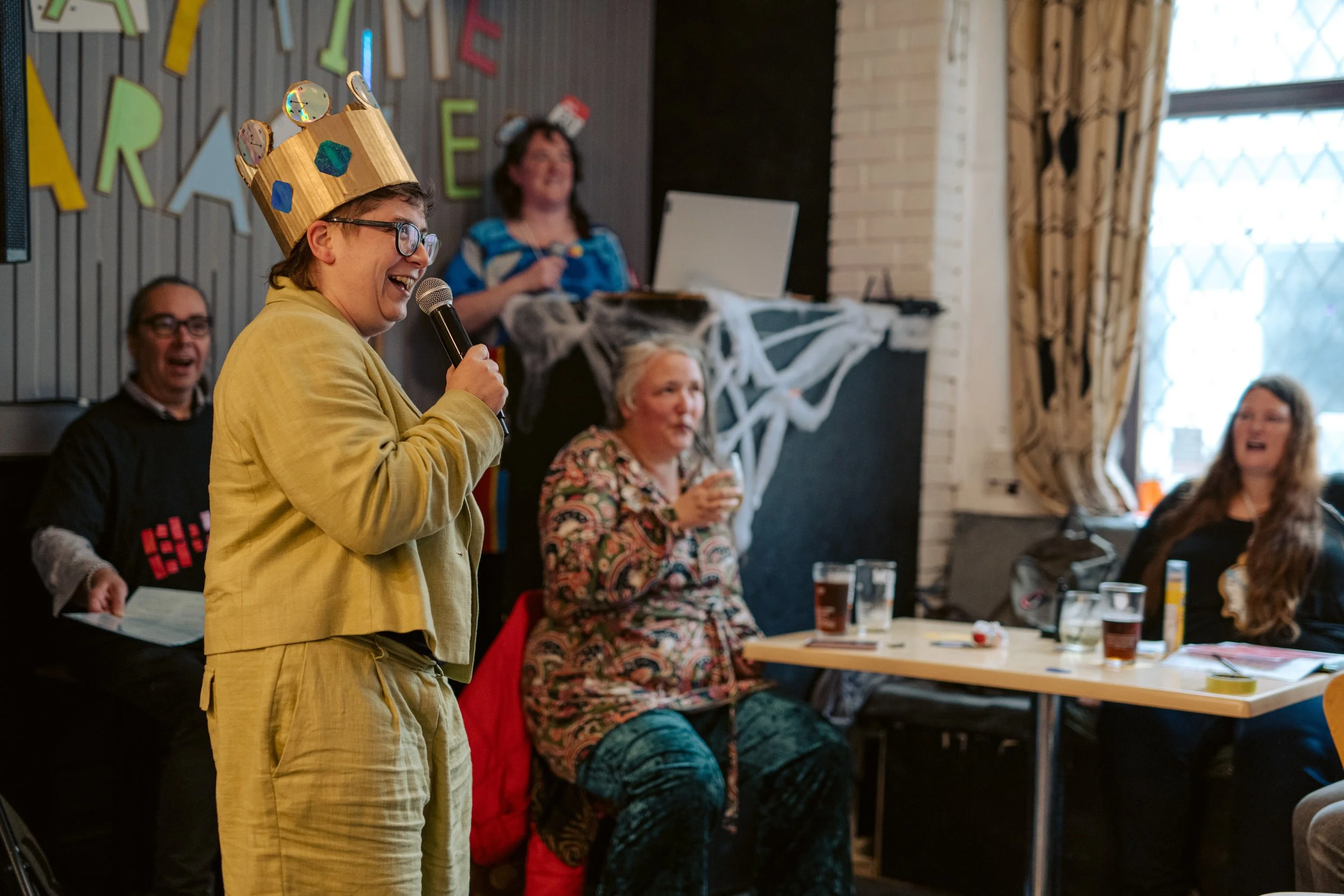
Image: Dom Moore
You’ve been part of Plymouth’s cultural landscape for a long time now, as an artist, curator, producer, organiser and sometimes all four at once. When you strip all of those job titles away, what do you think you actually do?
I think these are all part of the same practice in a way. I tend to think of myself as an artist with an iterative practice, and a lot of those iterations feed into one another. In terms of what I actually do, a lot of the time I am working out ways of bringing people together around art. Sometime’s that art is mine, more often it’s someone else’s.
You’ve spent a lot of your career creating opportunities and spaces for other artists. Has there ever been a tension between being the person who makes things happen for everybody else and protecting enough space to be an artist yourself?
As an artist there is a responsibility to other artists around you. Without their work, your work can’t make as much sense. So I’ve always felt a need to pay opportunities forward, it’s not always particularly glamorous, and I often take on more than I should - but it feels at odds to expect to be an artist, and often the work of people who do isn’t very interesting.
You’ve worked everywhere from grassroots organisations and community projects to The Box and the National Gallery. What have those very different worlds taught you about where interesting art actually happens?
Interesting art can happen anywhere, and just because an artwork is in a gallery it doesn’t always mean it’s interesting. It might be important for other reasons, but they’re not the same thing. Some of the most interesting art happens without people seeing it, in domestic spaces or in everyday encounters. But galleries and museums sometimes help the most interesting art to happen when they forget about the walls.
Community, participation and collaboration run through so much of your work. What does genuine participation look like to you and when does the art world sometimes get it wrong?
Just because a community is there, doesn’t mean they have to be a collaborator or that they want to be engaged. I think we have to resist a lot of the top-down models of collaboration, that reach a key performance indicator but offer limited lasting impact. It works a lot better when communities are met at their level, and the collaborative opportunity is something that’s relevant and appealing. We also need to remember that it’s okay for beauty to exist in these spaces, it doesn’t have to always be about making a point.
Your practice also explores queer lived experience. Has Plymouth itself shaped the kind of queer artist you've become, and if so, how?
I moved to Devon as a kid, and a lot of the rural and coastal communities I grew up in weren’t the easiest spaces to grow up queer. Whilst Plymouth hasn’t necessarily had the same level of queer visibility as some other UK cities, it still has a rich queer heritage and a contemporary scene that has grown significantly in the past few years, which has been amazing to see. Plymouth’s queer scene is very much led by the community, with the strongest and most impactful community action and programming coming from amazing grass roots organisations like Queer District Collective and Queer Out Loud. It’s really important we support these spaces to thrive, as they provide vital community connection.
Seaweed in the Fruit Locker feels brilliantly Plymouth – maritime tradition taken apart and rebuilt through contemporary queer experience. Where did that idea actually begin, and did you know immediately that you'd stumbled onto something special?
The idea had been forming for a long time, I’d always found Sea Shanty’s a fascinating tradition. Not necessarily from a historic perspective, but from the sense of community. It’s a form without class, without expectation. It’s something that brings people together, and doesn’t require much musical understanding. It’s a leveller, and that’s the best thing an artwork can do. But as soon as we did our first pub gig at the Minerva Inn, I knew that this would be something that was going to have a life beyond my initial provocation.
There’s something interesting about taking traditions that can feel very fixed; sea shanties, maritime history, museums, galleries etc and asking who was missing from the story. Is that act of reclaiming history important to you?
Reclaiming history is vital to every marginalised community. History becomes much richer when you paint the original cast back in. The idea that we would accept one version of events, or one structure, seems preposterous. It denies the opportunity for more interrogation of how we got to where we are and how we plan where to go.
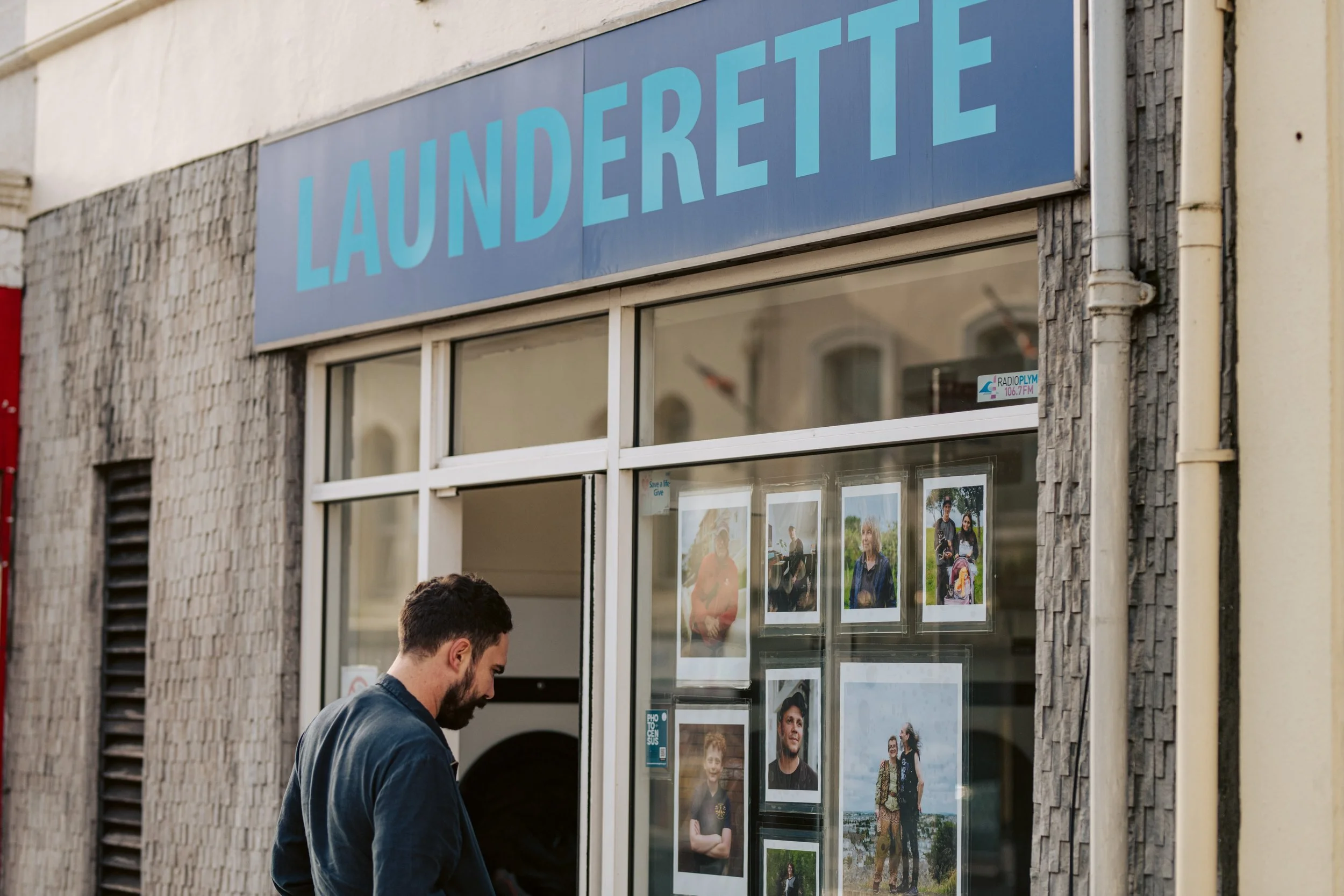
Image: Dom Moore
You've worked extensively in Plymouth's East End as well as within major cultural institutions. Do you think we're still too attached to the idea that culture happens in designated 'cultural' buildings?
No, but I think those structures can be more flexible. Dedicate cultural spaces is one of the most valuable resources we have, but they need to be porous enough to represent the world and the communities around them. They also need to be at the centre of challenging dominant narratives, not reinforcing them. As an adult, going to a museum or a gallery is probably the closest you get to going to school.
You’re very embedded in Plymouth. What does this city give artists that somewhere like London can't and, conversely, what does Plymouth still make difficult for them?
I think the most obvious differences are the community and the space you have. Not physical space, but the head space, without the pressure and expectation. When I studied in London artists seemed so panicked to find a gallery to represent them, which seems like no sort of life really. However, as a city we’re not as able to support artists as we were when I first came to the city in 2015, and that’s a problem. Without the opportunities to come together to show our work and commune with each other the system suffers and people become less connected.
Plymouth Art Weekender has been around since 2015. After all this time, what still surprises you about what happens when you effectively hand the city over to artists for a weekend?
I’m always blown away by how much the artists all want it. It would be completely reasonable to say no, but instead it’s challenge accepted.
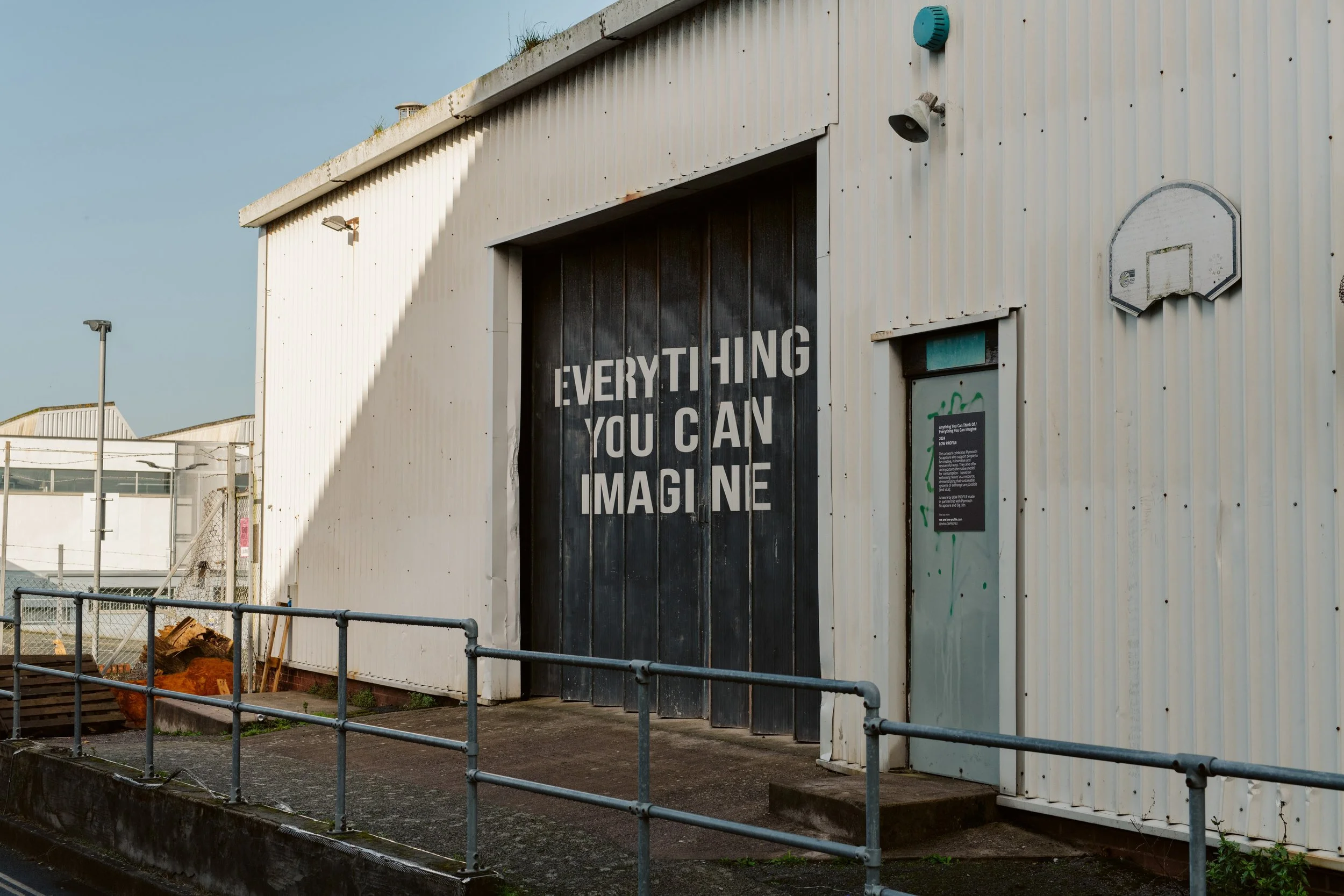
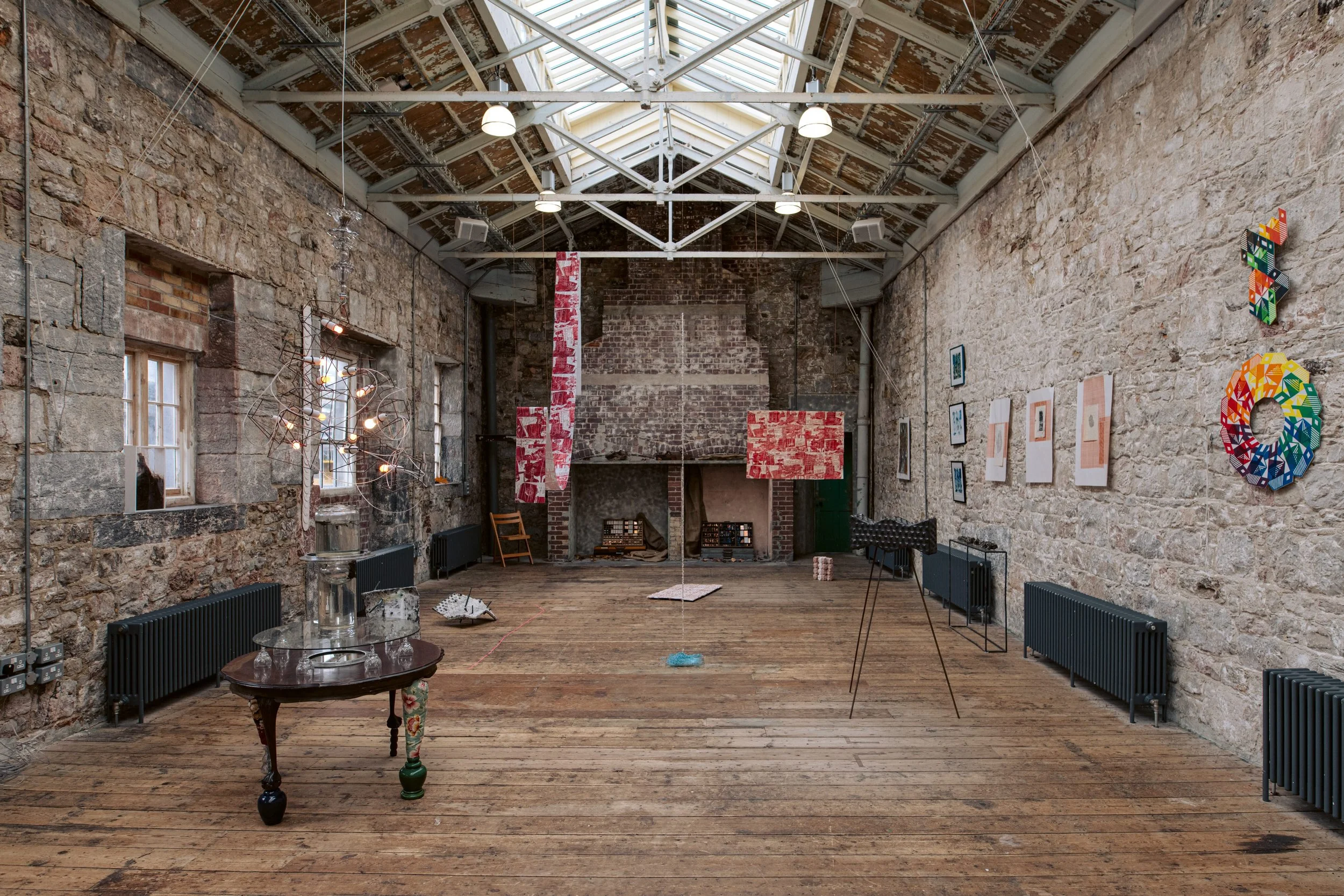
PAW deliberately puts established artists and organisations alongside emerging artists, DIY projects and work appearing in unexpected places. How important is that lack of hierarchy to what the Weekender is?
It’s crucial that institutions and organisations be part of the Weekender, not least because it would be a lot harder for them to survive in Plymouth without the artists who live here. I started working on the Weekender as an assistant producer in 2017 when I was still trying to work out how I would establish my practice here, and back then the board was half representatives from every big player in the city and half independent artists. This model, which was proposed by Stephen Paige and Grace Davies in 2014, was incredible. Sadly, it’s less practicable to support a board like that at the moment, however this joined up approach has remained important to us, as when artists work with the structures of Plymouth the impact is always more resonant.
There is a wonderful element of discovery to the Weekender; you can walk into a building or part of Plymouth you've never visited and encounter something you weren't expecting. Do you think getting people to see their own city differently is as important as getting them to see the art?
After working on Jeremy Deller’s piece for the National Gallery, I was asked to lead the Beryl Cook Trail project for The Box - which as a lifelong Beryl fan was a huge honour. Seeing those figures appear around the city and people that inspired the original paintings was a similar feeling to the Weekender. The context can inform your experience of the work you are seeing, just as the work you are seeing can inform your experience of the context.
For somebody who says, “Contemporary art isn't really for me,” what would you say the Weekender can offer them?
An opportunity to have that conversation, and find out if they really mean it. There’s a very good chance that if you stop and talk to an artist showing their work at the Weekender, you’ll come away from that conversation with a better appreciation for what they do and the questions they are asking. And, if you’re still not sure, go to a few more stops along the map - and it might just click.
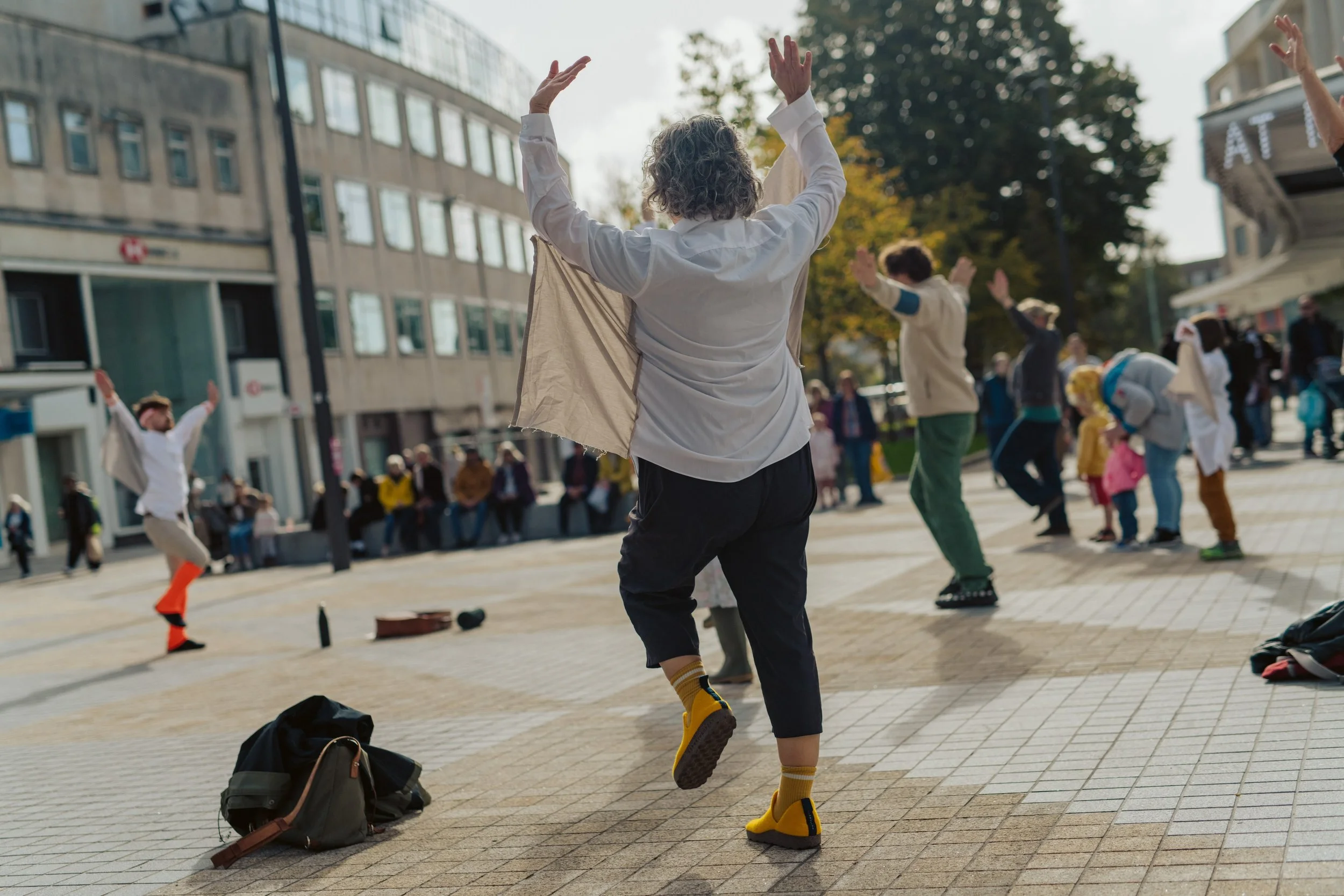
The programme is huge and eclectic. As someone who knows it from the inside, are there things happening this year that you think capture something particularly interesting about Plymouth's creative scene right now?
There’s a lot of group shows, and there’s a few more events in domestic spaces, like Hyphae House. It feels like people are resisting some more traditional routes. I think these things have been born out of necessity, but often that’s where the most interesting conversations happen, and where the most fun parties are.
PAW is now biennial. Does that change its purpose? Does it give you the opportunity to make it feel more like a moment in the city's cultural calendar rather than simply another annual event?
A biennial model is more practical, for us and for artists, that was the primary motivation. But the advantage is that it allows us build it as a moment, and take time to work out how it’s going to fit for the city from festival to festival. Prosperity peaks and troughs, so a biennial allows more room for us to absorb this and make sure we can still provide some level of platform for us all to come together on.
Arts organisations everywhere are talking about resilience, funding and sustainability. What does it actually take to keep something as grassroots and collaborative as Plymouth Art Weekender alive without professionalising the DIY spirit out of it?
The numbers speak for themselves with the Weekender. Very few things bring the sort of audience number’s the Weekender has over as few days. A lot of that is down to the sheer efforts of the artists that take part, but we have to make a lot of space for them as well and we have to do a lot of work to advocate for them as well. All of the artists and all of the cultural institutions are responsible for the cultural prosperity of Plymouth, and the Weekender is base camp in how we can work together to keep the ship sailing. So it’s very important people have a responsibility towards it, because if activity like the Weekender vanishes - then you’ll know you’re in a very different city.
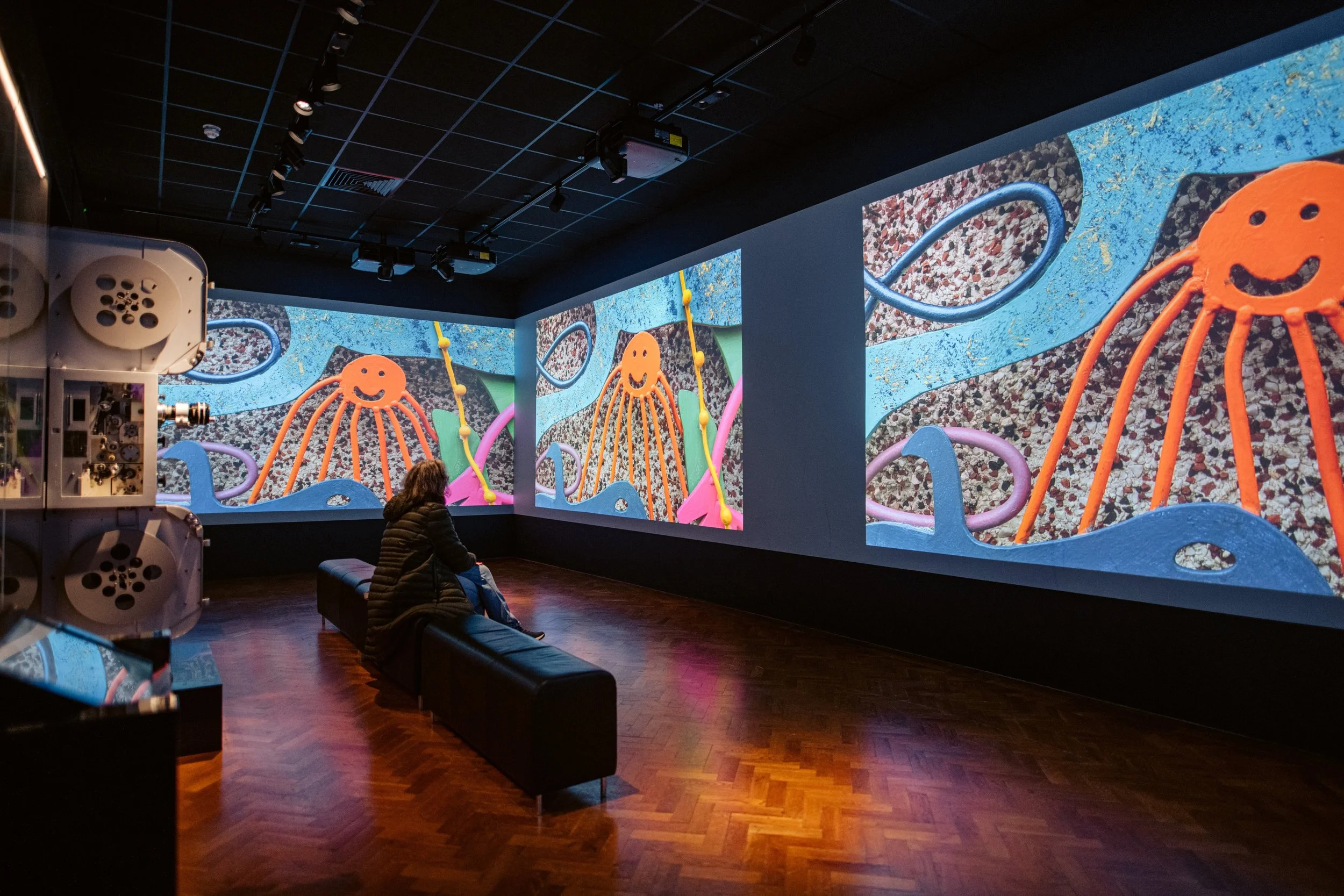
You've spent years advocating for artists in Plymouth. What are artists in this city most hungry for at the moment? money, space, audiences, recognition, connection, or something else entirely?
All of those things, and more, I’m sure. But I think community, and opportunities to come together with artists across the city, South West, and even country, are very valuable to artists in Plymouth. It’s hard not having enough funding, studios, exhibitions, commissions, residencies etc, but it’s even harder when you can’t connect with other people who face that as well. And recognition, perhaps of their practice, but also, and potentially more importantly, recognition and advocacy of Plymouth as a place where artists make good work.
You've seen Plymouth's visual arts scene from many different angles. Do you think Plymouth understands how good its artists are?
Not always. In fact, perhaps people should approach the Weekender as a survey show of Plymouth artists as much as it is a festival. And whilst it doesn’t have teams of technicians to make the events seamless, or hoards of gallerists to hold nice handbags, it does have the key ingredients of any major art fair - artists who spend countless hours making their work, and who want to show what they are making.
What is happening creatively in Plymouth right now that you think isn't getting enough attention?
There’s a lot of forms that don’t get the attention, or space, they deserve. For instance, there’s a lot of exciting painters in the city right now, artists like Cam Williamson, Zara Kahnum, Llyr Davies and Benji Thomas are all making incredible work - right here.
There’s also some incredible spaces that are working with artists year round, that are doing something really important for the city’s art scene at the moment, like 37 Looe St., Sappho’s and Cafe Momus.
And finally, imagine somebody gives themselves over completely to Plymouth Art Weekender for 48 hours...follows things they don't understand, goes into spaces they've never entered and encounters artists they've never heard of. What do you hope they come away thinking or feeling about Plymouth?
I would hope they would feel how I did the first time I came to Plymouth after graduating from Falmouth, which happened to be during the first Plymouth Art Weekender in 2015. Which was a warmth, and an openness to connect that might be completely unexpected. In spite of any driving wind, Plymouth can be one of the warmest cities in this country, and that’s as true of its artists as it is of anyone else.
