
In Conversation with Dr Rosemarie Corlett: Finding the Sea in Unexpected Places
The sea is never far away in Plymouth, even when you can’t see it. Writer and educator Dr Rosemarie Corlett invites people to explore the memories, sounds, stories and everyday encounters that connect the city to the water in Hidden Tides: Mapping the Sea Within the City, a creative writing workshop forming part of the Tide Together programme around David Cotterrell’s Intertidal.
Where do you find the sea when you’re not at the beach?
That question sits at the heart of Hidden Tides: Mapping the Sea Within the City, a creative writing workshop led by writer and educator Dr Rosemarie Corlett as part of Tide Together, the programme of activity surrounding David Cotterrell’s Intertidal commission for Sea for Yourself.
Taking place at Royal William Yard, the 90-minute workshop invites people to look at Plymouth differently and explore the many ways the sea finds its way into everyday life, often in places where we might not immediately think to look for it.
It might be a seagull circling a supermarket car park, a street that floods at high tide, the memory of a ferry journey, a hidden river beneath the city, the sound of gulls from an open window or a family story connected to the water.
Through a series of playful creative writing exercises, participants will turn those observations, memories and encounters into words, drawings and poems before adding them to a collective map of Plymouth.
Rather than simply charting the city’s coastline, the finished map will begin to reveal something more personal: where Plymouth remembers the sea, imagines it and carries it within everyday life.
For Rosemarie, the idea began with thinking about how the sea makes itself known even when it is out of sight.
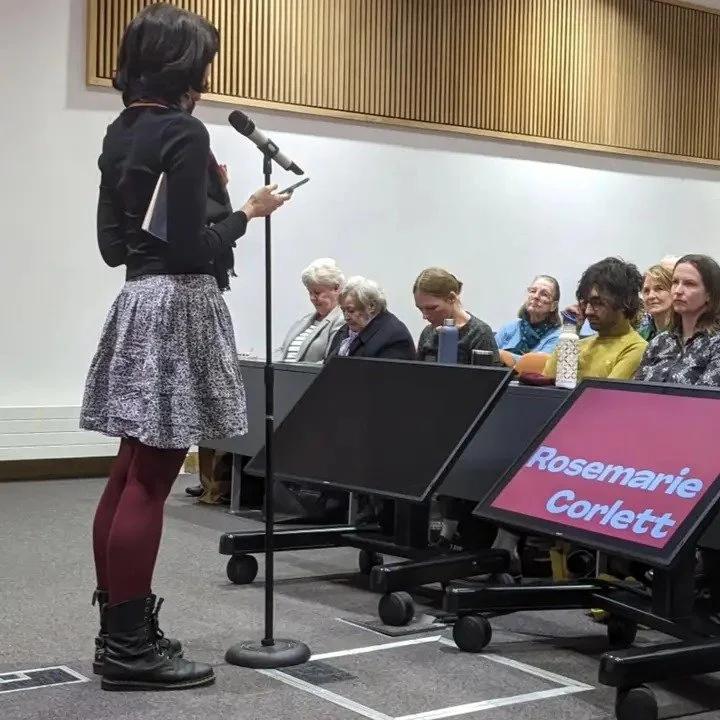
“I was interested in the idea that the sea can be present in a city even when we’re nowhere near the water. In Plymouth, it feels particularly easy to notice those unexpected traces — gulls in car parks, ferries glimpsed between buildings, flooded streets, or a smell or sound that suddenly makes you aware of the sea.”
The workshop has grown directly from the ideas behind Intertidal, artist David Cotterrell’s major Sea for Yourself commission exploring the relationship between Plymouth, its people and the water surrounding and running through the city.
One of the ideas at the centre of Intertidal is that the boundary between land and sea is far more porous than it might first appear. Hidden Tides takes that idea and asks participants to consider what it means emotionally and culturally as well as geographically.
Rosemarie says that sense of blurred boundaries immediately connected with her own interests as a writer.
“I really like the idea of Intertidal questioning where the boundary between land and sea actually lies. As a writer, I’m interested in those places where things overlap and become less fixed, and I think that gives us a lovely way of thinking about Plymouth and our relationship with the water.”
And in Plymouth, that relationship can be difficult to escape entirely.
“Definitely. The sea is so woven into the geography, history and everyday life of Plymouth that I think we carry an awareness of it without necessarily noticing. Even when you can’t see the water, there are often little reminders that it’s there.”
The workshop is designed to be relaxed and welcoming. There is no expectation that participants will arrive thinking of themselves as writers and no previous creative writing experience is needed.
A contribution might be a carefully crafted poem, but it might equally be a single sentence, a memory, a sketch, a few words or something noticed on the way to the workshop.
For Rosemarie, making the session accessible to people who might not usually describe themselves as creative is an important part of the process.
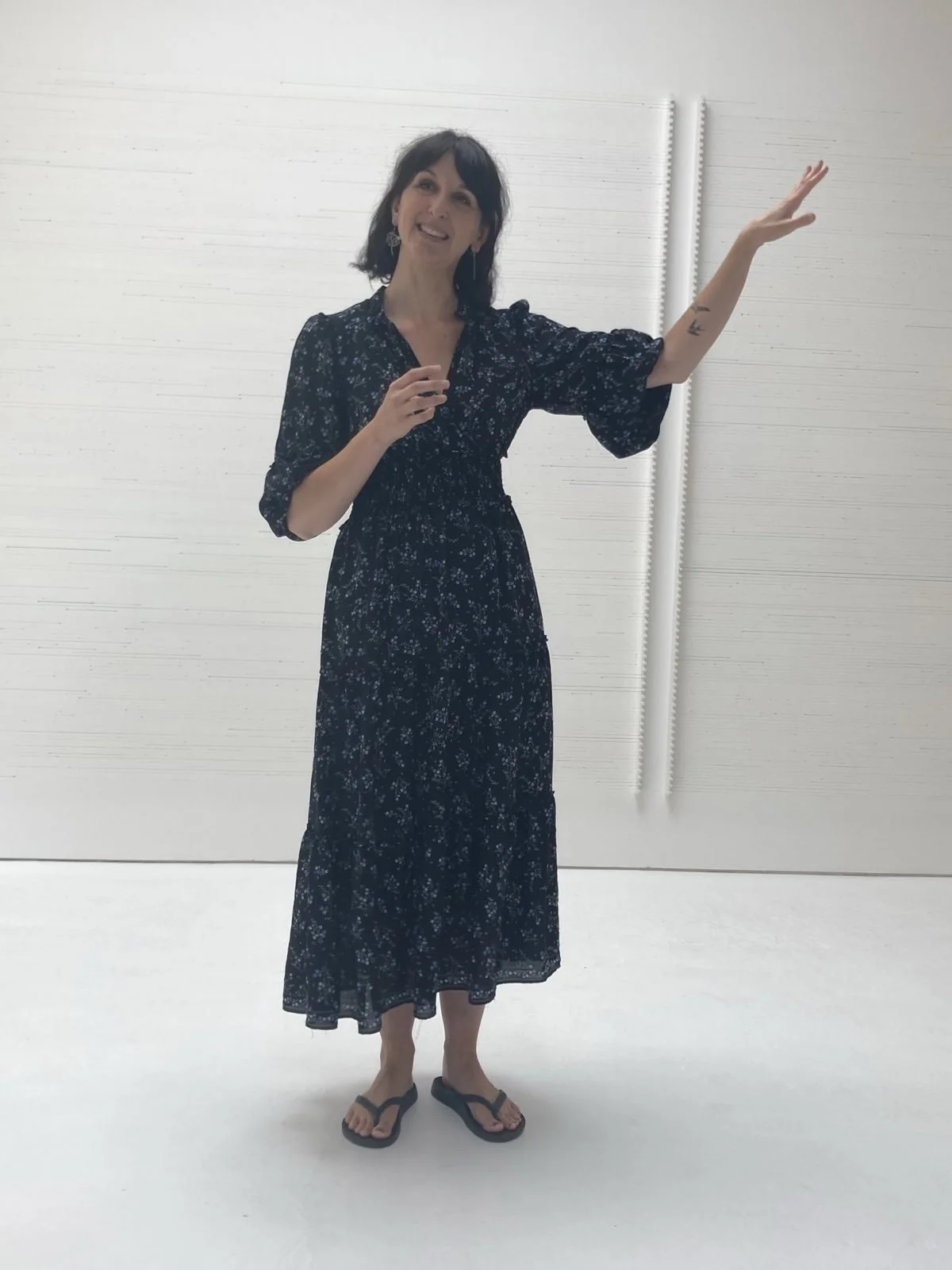
“Because I think everyone has stories, memories and ways of noticing the world, whether or not they think of themselves as a writer. I want the workshop to feel like an invitation to be curious and creative, rather than something you need to have any particular experience or confidence to take part in.”
It is the accumulation of all those different voices and experiences that will transform an ordinary map into a collective portrait of Plymouth’s relationship with the sea.
And Rosemarie hopes the process might also change the way people look at familiar parts of the city once the workshop is over.
“I hope they might start noticing the small, unexpected ways that the sea is present in their everyday lives. Perhaps they’ll walk through the city afterwards and see a familiar place slightly differently, or remember something they’d never thought of as being connected to the sea.”
Rosemarie is an Anglo-French author and educator and was Plymouth’s Laureate of Words from 2023 to 2025. Her debut poetry collection, Flightless Bird, was published by Shearsman Books in 2022, and her work has appeared in publications including Guardian Faber, Poetry Wales, Tears in the Fence and Iota.
Her participatory literature projects often bring together writing, place and community, and she has previously worked with organisations including Plymouth Sound National Marine Park, Literature Works, Plymouth Culture, Theatre Royal Plymouth and The Box.
Recent work includes The Phoenix Fountain, a permanent public artwork in Plymouth city centre featuring one of her poems, and Letters to the Sea, a digital anthology of community writing developed with Literature Works and the University of Exeter.
That relationship between people and place is central to much of her work.
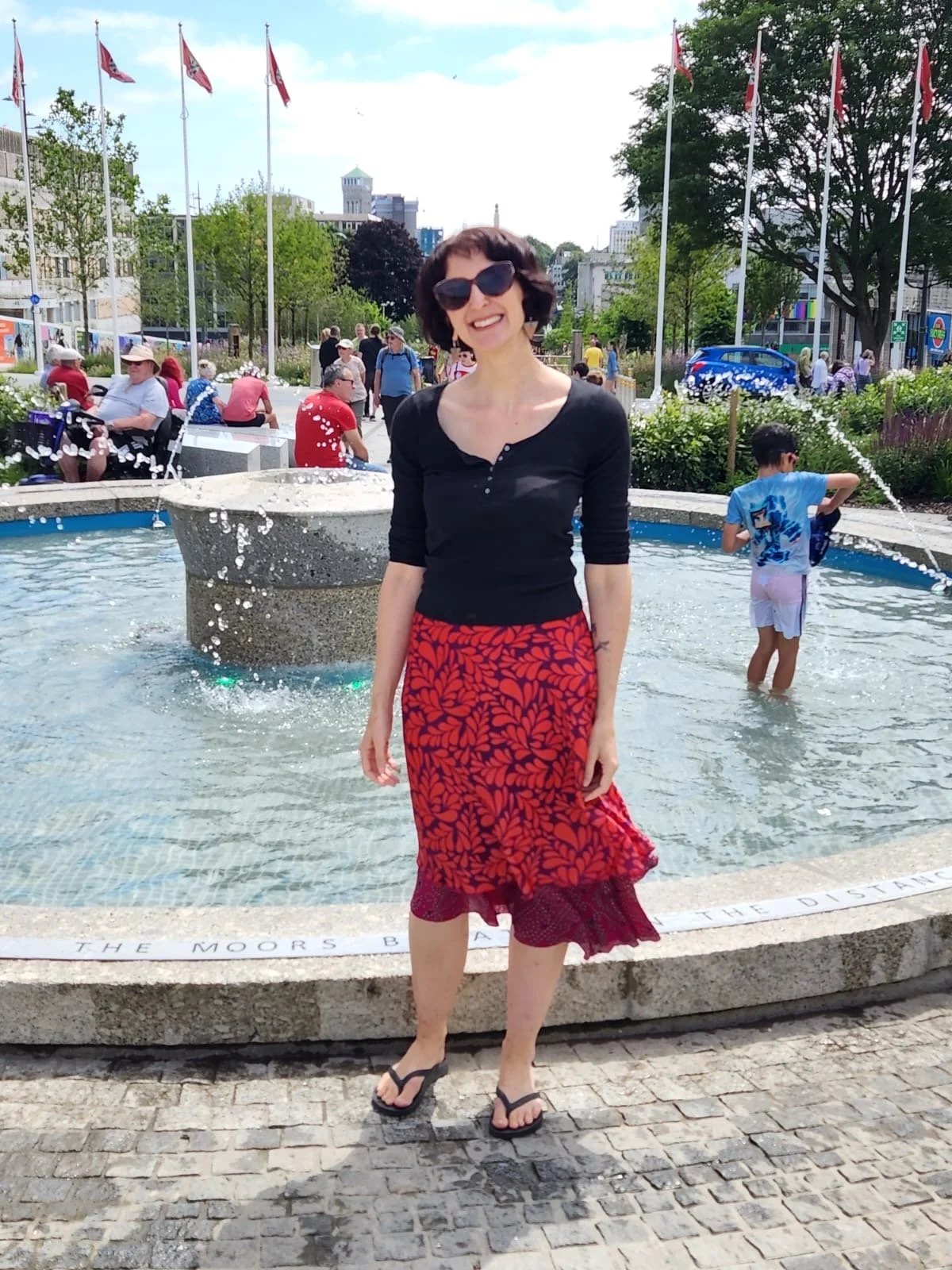
“I’m fascinated by the way places hold stories, and by the fact that no two people experience the same place in quite the same way. Bringing those different perspectives together can create a much richer and more surprising picture of a place than any single person could make on their own.”
There is something particularly fitting, then, about creating Hidden Tides collectively.
Each participant will add a small piece of their own Plymouth to the map. One memory might sit beside another person’s observation; a poem might connect to a journey, a workplace, a street or a childhood recollection. Slowly, the familiar shape of the city becomes layered with stories.
And it is those unexpected connections that Rosemarie is most curious to see emerge.
“I’m really curious about the things I could never have thought of myself — the completely unexpected connections people will make between the sea and their everyday lives. I’d love the finished map to be full of little surprises and to feel recognisably Plymouth, but also completely unlike an ordinary map of the city.”
Hidden Tides: Mapping the Sea Within the City forms part of Tide Together, a wider programme of workshops, conversations and creative activities accompanying Intertidal and inviting people across Plymouth to explore their own relationship with the ocean.
The workshop takes place this weekend at Royal William Yard and is open to all levels of writing experience. Book your place here.
