
From a career in science to an unexpected encounter with French police, Plymouth-based creative Luke Hall has taken an unconventional route into the arts. Ahead of Plymouth Art Weekender, he talks to Bracken Jelier about his fascination with water, the environmental issues shaping his practice and how support from Plymouth Culture is helping him bring his latest work to life.
For Luke Hall, water is far more than something to photograph. It's a collaborator, a creative material and a way of exploring some of the biggest environmental challenges facing our planet.
His work sits somewhere between photography, experimentation and environmental activism, inviting audiences to think differently about the relationship between people and the natural world.
This October, Luke is presenting The Shallows at Photo Now on Cornwall Street as part of Plymouth Art Weekender, taking place from Friday 16 to Sunday 18 October 2026. The exhibition includes Catchments, a project supported through seed funding from Plymouth Culture.
But Luke's journey into the arts hasn't followed the conventional route.
From science to the arts
"I'm a fairly late in life switcher to the arts," Luke explains. "Came from science and now we're here."
After moving to Plymouth around four years ago, Luke decided to pursue a master's degree in photography at Arts University Plymouth, despite having never previously completed a degree.
His research explored how photography might help raise awareness of water pollution, but also challenged the traditional relationship between photographer and subject.
"I kind of feel like documentary practice, specifically social documentary photography, is very much a photographer as an outsider looking at a subject. There's no involvement and I don't like the disconnect."
Rather than simply documenting water, Luke wanted to make it an active participant in creating the images.
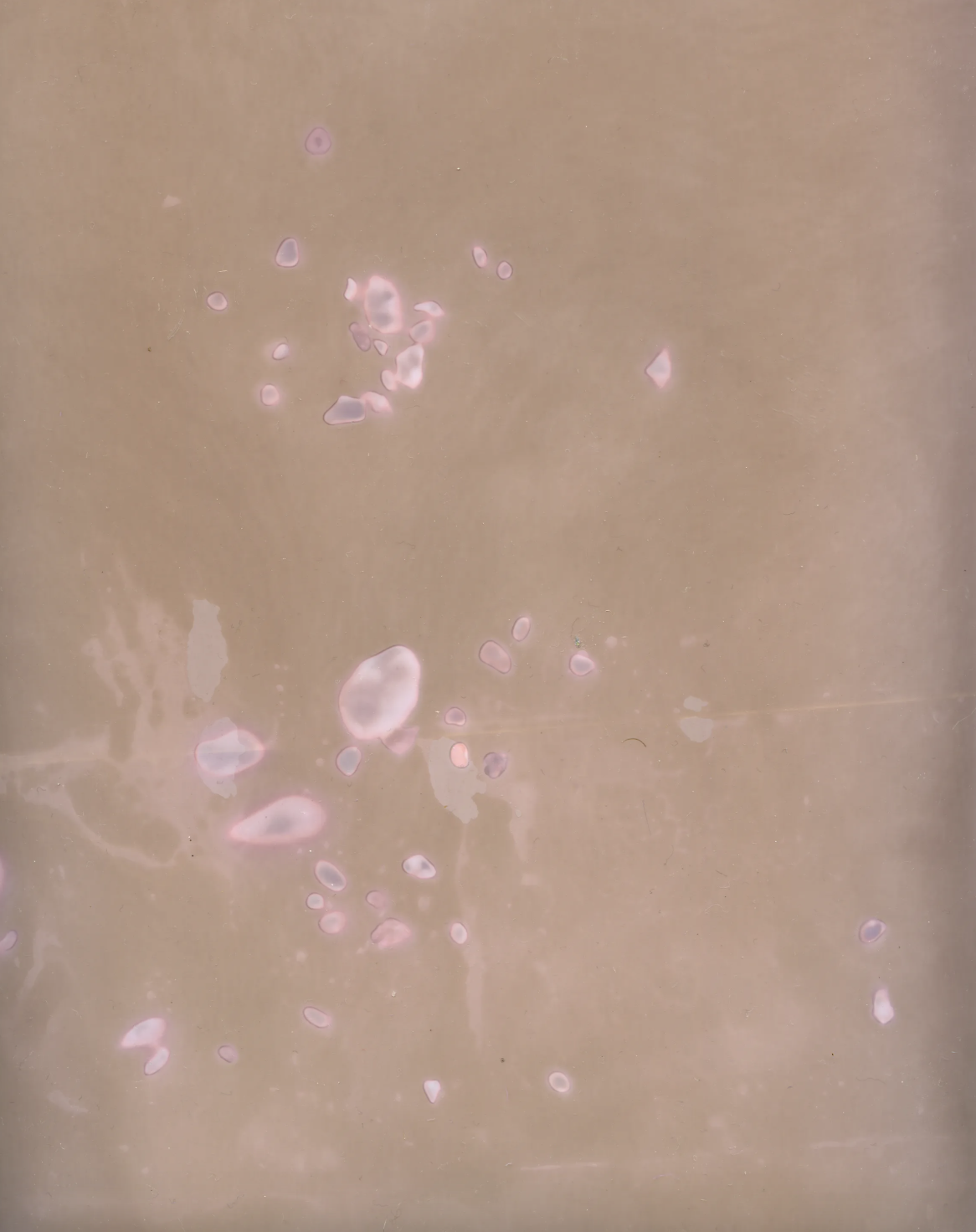
Working entirely with film photography, he began collecting water from the locations he photographed and using it in the development process. The resulting prints were deliberately unstable, changing and deteriorating over time.
"They have these really weird root systems almost of just decay all the way down the prints," he says.
It was fascinating work, but Luke recognised a problem. While the experimental processes were meaningful to him, they weren't always easy for audiences to understand.
That realisation would become an important starting point for his next chapter.
Finding inspiration in unexpected places
Luke has a particular fascination with islands, lakes and rivers, and much of his creative process now begins with something surprisingly simple: looking at maps.
During a visit to Paris for a photography event, he found himself exploring maps of the surrounding area and discovered a series of lakes in Normandy.
On impulse, he caught a train and headed out to investigate.
The trip resulted in several hours exploring an unfamiliar landscape, an unexpected conversation with the French police, who were understandably curious about his presence near a prison, and the beginnings of a new body of work.
The first pieces in Catchments were created at a lake known as the Lake of Two Lovers.
Unlike traditional photography, where the search for perfect lighting, equipment and composition can become all-consuming, this new approach offered Luke something rather different.
"Photography is really obsessive," he explains. "The whole concept of attempting to take great pictures is all about the best equipment, the best location, the best lighting, getting your settings perfect."
Instead, he began travelling with little more than paper, allowing water itself to become part of the creative process.
"To just carry around a pack of paper with me and I'm just going to places that I like and I'm just literally stood there putting paper in water is really relaxing."
He describes the process as almost meditative.
What began as an experiment has now grown into a collection of 15 works, forming Catchments, one of the three elements of his Plymouth Art Weekender exhibition.
Making art easier to understand
Alongside Catchments, The Shallows brings together photography, older and newer images, drawing, painting and a large-scale mural.
It's an ambitious exhibition, but there's a very straightforward idea behind it: Luke wants people to feel comfortable engaging with art.
He is particularly interested in the way contemporary art is discussed and presented, and whether the language used within galleries and institutions sometimes creates unnecessary barriers.
"There's no point trying to raise awareness of something and actually generate change if it's just a bit too out there."
He believes that artists can sometimes become so accustomed to speaking to other artists and arts professionals that they forget how unfamiliar the language might sound to someone encountering contemporary art for the first time.
"It's off-putting to just use crazy massive words that most people have no idea what you're talking about."
For Luke, The Shallows is an opportunity to explore how complex environmental ideas can be communicated through work that is visually interesting, thought-provoking and, importantly, understandable without someone standing beside it to explain everything.
It's a refreshing approach, and one that feels particularly relevant to Plymouth Art Weekender's invitation for people across the city to discover art in all its forms.
A little funding, a big opportunity
Luke's Catchments project received seed funding through Plymouth Culture, supporting the development and presentation of his work during Plymouth Art Weekender.
Interestingly, he almost talked himself out of applying.
"I'm not the best with applying to stuff. I've had bad experiences with it, but my brain is always like, 'Oh, there's no point, you're never going to get it.'"
But when he spotted the opportunity on social media, he realised it aligned closely with work he was already developing.
"So I was on my break at work, wrote the application to it and then won it. I was like, 'Oh, cool. Here we are.'"
It's a lovely reminder of what can happen when artists take a chance on an opportunity, even when they're not entirely convinced they'll be successful.
For Plymouth Culture, supporting artists to experiment, develop their practice and share new work is an important part of helping the city's creative community flourish.
And for Luke, the funding has helped bring an existing idea into a public exhibition where people can encounter and respond to it.
Why Plymouth Art Weekender matters
Luke is enthusiastic about Plymouth Art Weekender precisely because it doesn't demand that art be intimidating, exclusive or overly serious.
He recalls attending an information evening where the organisers encouraged artists to embrace the opportunity without worrying about everything being perfect.
"It's not some massive serious thing. Don't freak out about everything being perfect. It's just about making stuff, putting it out there and just getting people to come and talk to you about it."
That openness is something Luke clearly values.
"It's just creative throughout the city," he says. "I think that's perfect. It's just fun. Why not?"
It's also an encouraging message for anyone who might feel that galleries or contemporary art exhibitions aren't really for them. You don't need specialist knowledge or an arts background to explore Plymouth Art Weekender. Sometimes curiosity is all that's required.
Going deeper: what comes next?
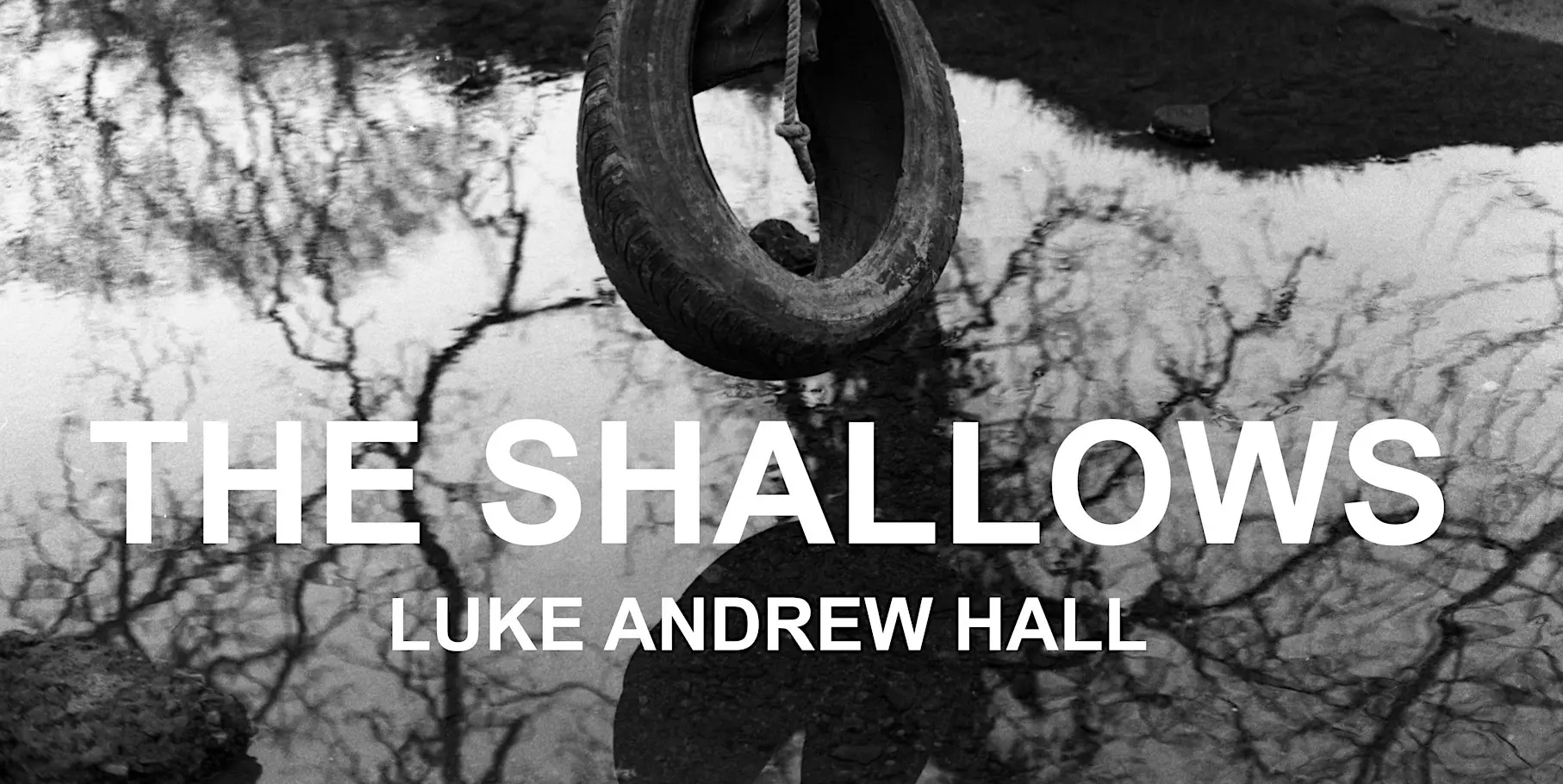
Despite having a new exhibition to prepare, Luke is already thinking several projects ahead. The Shallows is intended to be the first in a series of four or five exhibitions named after different layers of the ocean, with each taking his research and creative practice into deeper territory.
He's also involved with Drip Drip, a group based in Calstock campaigning for greater rights and protections for rivers. The group works with environmental organisations and parish councils, with the ambition of encouraging communities along the River Tamar to adopt resolutions that support cleaner waterways and better relationships with the river.
Luke hopes his future work will bring together photography, interviews, video, sound and more investigative approaches to environmental storytelling.
"I'd like to go a little bit deeper into actually getting a space where I can interview people, just members of the public, start actually building some video work, some soundscapes."
Ultimately, he wants to explore real environmental stories and find new ways to make them visible, accessible and meaningful.
For someone who began by questioning the distance between photographer and subject, it feels like a natural progression. And as Plymouth Art Weekender prepares to fill the city with creativity, Luke's work offers a reminder that art doesn't have to provide all the answers. Sometimes its greatest value lies in encouraging us to look at something familiar, like water, in a completely different way.
See Luke Hall's work at Plymouth Art Weekender
The Shallows
When: Friday 16 – Sunday 18 October 2026, 11am–5pm
Where: Photo Now, 107 Cornwall Street, Plymouth
Explore photography, experimental processes and environmental themes in Luke Hall's exhibition, including Catchments, supported by Plymouth Culture seed funding.
