
Bracken Jelier revisits Andrew Lloyd Webber's CATS at Theatre Royal Plymouth, discovering that while the music, movement and magic are just as captivating as ever, the passing years can bring an entirely new perspective to this much-loved musical.
The last time I saw CATS, I wasn't yet a teenager. It was in London, the show was still relatively new, and it was one of my first experiences of a big West End musical. I remember being completely mesmerised by the dancing, the music, the spectacle and the sheer excitement of it all.
Several decades later, sitting in a packed Theatre Royal Plymouth, I wondered whether that magic would still be there.
I'm delighted to say it absolutely was. Although this time, I found myself moved by something rather different.
I'd brought along a friend's 16-year-old daughter, a passionate young theatre and music enthusiast who had never seen CATS before. There was something rather lovely about experiencing the show alongside someone discovering it for the first time, just as I had all those years ago.
The theatre was buzzing, with an audience spanning generations, and it was wonderful to see so many people gathered to experience a production that has been captivating audiences for decades.
Of course, CATS isn't a conventional musical. There isn't really a traditional storyline to follow, or the sort of narrative arc you might expect from a big theatrical production. Instead, inspired by T. S. Eliot's Old Possum's Book of Practical Cats, it introduces us to a collection of wonderfully eccentric feline characters, each with their own personality, story and place in this curious world.
Having loved Eliot's poems as a child, and even learnt to recite some of them, hearing those familiar words brought to life through Andrew Lloyd Webber's music was an unexpected pleasure.
But what struck me most this time was the extraordinary physicality of the performers.
We often talk about musical theatre performers as triple threats, but CATS seems to demand something beyond even that. Not only must the cast possess exceptional singing voices and remarkable dancing ability, but they must also sustain an almost continuous level of physical characterisation.
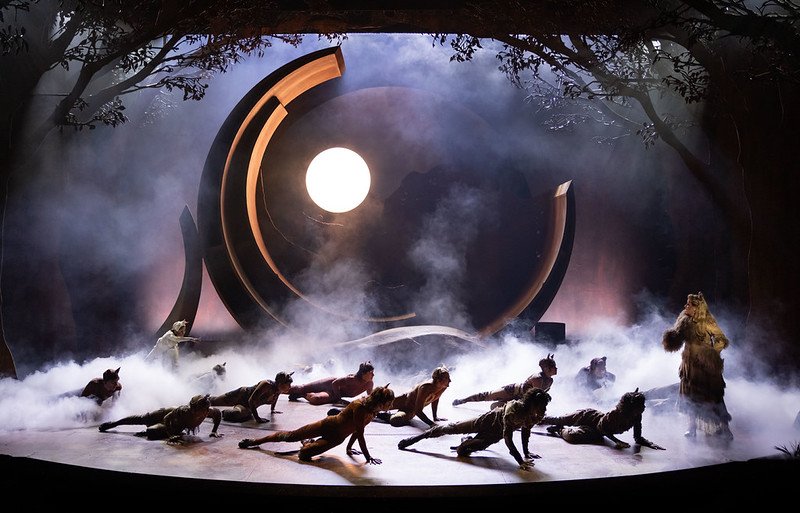
Every stretch, every turn of the head, every carefully controlled movement feels considered. There are moments of explosive athleticism followed by extraordinary stillness, as the performers crouch, prowl, twist and curl their bodies into shapes that seem entirely natural to a cat, but must require tremendous strength, flexibility and control from a human being.
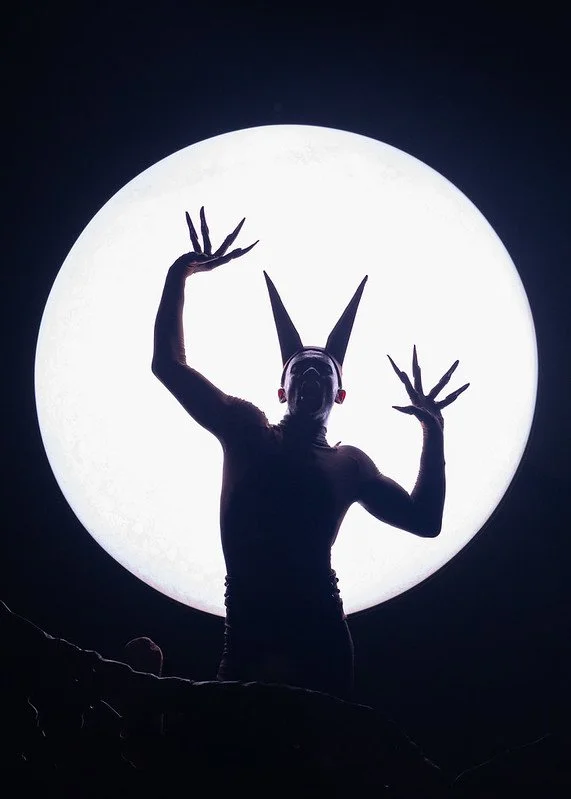
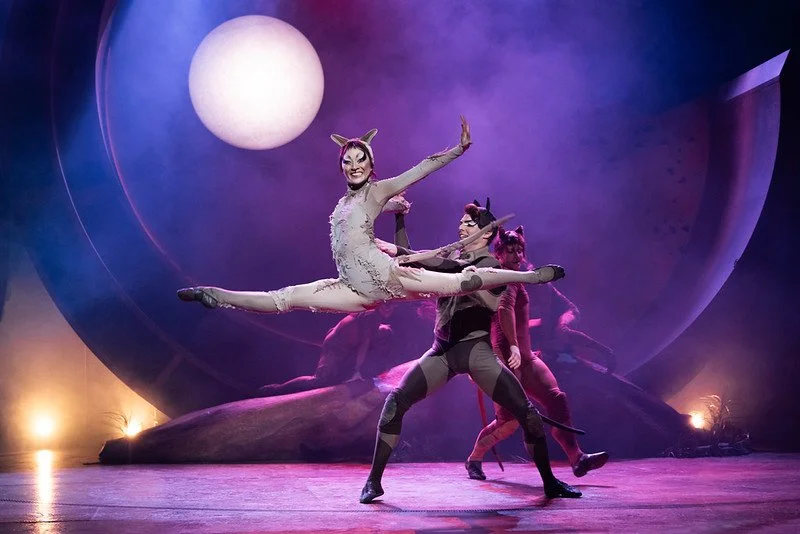
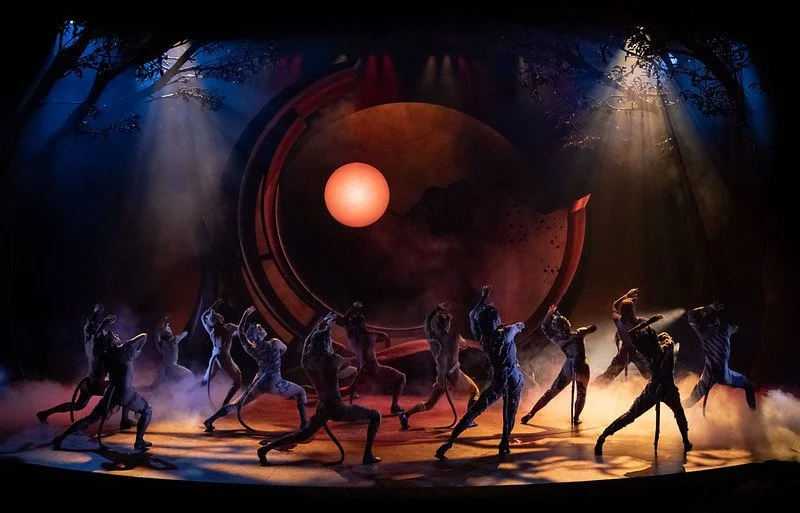
The attention to feline behaviour is fascinating. These aren't simply dancers wearing cat costumes. They inhabit their characters physically, even when they're not the focus of a scene.
And, speaking as a middle-aged woman watching from the comfort of a theatre seat, I couldn't help marvelling at just how much time they spend on their knees. Mine were aching in sympathy.
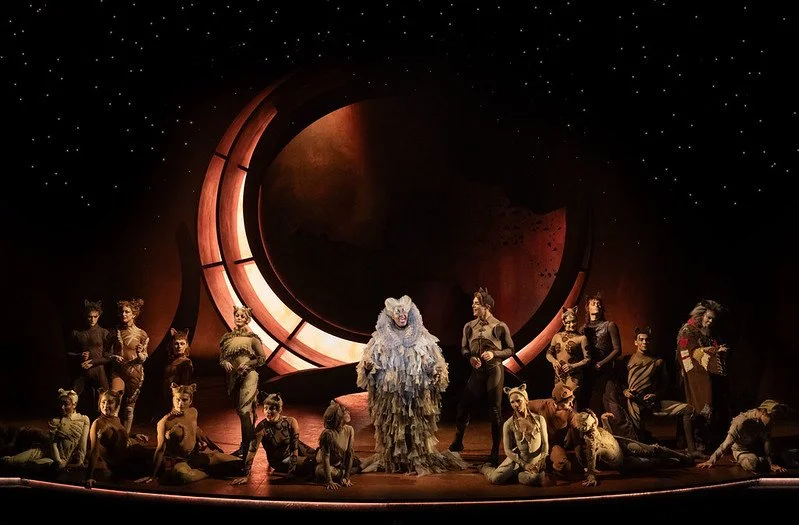
The costumes complement this beautifully, striking that delicate balance between human and feline. Each character is instantly recognisable as a cat, yet retains enough individuality and humanity for us to connect with them. Together with the movement, they create a wonderfully convincing world.
The entire ensemble deserves enormous credit. There wasn't one performance I felt overshadowed the others; rather, it was the collective talent, precision and energy that made the production so impressive.
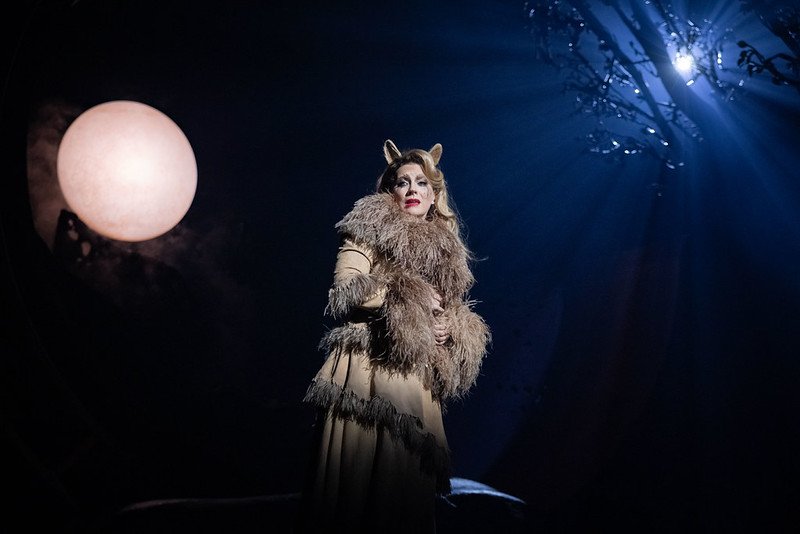
And then, of course, there's Grizabella (played by Louise Dearman).
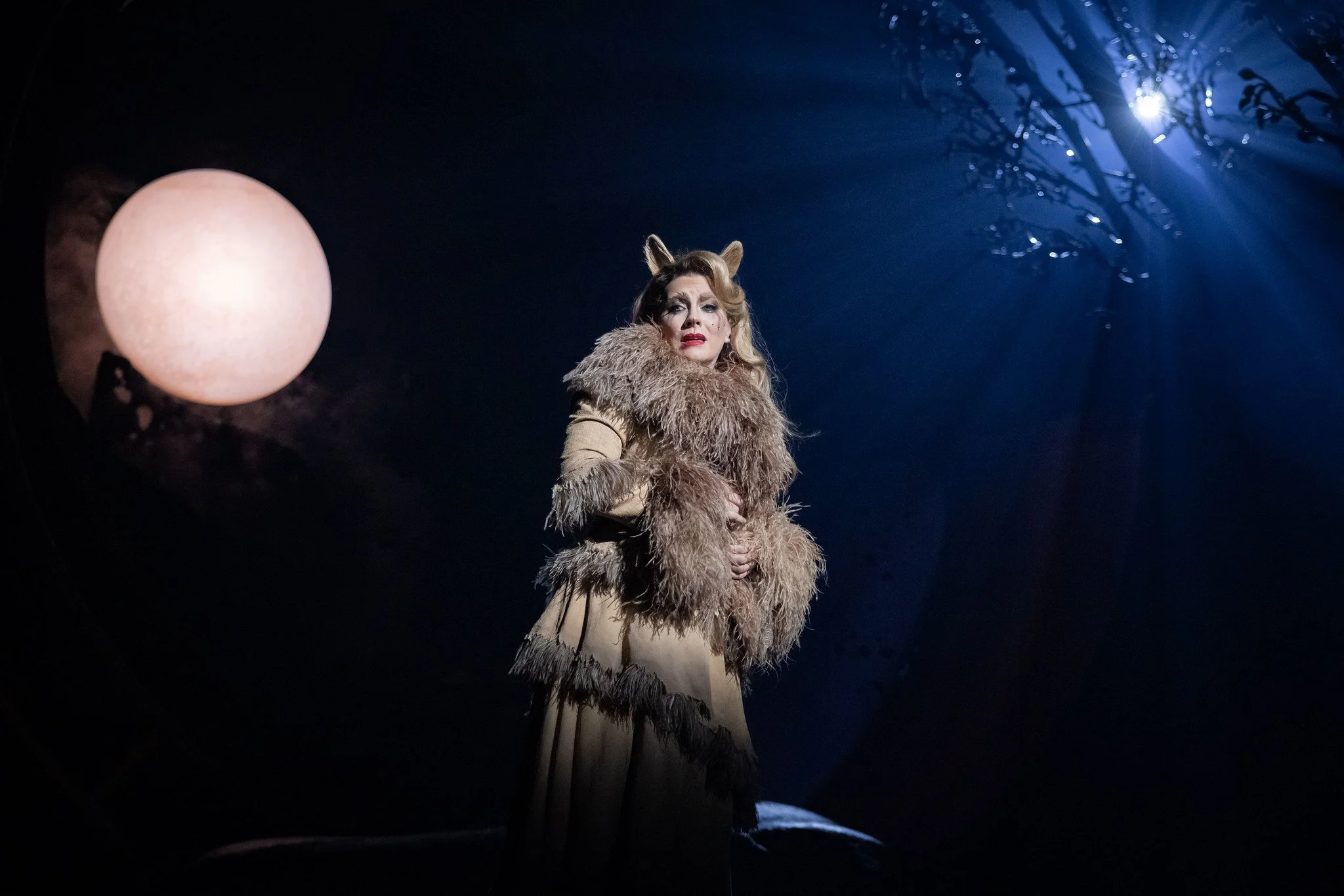
I knew Memory was coming. I knew the words. I knew the character and what her story represented. Yet I was completely unprepared for how deeply it would affect me this time.
Grizabella, once glamorous and beautiful, is now older, dishevelled and rejected by the other cats. She moves through their world largely unseen, unwanted and untouched, longing for the warmth and acceptance she once knew.
Watching her, I couldn't help thinking about the experience of ageing, particularly for women, and how a society that places so much value on youth and beauty can make people feel increasingly invisible as they grow older.
Perhaps that interpretation says as much about where I am in life as it does about the musical itself. But looking around the theatre, at the tears being wiped away by people sitting nearby, I had a feeling I wasn't alone.
It was an extraordinarily moving moment, and one that resonated far more deeply with me now than it ever could have when I was a child.
Perhaps that's one of the most wonderful things about returning to a piece of theatre after so many years. The production may be familiar, the music instantly recognisable, but we bring a lifetime of different experiences into the auditorium with us.
And suddenly, something we thought we knew has something entirely new to say.
CATS remains a glorious celebration of music, movement, imagination and theatrical skill. It's unusual, occasionally wonderfully eccentric, and unlike almost anything else in musical theatre.
If you're expecting a conventional story, you might find yourself a little surprised. But if you're prepared to immerse yourself in its world, appreciate the astonishing talent on stage and simply enjoy the experience, there's a great deal to love.
For me, it was a joyful return to a musical that helped spark my love of theatre all those years ago, made even more special by seeing it through the eyes of a new generation.
And how wonderful that we get to experience productions of this calibre right here in Plymouth.
If you can go - then get some tickets now: https://theatreroyal.com/whats-on/cats/
Captioned – Thu 15 Oct 2026, 7.30pm
BSL Interpreted – Fri 16 Oct 2026, 7.30pm
Audio Described (w/ Touch Tour 12.30pm, please contact Box Office to book) – Sat 17 Oct 2026, 2pm
