
From giving away hundreds of books in Plymouth's neighbourhoods to inspiring young readers, supporting families and bringing a literary festival back to the city, meet the Community Reading Champions proving that stories really do belong to everyone.
What do a community wellbeing hub in Whitleigh, a family support centre and a literary festival have in common?
Quite a lot, as it turns out. Across Plymouth, people are finding imaginative ways to make reading part of everyday life. Books are being handed out in parks, shared in community centres, swapped in family hubs and celebrated at events bringing writers and readers together.
And behind many of these activities are people who believe passionately that reading shouldn't be a privilege, a chore or something reserved for those who already consider themselves book lovers. As part of Plymouth Reads, What's On Plymouth Culture has been celebrating the National Year of Reading 2026, alongside Plymouth Libraries' 150th anniversary.
Through the campaign, the National Literacy Trust has been connecting organisations and Community Reading Champions who are helping make reading more accessible across the city.
While October's reading and wellbeing activities may have finished, their work continues throughout the year. We caught up with three of Plymouth's Community Reading Champions to find out what drives them, the difference they're making and how people can get involved.
Four Greens Community Trust: 800 books, a thousand possibilities
For Melanie Rawles, Deputy CEO and Community Development Manager, books have been part of her professional life for more than two decades.
Before joining Four Greens Community Trust, she spent 12 years working for Waterstones and 13 years with Plymouth Library Services. It's an experience that has shaped her belief in the importance of reading, not simply as a way to learn, but as a source of companionship, comfort and connection.
"I know that reading is hugely beneficial to people's mental health and wellbeing. It is a form of escape and a source of knowledge and information," she explains.
"Reading brings people together to discuss and share their thoughts and feelings but it can also be a companion to people when they are feeling alone or isolated."
Today, Melanie is Deputy CEO and Community Development Manager at Four Greens Community Trust, which supports people living in Whitleigh, Manadon, Ernesettle, Honicknowle and West Park.
Four Greens is one of Plymouth's 12 wellbeing hubs, providing health and wellbeing services, community activities and practical support. The organisation also leads the Community Builders team's operations and works with Whitleigh Community Trust on the National Lottery-funded PL5 Pathways project.
That network of community connections has proved invaluable when it comes to getting books into people's hands.
From the park to the community hub
Thanks to donations from the National Literacy Trust, Melanie and her colleagues have distributed more than 800 books across Plymouth, with an ambition to exceed 1,000 before the end of 2026.
Rather than concentrating the books in one place, they've shared them across the city's wellbeing hubs and taken them directly to community activities. Community Builders have gifted books to adults and children during the Fit and Fed park tour, Family Hubs' summer park events and other activities across Plymouth. And the giveaways aren't finished. The team is preparing to distribute more books at Christmas events.
At Four Greens itself, reading has become part of a much wider programme of community activity. The hub has participated in World Book Night, National Storytelling Week and Refugee Week, using each occasion as an opportunity to introduce people to stories and conversations they might not otherwise encounter.
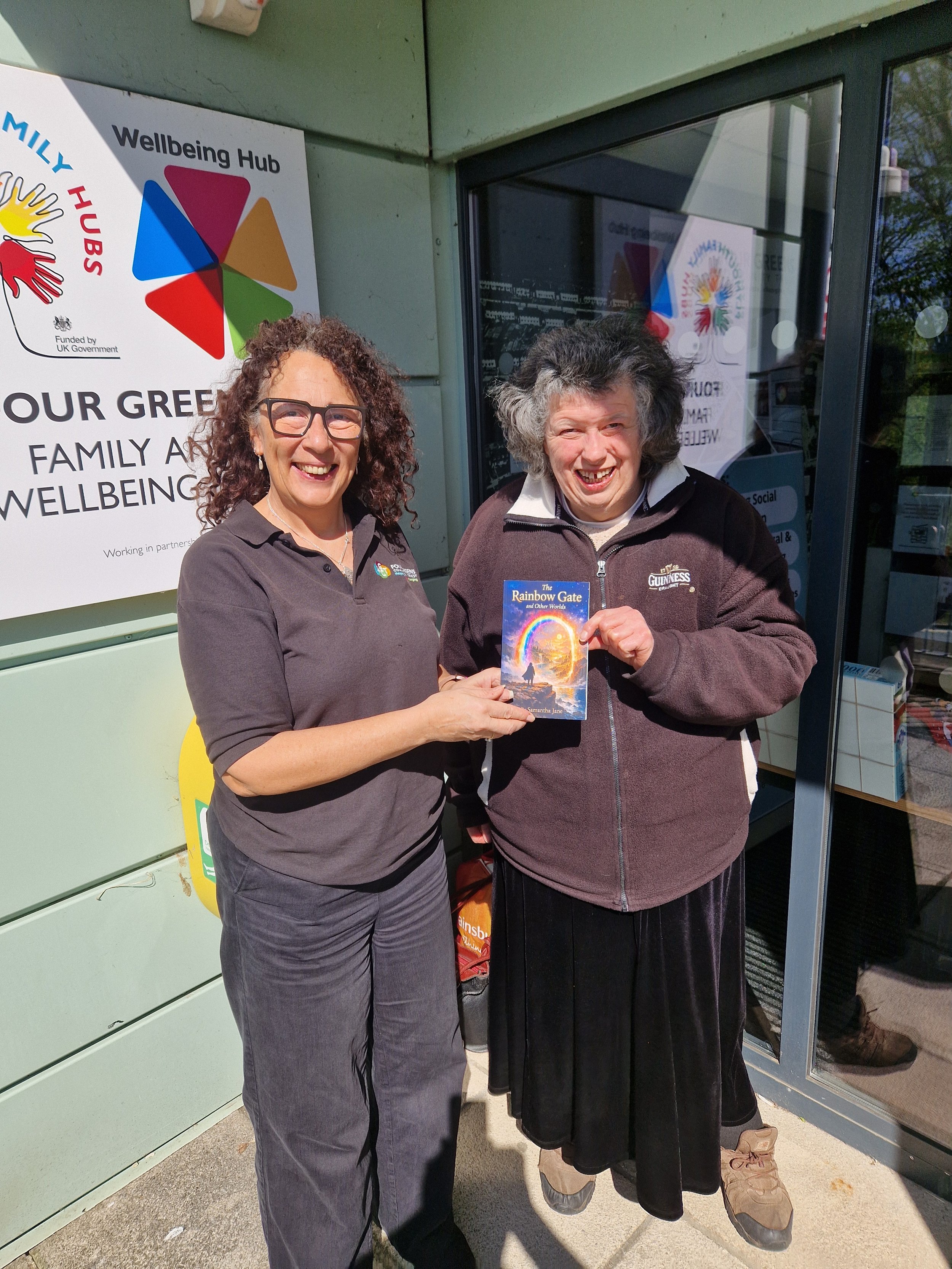
It has also celebrated the achievements of people within its own community. One example is Sam Jane, who regularly attends groups at Four Greens and has published a book on Amazon. Melanie and her team interviewed Sam about her journey into writing and what reading means to her, with the story featured on the National Year of Reading website.
It's a reminder that the people attending community groups aren't simply audiences for reading activities. They have their own experiences, creativity and stories worth sharing.
The story that stopped a room
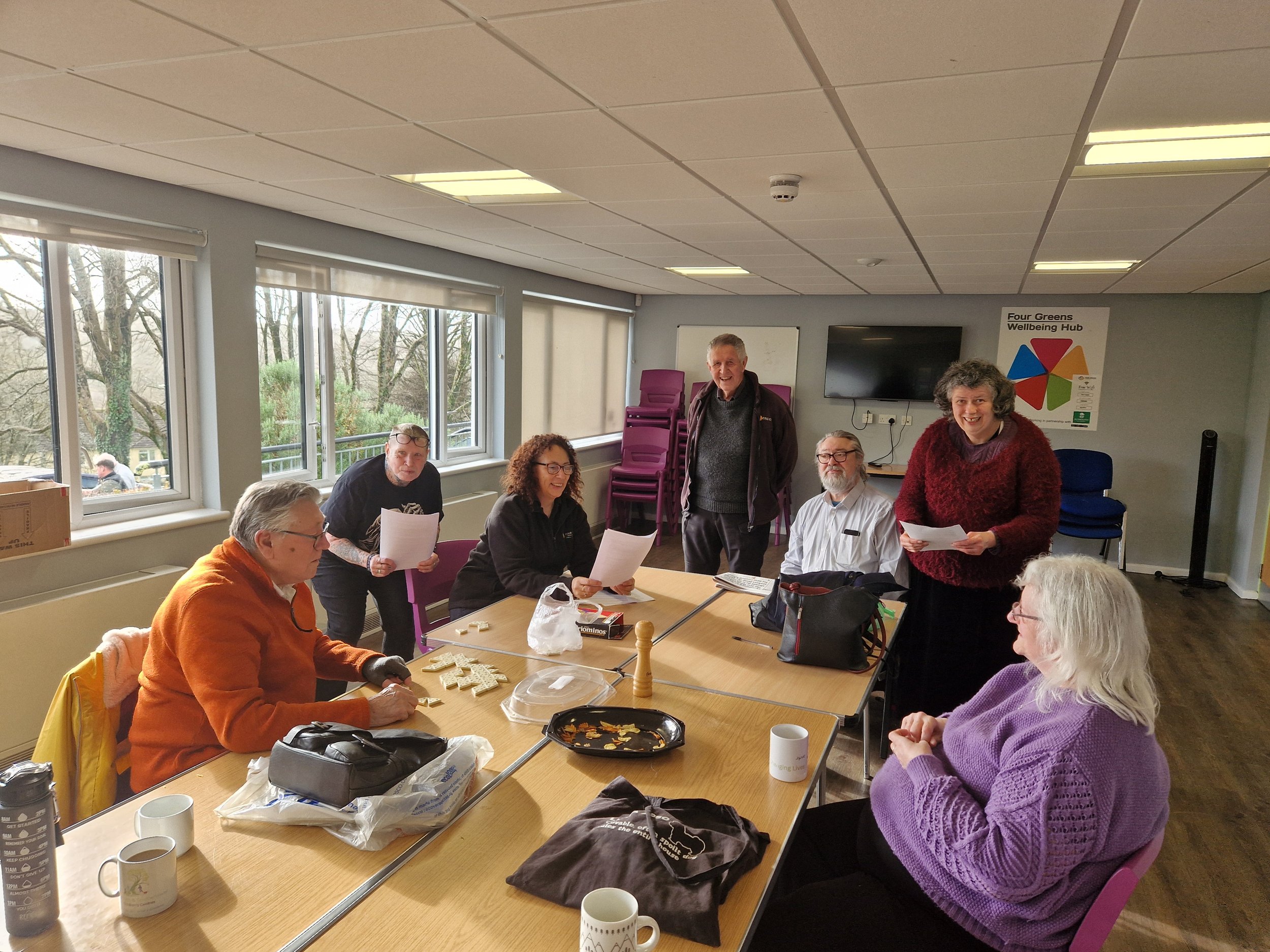
One of Melanie's favourite examples of the power of reading came during National Storytelling Week. A group at Four Greens was invited to take part in a storytelling activity, but not everybody was convinced.
"When one of our groups was asked to take part in National Short Storytelling Week, they were a bit unsure and I thought that some of the members may not engage," Melanie recalls.
She began reading the story aloud. Gradually, the people who had seemed least interested stopped what they were doing and began listening.
"I started reading the story aloud and slowly the people who weren't so keen on the idea stopped what they were doing and listened to the story."
What followed was a lively discussion. For Melanie, the experience demonstrated that reading doesn't always have to be a solitary activity. Sometimes being read to can be just as meaningful, particularly when it creates an opportunity for people to share their thoughts.
A warm space and a good book
Melanie is particularly passionate about the similarities between community wellbeing hubs and public libraries. Both provide something that goes beyond their formal services.
"It is important to stress that it doesn't matter what you read, where you read, or how long you read for," she says.
She also points to the importance of having welcoming places where people feel comfortable spending time.
"What wellbeing hubs have in common with libraries is that they are free, warm, safe and trusted locations where people can get help if they need it and can find company in human form or with a book."
At Four Greens, visitors can use a community bookcase to take or donate books, alongside joining the hub's regular programme of activities. It's a simple way of making reading accessible without requiring anyone to sign up for a formal group or spend money. And perhaps that's the point. Sometimes a book is just one more reason to walk through the door.
Plymouth Family Hubs: where a love of reading begins
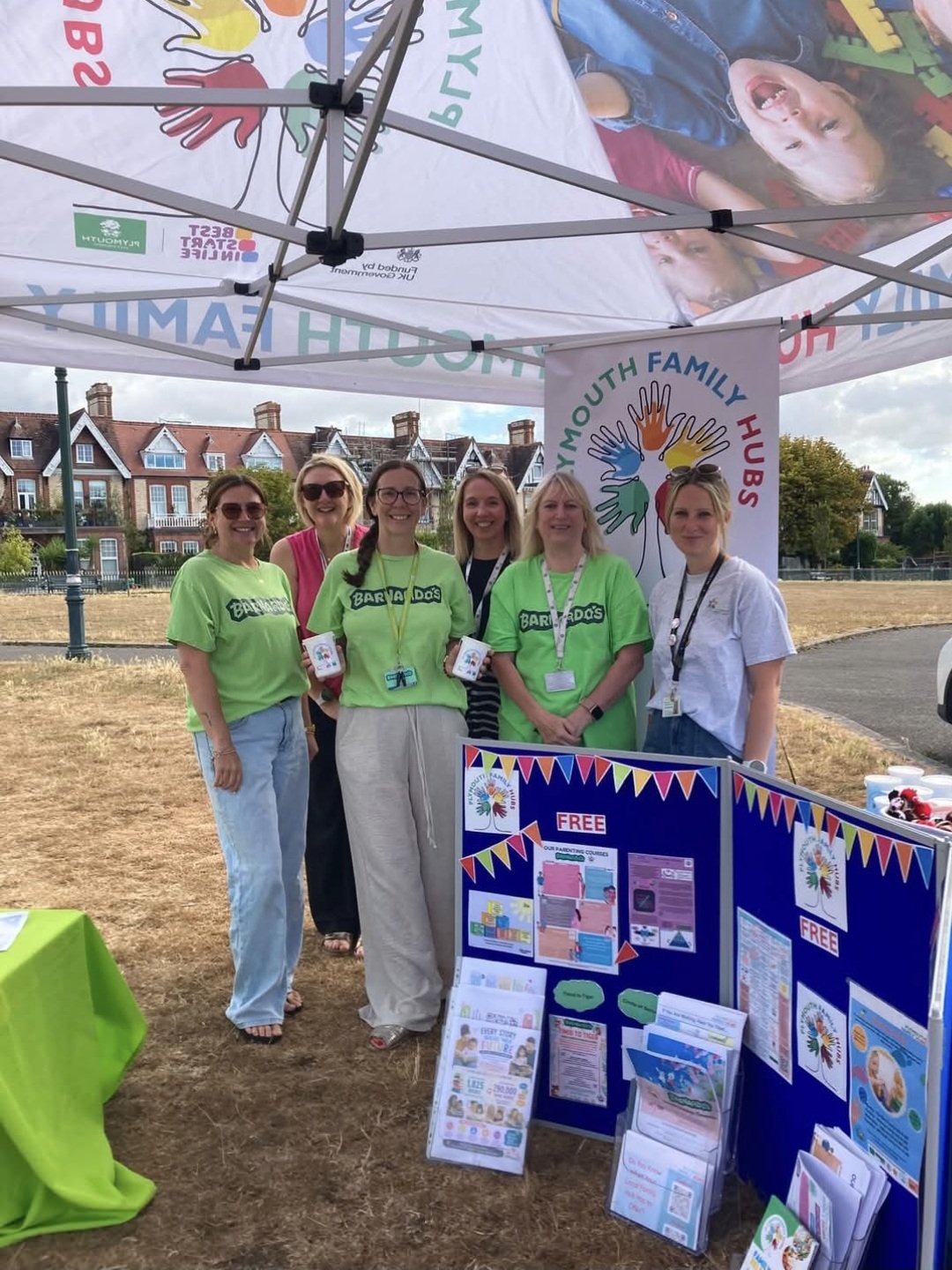
For Kirsty Thompson, Team Manager at Plymouth Family Hubs, encouraging reading is about giving children and families opportunities that can stay with them for life.
Kirsty is one of the Team Managers within Plymouth Family Hubs, a network of 11 hubs and additional satellite locations providing support to families across the city. Barnardo's oversees seven of the hubs, while Action for Children and LARK each oversee two.
Their work extends well beyond early years activities, supporting families from pregnancy through childhood and up to age 19, or 25 for young people with special educational needs and disabilities. Families can access everything from free classes and activities to feeding support, help with children's development, financial and housing advice, and connections to other local services. Reading is woven into that wider approach.
"Being a Community Reading Champion is important to me, and to our service, because we see first-hand the impact that reading, and access to books and literacy opportunities, can have on a person's life," Kirsty explains.
"Reading is far more than a skill; it is a gateway to learning, communication, confidence, wellbeing, and future opportunities."
Take a book, even if you haven't brought one
One of the simplest ways Plymouth Family Hubs encourage reading is through the book swap areas found in every centre. Families are welcome to browse, exchange books or take something home. Crucially, they don't need to have a book to swap. It's an important distinction.
For families managing household costs, buying new books regularly isn't always possible. Making books freely available removes that barrier and gives children more opportunities to discover stories they enjoy. The hubs have also benefited from resources donated by the National Literacy Trust, distributing reading materials to families who might otherwise struggle to access them. But access to books is only part of the picture. Kirsty and her colleagues also want to help parents and carers feel confident reading with their children.
Stories, songs and a little imagination
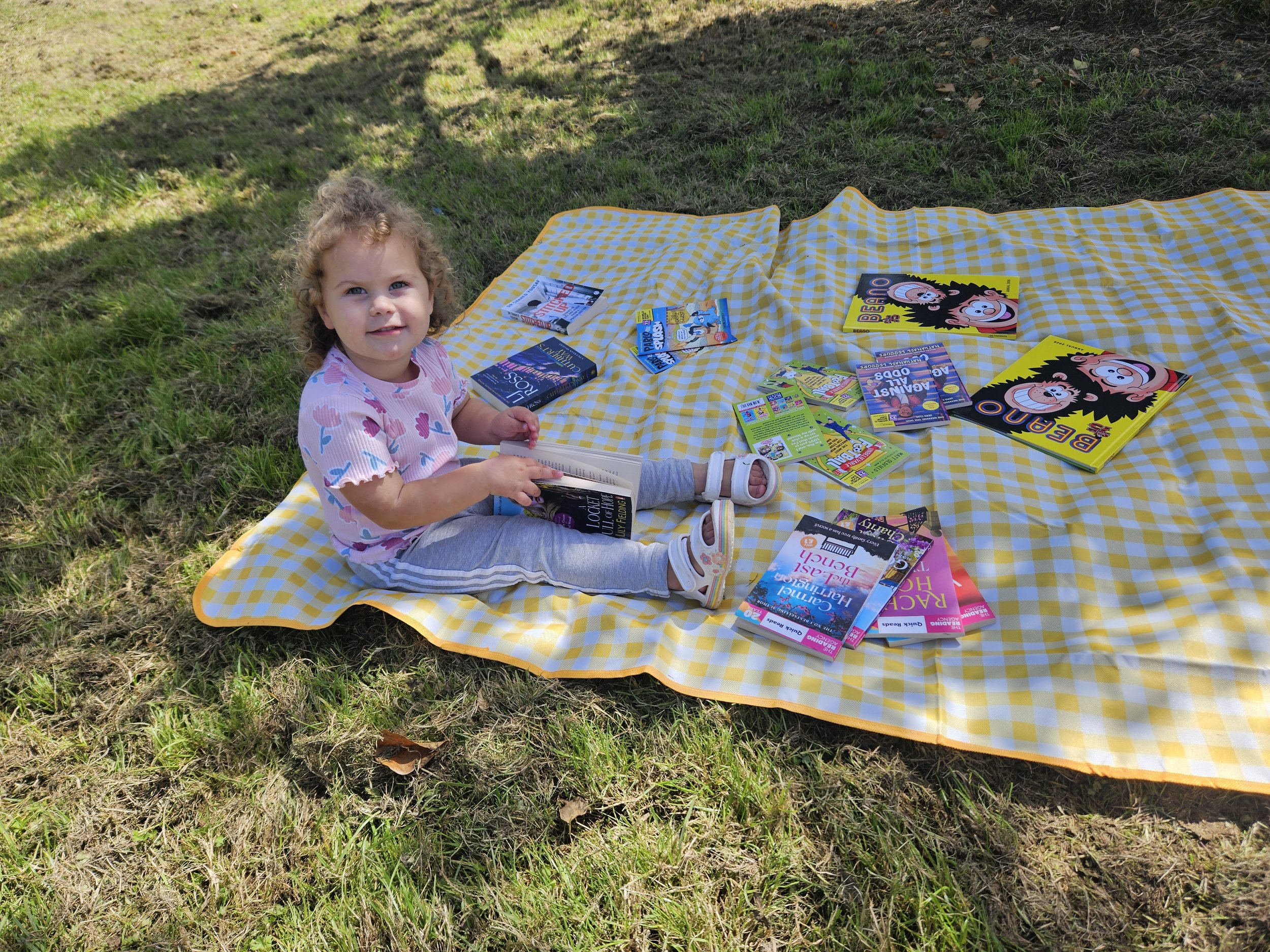
At every parent and toddler group delivered by Plymouth Family Hubs, staff share a story. They demonstrate how books can be explored through songs, props, conversation and interactive play, helping families discover that reading with young children doesn't have to involve sitting perfectly still and listening quietly.
In fact, quite the opposite. The teams have seen children who were initially reluctant to engage with books become enthusiastic participants when stories are brought to life. Parents have subsequently introduced their own reading routines at home, often feeling more confident about supporting their children's development.
"One of the most powerful things we observe is how sharing a book can strengthen the bond between a parent and child," Kirsty says.
"Families often tell us that story time becomes a special part of their daily routine, creating opportunities for conversation, connection and quality time together."
It's a particularly lovely example of how reading can become something families do together, rather than another task to fit into an already busy day.
Free books and familiar characters
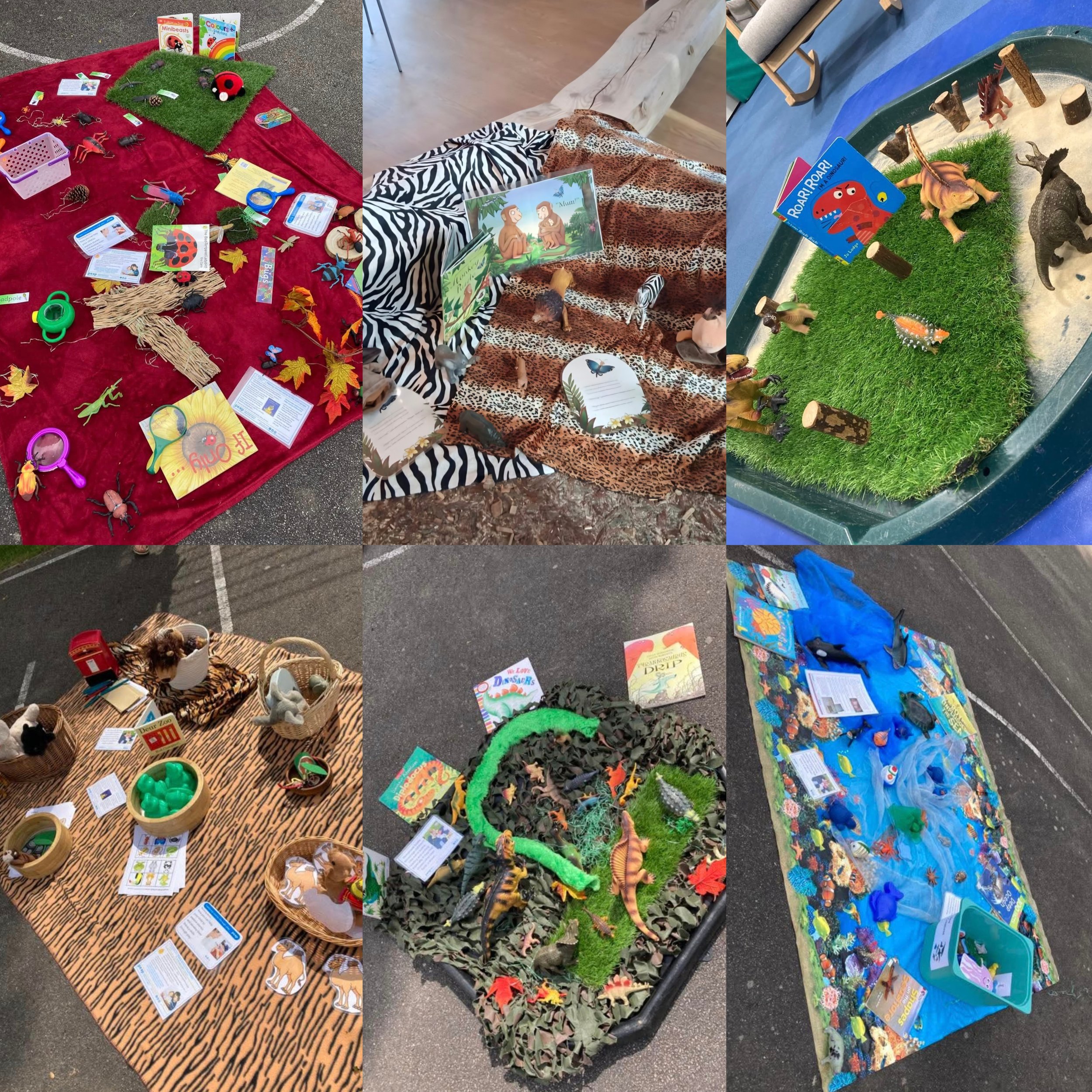
Throughout 2026, Plymouth Family Hubs have been involved in a range of reading activities. For World Book Day, they organised a large free community event at a city-centre play café. Children were invited to dress as their favourite book characters and enjoy activities designed around books, storytelling and learning through play. Thanks to donated books, every child who attended went home with a free book of their own.
The hubs are also supporting the rollout of Dolly Parton's Imagination Library in Plymouth. Through the initiative, eligible children aged two and above in participating areas can receive a free book delivered to their home every month until their fifth birthday.
It's another opportunity to build a collection of books at home, particularly for families who might not otherwise be able to afford them. Kirsty believes these small, repeated experiences are important.
"By promoting reading and increasing access to books, we can help build confidence, support learning, strengthen family relationships and improve long-term outcomes."
Reading doesn't have to look the same for everyone
Kirsty's message to people who don't consider themselves readers is refreshingly inclusive.
"I would say that reading is for everyone, but it doesn't have to look the same for everyone."
She points out that reading might mean comics, magazines, recipe books, graphic novels, sports articles or books about a favourite hobby. It could also involve listening to an audiobook, sharing a picture book with a child or simply reading a few pages at a time.
"The most important thing is finding something you enjoy." And that's something she believes applies just as much to adults as it does to children. "A child who says they don't like reading often just hasn't found the right book yet. The same is true for many adults."
For families wanting to get started, the invitation is straightforward: visit a local Family Hub, explore the book swaps, join a group or ask staff about upcoming activities. You don't need to be an enthusiastic reader already. You can discover that together.
Plymouth Literary Festival: bringing a city's book lovers together
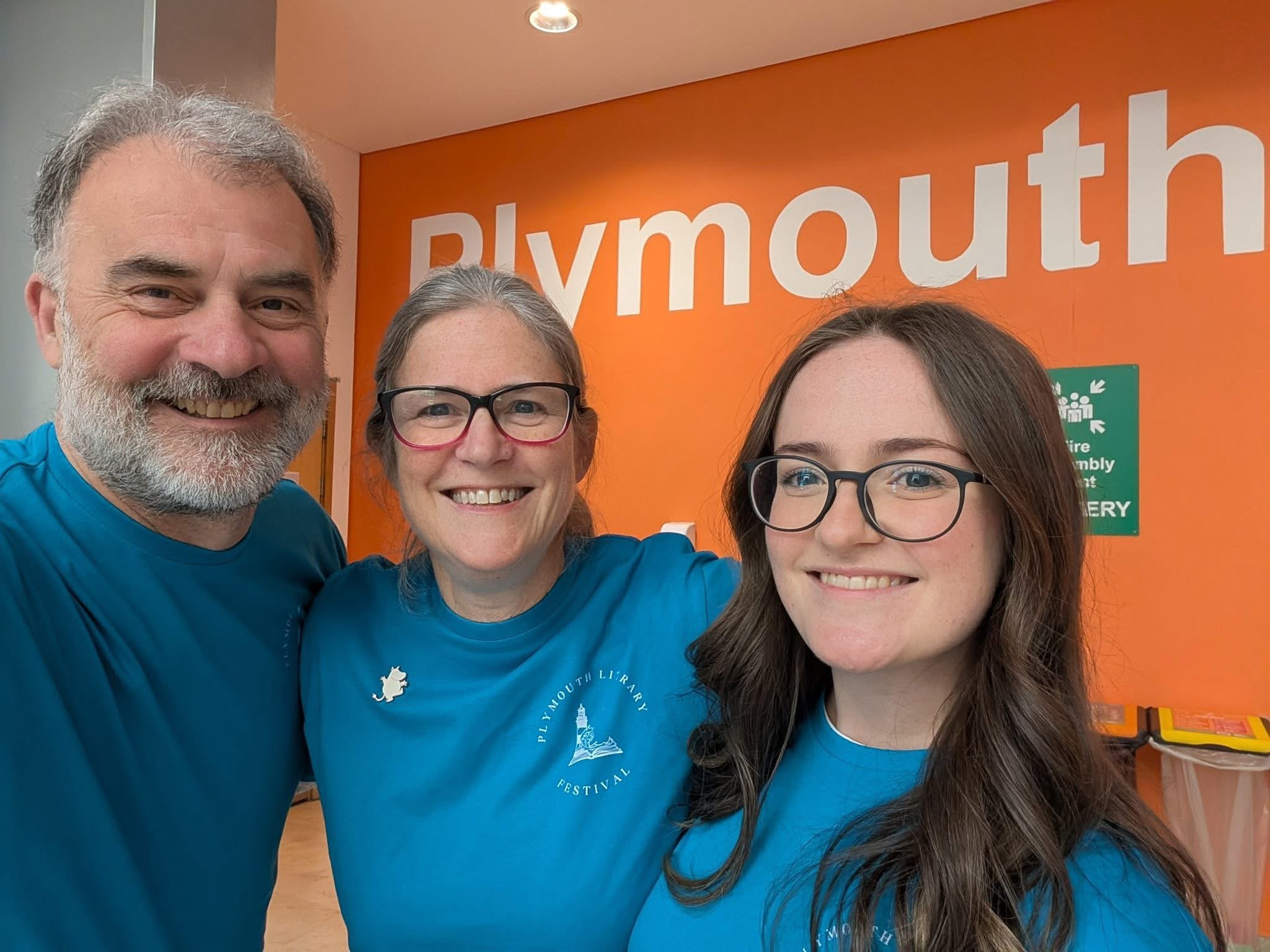
Katie pictured on the right.
When Katie Geraghty decided to bring Plymouth Literary Festival back after an eight-year absence, she wanted to create more than a programme of author talks. She wanted an event that would make people feel welcome, introduce them to new ideas and help them discover that the literary world isn't reserved for a particular kind of reader.
An English Literature graduate and passionate book lover, Katie relaunched the festival in April 2026. More than 560 visitors attended, enjoying a programme of author talks, panel discussions, book signings, family activities and opportunities to meet authors, publishers and local organisations.
For Katie, it was a chance to bring together people who might otherwise never cross paths. "I wanted to create something that celebrates books and the people behind them, while giving people across Plymouth more opportunities to discover reading, meet authors and explore their own creativity." And the festival's return demonstrated just how much interest there is in literary activity across the city.
Finding the right book
Katie has a particular message for anyone who has decided that reading simply isn't for them. "I've always believed that if you don't think you like reading, you probably just haven't found the right book for you yet."
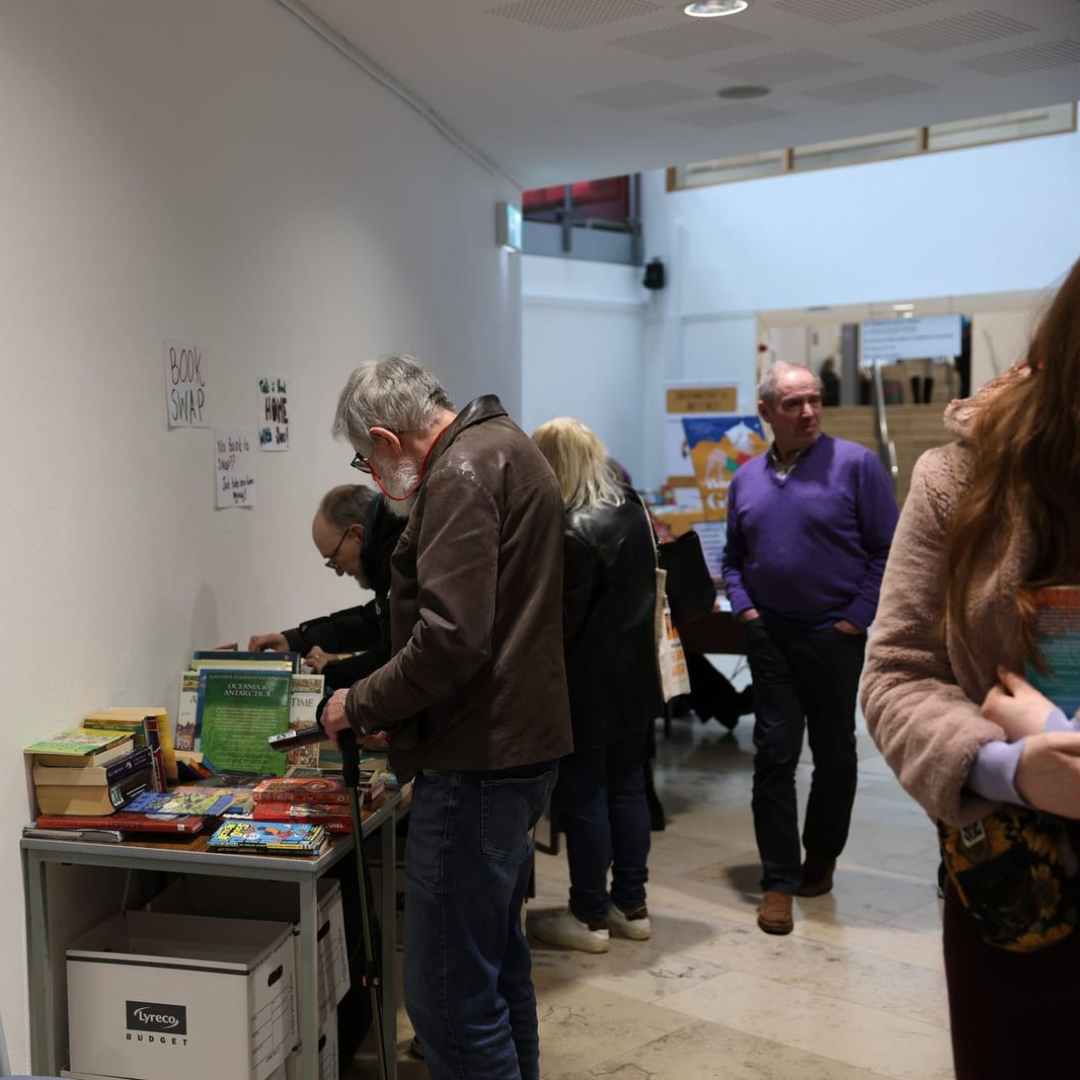
It's a belief that influenced how she approached the festival. Rather than assuming everybody attending would already be an enthusiastic reader, Katie wanted to create opportunities for people to discover something unexpected. That might mean listening to an author talk, learning about the publishing industry, exploring a different genre or simply picking up a book that catches their attention. One of her favourite festival activities was the free book swap.
Visitors could take a book home without spending any money. "I think that's really important because enjoying reading shouldn't depend on what you can afford." It was also an opportunity for people to try something new without worrying about wasting money on a book they might not enjoy. And sometimes that small discovery can be the beginning of a much bigger interest.
More than a festival for established readers
Looking back on the 2026 festival, Katie was particularly pleased by the variety of people who attended and the conversations that took place. "It wasn't just about buying books or listening to authors speak," she explains.
"People were discovering new writers, exploring genres they hadn't tried before and finding out more about how to start writing themselves or get into publishing." For aspiring writers, meeting people already working in the industry can make the idea of writing professionally feel more achievable. For readers, meeting an author or discovering a new genre can open up an entirely different world.
And for people who don't usually attend literary events, simply feeling welcome can make all the difference. "I loved that we could bring established authors, aspiring writers and people who simply enjoy reading into the same space, all with different interests and experiences to share."
Katie believes those connections are one of the festival's greatest strengths. "Books can be a shared interest that brings people together, but they can also open the door to completely new interests, ideas and possibilities."
Looking ahead to 2027
Plymouth Literary Festival returns on 17 and 18 April 2027, and Katie is already working on building on the success of its comeback year. The next festival will feature a new programme of events, with Read for Good joining as the official charity partner.
The charity's work encouraging children to enjoy reading and helping them access books is particularly close to Katie's heart. She's hoping the partnership will create more opportunities for children and families across Plymouth to discover reading for pleasure. While the 2027 programme is already full, Katie is keen to hear from authors, publishers, bookshops and stallholders interested in future festivals.
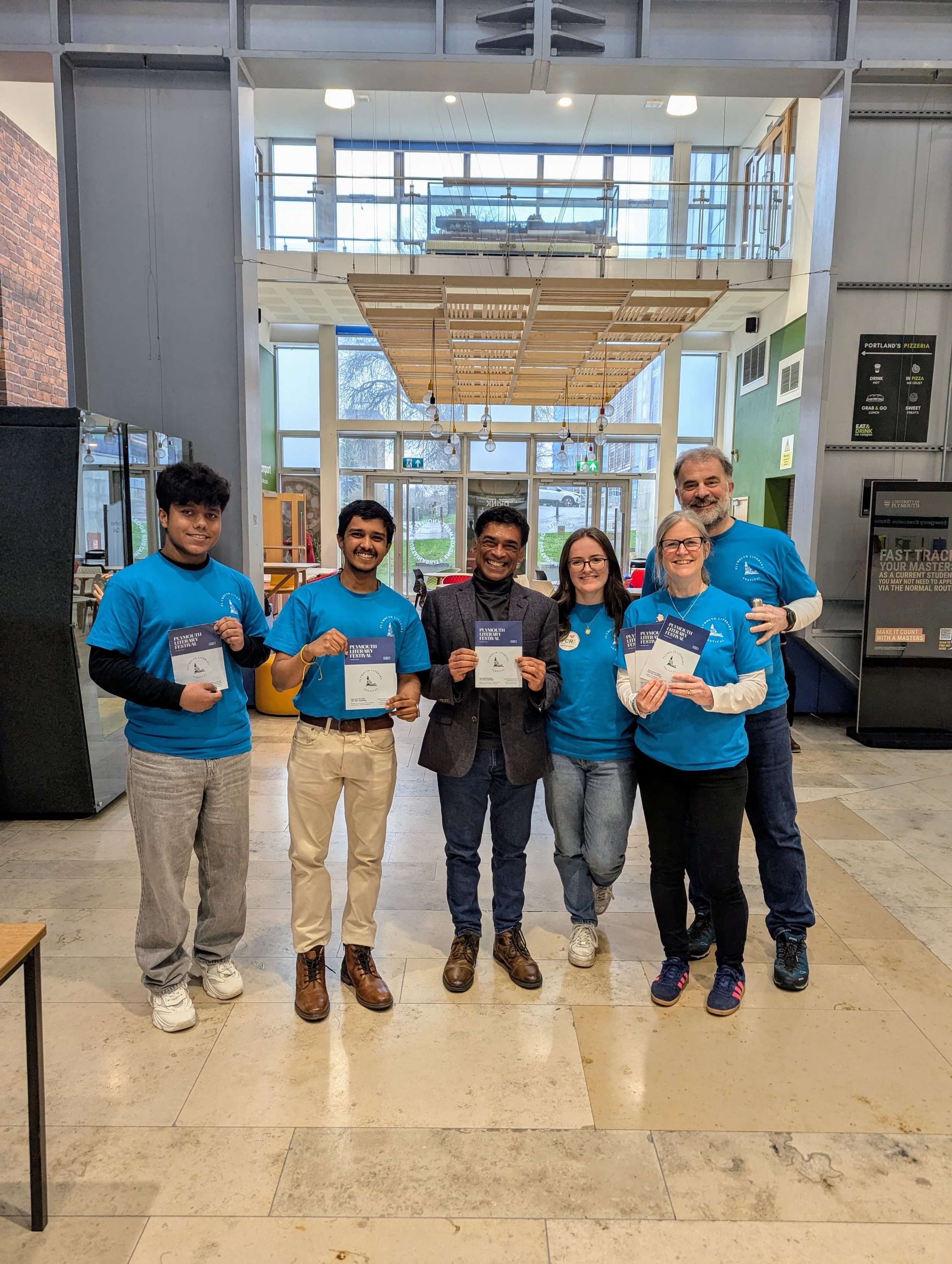
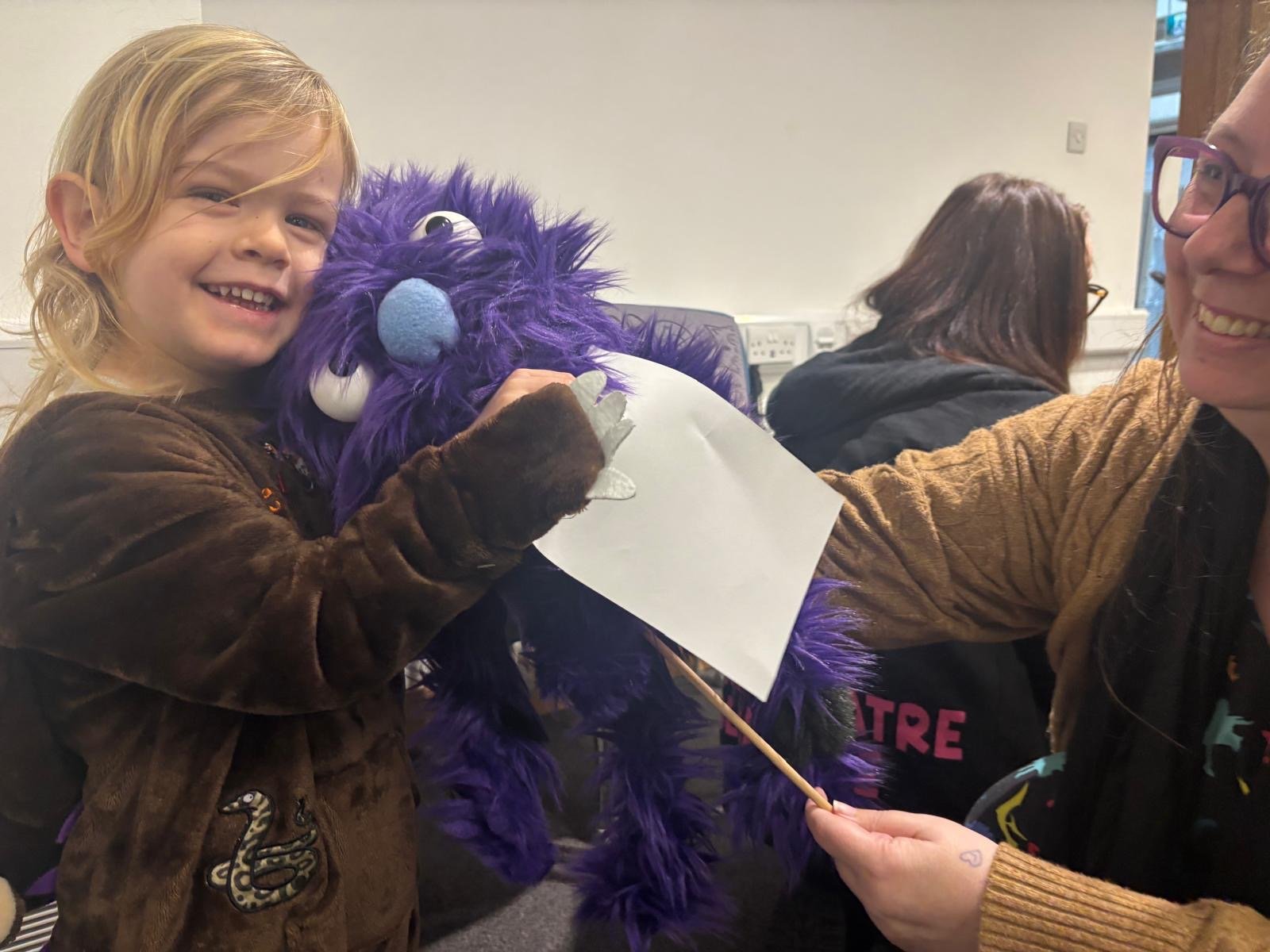
The 2026 Volunteer Team
She's also looking for volunteers and people who can help spread the word. "I'm building this festival largely on my own, so the support of people who believe in what we're doing really does mean a lot."
Whether it's helping at an event, sharing a social media post or introducing the festival to another organisation, Katie believes community support is essential. "The more people who get involved, the more we can offer Plymouth." And her advice for people who are hesitant about reading?
"Reading shouldn't feel like a chore. You don't have to read the classics, finish a certain number of books or enjoy the same genres as everyone else. You just need to find something that captures your interest."
What Plymouth's Reading Champions have in common
Three organisations. Three very different approaches. One shared belief. Reading belongs to everyone.
At Four Greens, that might mean somebody discovering the pleasure of listening to a story during a community activity. At a Family Hub, it might be a parent and toddler sharing a book together for the first time. At Plymouth Literary Festival, it might be someone picking up an unfamiliar novel from a free book swap or meeting an author who inspires them to start writing.
What connects these experiences isn't simply the presence of books. It's the people creating opportunities for others to enjoy them. Melanie's experience shows how reading can offer companionship and connection in community settings. Kirsty's work demonstrates how early experiences with books can help families build relationships and confidence. And Katie's festival reminds us that reading can also be a celebration, bringing together people of different ages, backgrounds and interests.
Together, their work reflects the message at the heart of the National Year of Reading 2026: whatever you're interested in, there's a way to connect it to reading. And while the national campaign has provided a focus for Plymouth's reading activities, these organisations are helping make sure the opportunities continue beyond a single month or year.
How to get involved
Four Greens Community Trust
Based in Whitleigh, Four Greens provides community and wellbeing activities for people across Whitleigh, Manadon, Ernesettle, Honicknowle and West Park.
Visitors can take or donate books through its community bookcase and find out about regular groups and events.
Website: https://www.fourgreenscommunitytrust.co.uk/
Facebook: Four Greens Community Trust
Instagram: Four Greens Community Trust
Plymouth Family Hubs
With 11 hubs across Plymouth and additional satellite locations, Family Hubs offer free support, activities and opportunities for families.
Explore the book swap areas, join parent and toddler sessions featuring storytelling, or ask about Dolly Parton's Imagination Library.
Website: https://www.plymouth.gov.uk/family-hubs
Facebook: https://www.facebook.com/plymfamilyhubs/
Barnardo's Plymouth: https://www.facebook.com/barnardosplymouth/
Instagram: https://www.instagram.com/barnardosplymouth/
Imagination Library eligibility: https://imaginationlibrary.com/check-availability/
Plymouth Literary Festival
The festival returns on 17 and 18 April 2027, with author events, literary activities and opportunities to connect with the city's reading and writing community.
Follow the festival for programme announcements, volunteering opportunities and details of how to support future events.
Website: https://plymouthlitfest.co.uk/
Instagram: @plymouthlitfest
Facebook: https://www.facebook.com/profile.php?id=61576760343325
Discover more with Plymouth Reads
Throughout 2026, What's On Plymouth Culture has been celebrating the different ways people across the city read, write and connect through stories.
If you'd like to discover more reading groups, independent bookshops, libraries, writing opportunities and places to enjoy books, explore our comprehensive Plymouth Reads guide:
Find out more about the National Year of Reading:
