
From the soft glow of Café Momus to the bold colours of her Australian childhood, curator and community connector Eloise Dunwell thinks about art as something lived, shared and fearlessly made public. In this in-depth conversation with Community Reporter Linda Bell, Eloise reflects on Steiner schooling, social sculpture in Bristol, her return to Plymouth, and the power of matching artists with underused, historic spaces. From her work at Alma Yard to co-founding SOOP – a grassroots collective that treats creativity as a shared social act – Eloise offers a hopeful, practical vision for how Plymouth can nurture artists, reimagine buildings and keep community at the heart of culture.
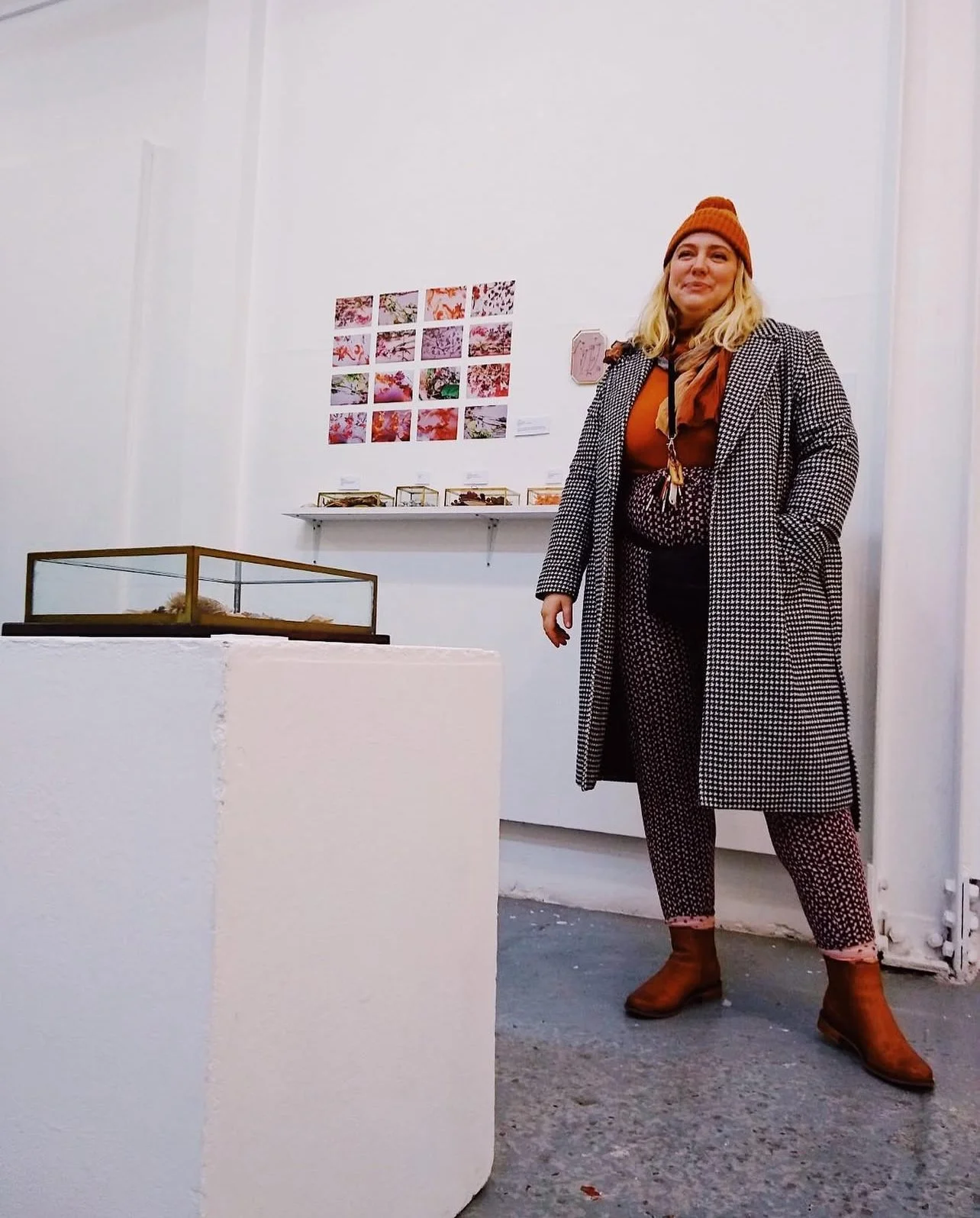
Curator Eloise Dunwell. Photo - Helene @Helene.bristol
From the rejuvenation of Union Street to the luminous shades and bold palette of Australia, a meet-up with curator Eloise Dunwell entails a conversation with almost no bounds! Collaboration, creative control and artificial intelligence; our tete-a-tete at Café Momus in the rosy early-evening sunlight branches into many tributaries.
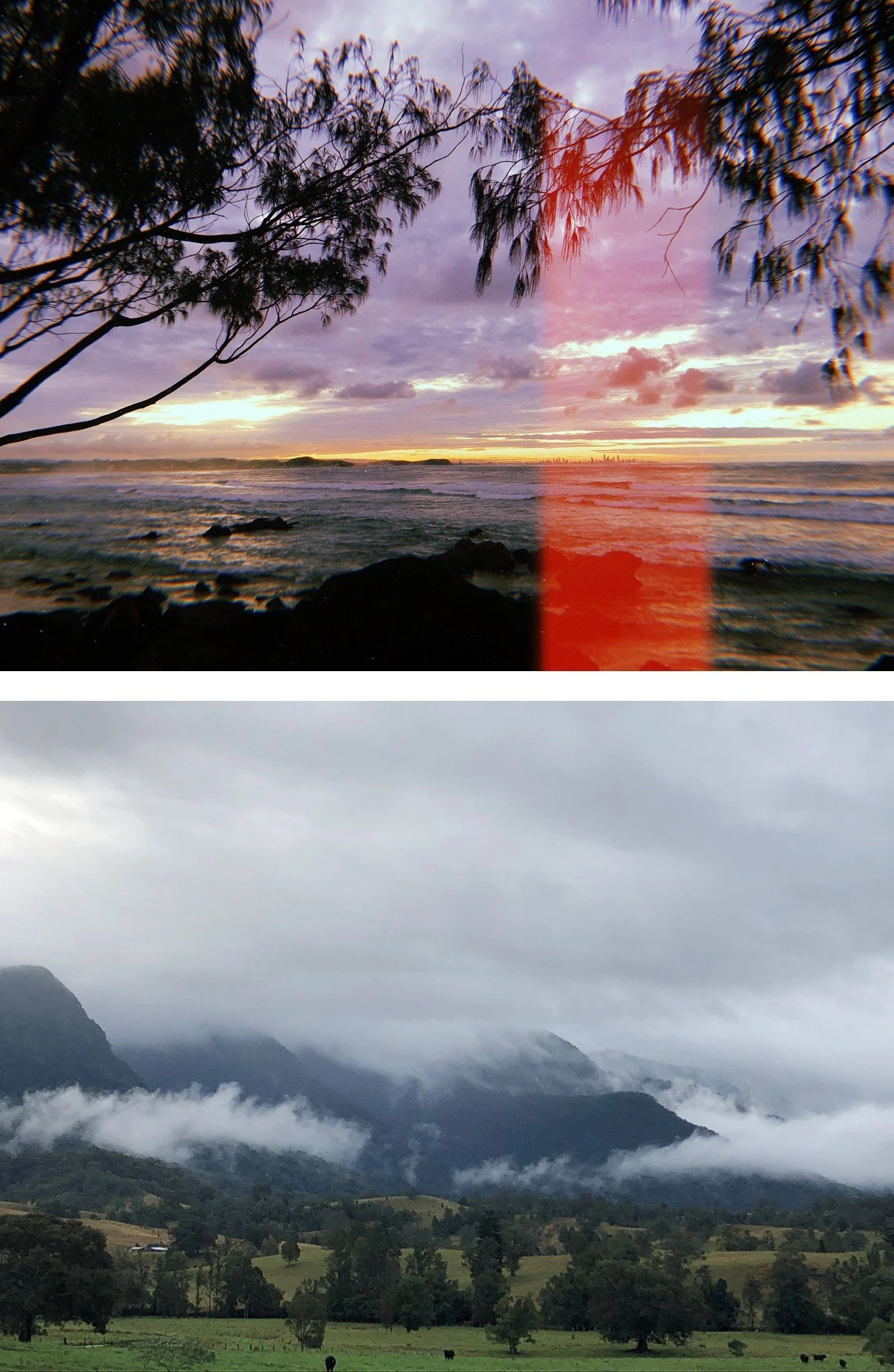
Northern New South Wales, Australia
Eloise grew up in Tyalgum, a small farming village close to Byron Bay in eastern Australia before moving to the UK in her teens. She completed her Art and Design Foundation Degree in Plymouth prior moving to Bristol for her undergraduate degree in Fine Art.
Here, Eloise discovered an inclination to support and mentor her fellow peers. She went on to join the new MA Curating course at the University of the West of England and completed an internship with Bristol’s Situations before returning to Plymouth. Eloise’s recent role as Community Manager at Eat Work Art’s Alma Yard has enabled her to connect with many of Plymouth’s familiar cultural faces.
It is enlightening to hear the curator’s thoughts on the iconic beauty of historic buildings alongside her ideas to support Plymouth-based artists. Eloise’s involvement with SOOP - Plymouth’s coolest collective – and her vision for shaping the cultural offering of Britain’s Ocean City, whatever the Season, is inspirational to say the least!
We even touched on the curator’s schooling at a Steiner School and her involvement in several Bristol-based Social Sculpture projects - an apt connection to Rudolf Steiner’s influence on Joseph Beuy’s theories.
We sip our coffee as others play chess and quench their thirst with local Black Friars gin. Meeting at Café Momus enables us to take note of the b410 art exhibit in the Manor Street Gallery; the artworks gather around a baby grand piano like a turned-out choir in visual splendour.
Despite its namesake, no proof of societal criticism can be found in Café Momus. Son of Night and Darkness, this Greek god of Plymouth is instead synonymous with live music and social gatherings. Patron of revelry, writers and poets, this Momus embodies the mischievous spirit of an alternative exhibition space. A safe, playful and supportive setting, rather than a judge of handiwork from Aesop’s Tales!
Beneath the watchful eyes – so many almond-shaped eyes! – of Modigliani-inspired portraits - nudes with flesh inviting, mysterious figures of dubious fancy all lovingly framed with a whimsical, Parisian appeal - we settle amongst the Moroccan lamps and cushions to delve into Eloise’s insightful musings.
LB : Eloise, could you tell us about your educational journey from your experience attending a Steiner school to the decision to study Fine Art and then Curation?
ED : I was so lucky to be able to study at Steiner because it really centres the child and it has so much more to do with using your body as well as your mind. There's this great balance of creativity and I learnt so much from my schoolteachers in terms of how to create form in drawings. It gave me a lot of confidence going forward and exploring the art world. It's a sort of a safe place, a place that I felt really comfortable in, in terms of producing work.
I studied at Bristol and it was an interesting course because it was quite ‘hands off’ in a lot of ways. We were given prompts, but we weren't mollycoddled through anything, which again taught me a lot of independence. But I also saw this streak of talking to my peers in a way that perhaps the tutors would have, such as: ‘Oh, have you tried it like this?’ Or: ‘Your work would look great projected’. And one tutor sort of joked with me: ‘Oh, do you want my job?!’ But it was this element I found where I really enjoyed talking to people about their work. And I thought, how can I go further with that?
Then my tutor, Matthew Partington, developed the Curatorial Masters. He was a fantastic tutor. So that's when I thought, yeah, why not start to learn about institutions and places where people show work to reach back, to say this is a safe space for people who might not have thought that a gallery or museum is a place that they're comfortable in. Showing them that it's possible to show their work in there.
LB : That's great. So you've previously worked with a variety of artists in Bristol and the Southwest. What was it that drew you back here to Plymouth?
ED : Another great question. Plymouth, even when I studied in 2010, had this simmering feeling of opportunity. It's always been a grassroots city. Even after the Blitz there wasn't a lot of governmental help, which I think created a lot of community and interdependence between the creative arts. When the art school moved down here properly, I could see that things were coming to fruition 15 or so years later, empty space being teed up with creative people, creative groups and programs, community programs. So I was dying to come back and see what was happening. I think in a lot of ways Plymouth is a great example of how to strengthen community and how to use spaces for the good of community as well.
LB : Could you tell us some more about the projects you have previously curated or been involved in across Plymouth and the Southwest? How did they evolve from your input?
ED : It's tricky to define that one to the Southwest. I feel like a lot of the most interesting projects I assisted on were in Bristol, which I guess is just tucked into the Southwest, I think some people would say. There was a company called Situations who did a lot of site-specific work. They worked for someone called Katie Paterson, for example, who planted a forest in Oslo and created a board of trustees to take the project into 2114, a 100 years from the point it was made.
And she's commissioning an author each year to write a short story to go in this book, and the forest will then be felled renewably to print this book onto. The first author for that was Margaret Atwood, who we all know and love very well. So that was when Claire Doherty, who ran Situations, came to lecture at the University. I fell in love with everything that they did and really wanted to be a part of that.
We produced a lot of artwork in that way. I started as an intern but came up to Curator In Training through my degree. There was Michael Salesdorfer who buried 10,000 lbs worth of ingots on the on the beach and he called it a Social Sculpture where people would come and dig to finders-keepers and the tide would then come and wash it all clean for the next day.
What I saw in Folkestone were all these people coming out, whether it was families, whether it was 80-year-olds, you know, buddies that have seen their friends for ages to come and watch what was happening. For me, those experiences really redefined what art can be. It doesn't have to be a painting on the wall - it can be an organic happening that people stumble upon. So those were some of the more exciting things that I was involved with which I loved doing.
LB : What excites you to curate or mentor other artists and to work as a facilitator in the industry?
ED : I love hearing about people's passions, and I think creative brains are so fascinating. I think people can see something or produce their work and be so stuck in that mode that sometimes it's good to have that helping hand to say:
‘Where do you want to go?’
‘Who do you want to show this to?’
‘What sort of space(s) do you envision your work being in?’
I love hearing people's passions and where they want to head and just mapping out the next few steps, whether it's an exhibition in three months’ time, whether it's if they want to sell in a big gallery! What's the map to sort of get them there.
That brings so much joy because you also get to know a variety of people and what drives them as a creative force.
LB : How do you see curating as an element of an artist's practice? Is it something that is cross-disciplinary or do you feel there is more benefit to be found through collaboration between artists and curators?
ED : Again, it so depends on each different person's practice and what they want to achieve. If the artist is acting as their own curator, they might want full control over the vision and they might have already built into their artwork that end result. How people are going to see it, whether it's people greeting them on arrival to an exhibition or an opening. Whether it's creating a scent for the gallery or music. It's great to have someone help you with (these elements) but you know it is ultimately - if the artist is acting as curator - up to them.
I feel like when there's a middle ground and you are collaborating - with any collaboration there's an element of relinquishing control and being pleased by the surprises that you find. I like to gently coax and hear what they want and adjust for that.
There's always a play, isn't there? You're co-creating something in that moment. So it's good to be clear on the goal. I think that's important. And if there's a theme, that's often something you co-create - how you want it to come across to your audience. I feel the curating element is something most artists aren't taught or isn't built into their practice.
So I often say, producing - when it comes to an exhibition - producing the work is almost 10% of the work. You almost want to be done. And then if it's an exhibition, then you're thinking about all the interpretation.
LB : Presentation and the audiences’ experience.
ED : Yeah, labelling all your paintings, things like that. Whether you want a little QR code. How do you make that unique to your work?
It's great to think about that. And editing is the other, more well-known part of curating. If you've got a big body of work, are you going to have a suite of paintings that are from a certain era? And how do you tell that story as you're going around the room?
LB : Could you tell us a little bit more about your role over at Alma Yard and what it is like to work in such a historic, vibrant and creative setting?


Through working at Alma Yard I’ve learnt that humans are born to be in beautiful places. And when you're surrounded by that history, as you mentioned, when you're seeing these old oak beams, even if you're just gazing out, daydreaming when you should be typing, you're struck by our history as humankind, especially in Britain. Not that that's unique to the UK, but in Europe, say, because my roots are from Australia. . . The new part of Australia is only as old as the blink of an eye, whereas here you've got 200-year-old pubs on each corner!
So it's that mix of intentional design. Intended to inspire. And then in terms of the people that are coming through - it might sound, not crass, but it might sound straightforward - I've just really learnt that branding is so important. Who you are as a business. It's a bit like curating. You pick your voice, you pick your colours, you pick how you want to get across and. . . . With any of the residents that have come in, I can really tell you who they are in an instant, and I think that's what works for them in terms of clients. Through Eat Work Art and the people I've seen come through the door, I've really seen that as an important element of running a successful creative business.
LB : So it's also about how you present yourself to the world as a creative?
ED : Yeah, absolutely.
LB : Eloise, you mentioned your upbringing in Australia and I wondered how you think that maybe shaped your interest in art?
ED : I always bring it down to the colours. Everything in Australia is just, well, saturated and bleached. So you've got this really deep blue sky, you've got this red earth, but you've got these bleached shells at the sea. My work there, through the Steiner influence, was very colourful. Very saturated reds and blues and going through that rainbow hue - full spectrum. And when I came to the UK and started working, it was Autumn and things were slowing down . . . I often work with found objects, so acorns and dried up plants preserved by the cold air. The colours in the UK can feel muted, but the longer you're here, the more vibrant they feel, like the gorse on the moors and when the trees are bare, but they've got red stalks.
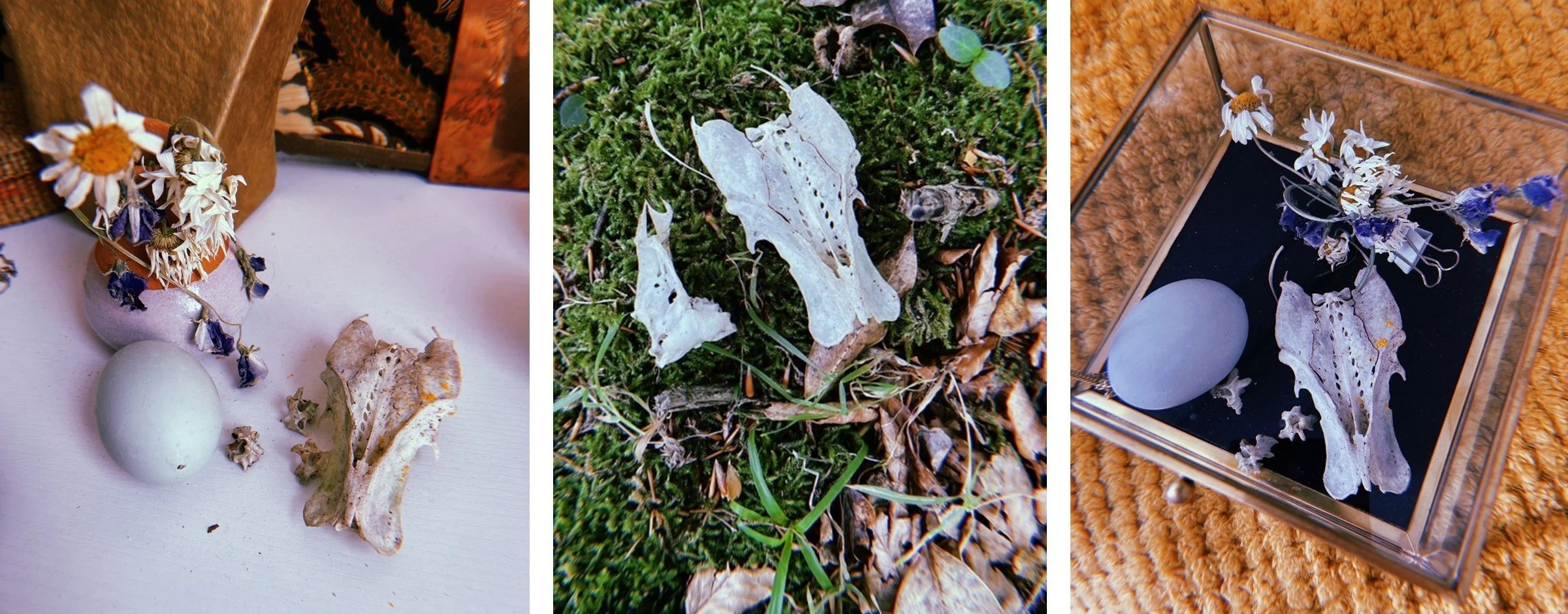
So I definitely felt a huge shift in colour palette, which was really exciting for me and also finding that World Nature - because if you're on a walk and finding things - always gives you gifts. I found a duck skeleton once, I saw it and was like, ‘What is that?!’
LB : Wow
ED : It looks like a dinosaur because they've got the bill!
LB: Of Course!
But then they've got a tail. So it looks like this alien creature and I just thought, ‘Wow!’ I did pick it up and it was clean and I tend to make these arrangements for painting. It happened to be Easter, so I had the duck skull, which isn't normally how you'd think of a duck! But then I had an egg and just a sprig of lilacs. So that to me is – was -the biggest difference. The environment, the natural flora and fauna and environmental changes.
LB : Oh, that's fascinating. Well, thanks for sharing those memories and those thoughts with us. It's really intriguing.
In recent times, artists have become both concerned and excited about the use of AI (artificial intelligence) and the influence of digital media in creative fields. What keeps you curious about the role of being a curator in the 21st century?
ED : Art is always going to be what you make it. I mean, wasn't there a gentleman who printed out a big Instagram photo and it had the ‘likes’ and he put that on the gallery wall? I think people are always going to respond to the technology. I think some of the issues that people have with AI is unaccredited work. So people who would have spent their years and their spirit that they put into their work, all of their experience is going to shape that voice. And for someone to come and copy that might feel like a theft. But I think copies have been happening.
Think of Dolce and Gabbana handbags. Something good will always be copied whether it's a physical thing or not. I feel that people who pour their livelihood into art should be credited where possible. And going deeper into it, there should be some things put in place to protect that.
On the other hand, if you're using it to further your practice or get things done, of course that's going to help as often artists work on their own. So if something can automate something for you and that's part of your work, then I have nothing against that whatsoever.
But when you asked me that question before, it really made me think about the process of making as a form of being in ‘flow’. That connection, like writing a poem. That's the only difference I can see where - not that it's a detriment to use AI - but to remember the importance of the physical making as a form of therapy, as a form of getting all those big feelings and the unspeakable. . . . We think language is the be-all-and-end-all, but there's so many emotions we don't have names for. Getting all of that out is so important in terms of making.
So yes, as long as we don't automate that, that’s a good step in the right direction.
It's the same with Shein and people who make fashion. They rip it off, the whole throwaway culture. People make similar things with cheap fabric. But I'm really leaning into finding things that are tactile and handmade and wear well. And I think that's the antidote to this huge mass consumer (problem) - clothes in landfill, all that. It's like if you can see the potter's thumb prints on your mug in the morning. That's a joy.
LB : As you suggest there's the whole copyright issue. And of course, the handmade object, whether it's a surfboard, a guitar or a bicycle, there’s such a human feel to it.
And now a different sort of question. How would you describe your ‘curative style’? What motivates you to support a particular artist? Or perhaps to facilitate an exhibition of their work?
ED : I think I’ve realised it's their excitedness about their own practice. It's their excitedness to be seen. To me, it doesn't matter the skill or whether you're male, female, non-binary, whether you're young or old. It's the passion behind it because there wouldn't be a point. Someone wouldn't come to you saying: ‘Can I do a show?’ unless they were ready and excited to do that. I don't in that way have a curatorial process and then the only other aspect would be my capacity at the time, in which case I always say: ‘Let's sit down and have an hour's chat’ and if that helps, great. I feel that even by being a sounding board for an hour, they've then got 10 more ideas to go and pursue. I really think a huge part of curating is just listening. Listening to people speak about what they want to do and go: ‘Oh. Have you, you know, go ring those guys up? And see if you can just do it, you can totally do it!’
So in that way it's more their passion and excitedness. That's so much more fun to work with because it will propel itself forwards in its own way.
LB : So listening is really, almost at the crux of what you do?
ED : Absolutely.
LB : Eloise, you've been very involved in setting up your own mentoring schemes and supporting artists to exhibit their work. From these experiences, do you have any advice for artists in Plymouth so that they can gain more exposure or interest in their work?
ED: I think be fearless with your goals. I feel that everyone's innermost goal almost feels too good to be true - or too selfish. You think: ‘Oh, how could I ask to show my work?’ But be brave enough to share those goals and reach for them and just do it. Just start picking away at the steps between you and doing that thing.
If you can't show in a big expensive gallery, what's a smaller one that you can start in? If you can't afford a brand to come and be a bar for you, go down to Lidl and get some champagne and put some cups on the table. I think it's great to have those huge aspirations, those high-flying ones, but you can start small and build from there. And if there's something out there in the world that you want to see happen, create it. Absolutely create it.
There are cafes, there's lots of interesting spaces that artists can inhabit, and it's worth exploring what that is for you, where you want your work to be seen and how it could be online. You could find an abandoned car park and put your paintings up, photograph it and then that's your exhibition for the month. So yeah, just be creative.
LB : Oh, that's wonderful, great advice and quite a lot of fun as well there it sounds like! Thank you for that, Eloise. I guess it's down to artists to always be proactive.
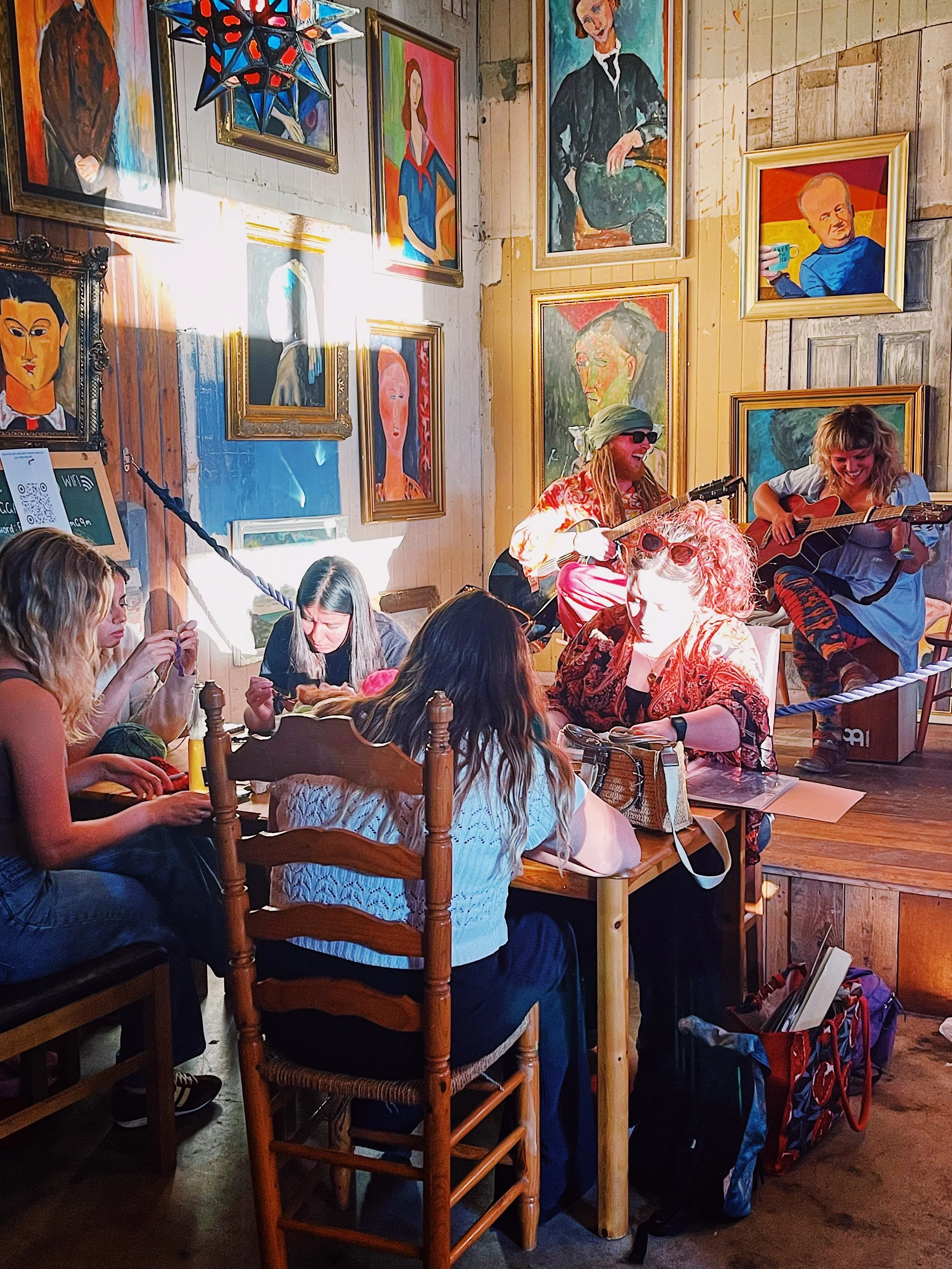
SOOP Collective Crochet Event
LB : I'm following SOOP on Instagram and it looks like a wonderful mixture of craft, art and socialising! What gave you and your co-founders the inspiration to establish this collective?
ED : SOOP has been such a joy in both my artistic practice and curatorial practice. I think it's truly where the two are meeting for me. When you talk about Social Sculpture, for me art can be bringing people together in a space and holding space for them. As I mentioned, if you want to see something in the world, create it. It's as simple as my friends and I saying: ‘Wouldn't it be great if there are craft nights? Wouldn't it be great if we could come and get together?’
There's nowhere anymore that's public and free. Isn't it great to play when you want to express a new creative avenue? So we just got together and we advertised. I can't remember how we got so many people to come to our first evening. But we had up to 20 people in this beautiful space we're in, Café Momus, who've been so kind to accommodate us for free.
I'm learning within this structure when you take economy out of it and finance out of it, a lot of magic happens. So the first night we were here, there'd been an exhibition next door. They had some pizza left over, they said: ‘Guys, help yourself!’ There was a gentleman. He had a studio upstairs that worked with rare precious metals and he literally came down with little flakes of silver in bottles and was handing out precious stones and vials of silver.
LB: (laughing)
And I thought, how bizarre that, you know, the last thing on our minds with SOOP is to make money. It's about connection. It's about community. It's about safe spaces. It's about people also in their thirties or late twenties to wanting to make friends without it being down at the bar and loud music or whatever. So it's about all of those wholesome things and all this richness came into it, which was fantastic.
LB : Well, that sounds absolutely brilliant. Thanks for telling us a bit more about SOOP. And if you're listening or reading this article, this is your sign you've been waiting for! So hopefully we'll see even bigger numbers in the next meet up!
Thanks, Eloise. That's so inspirational. Could you tell us a little bit more about your long-term vision for SOOP and its role in Plymouth's creative ecosystem?
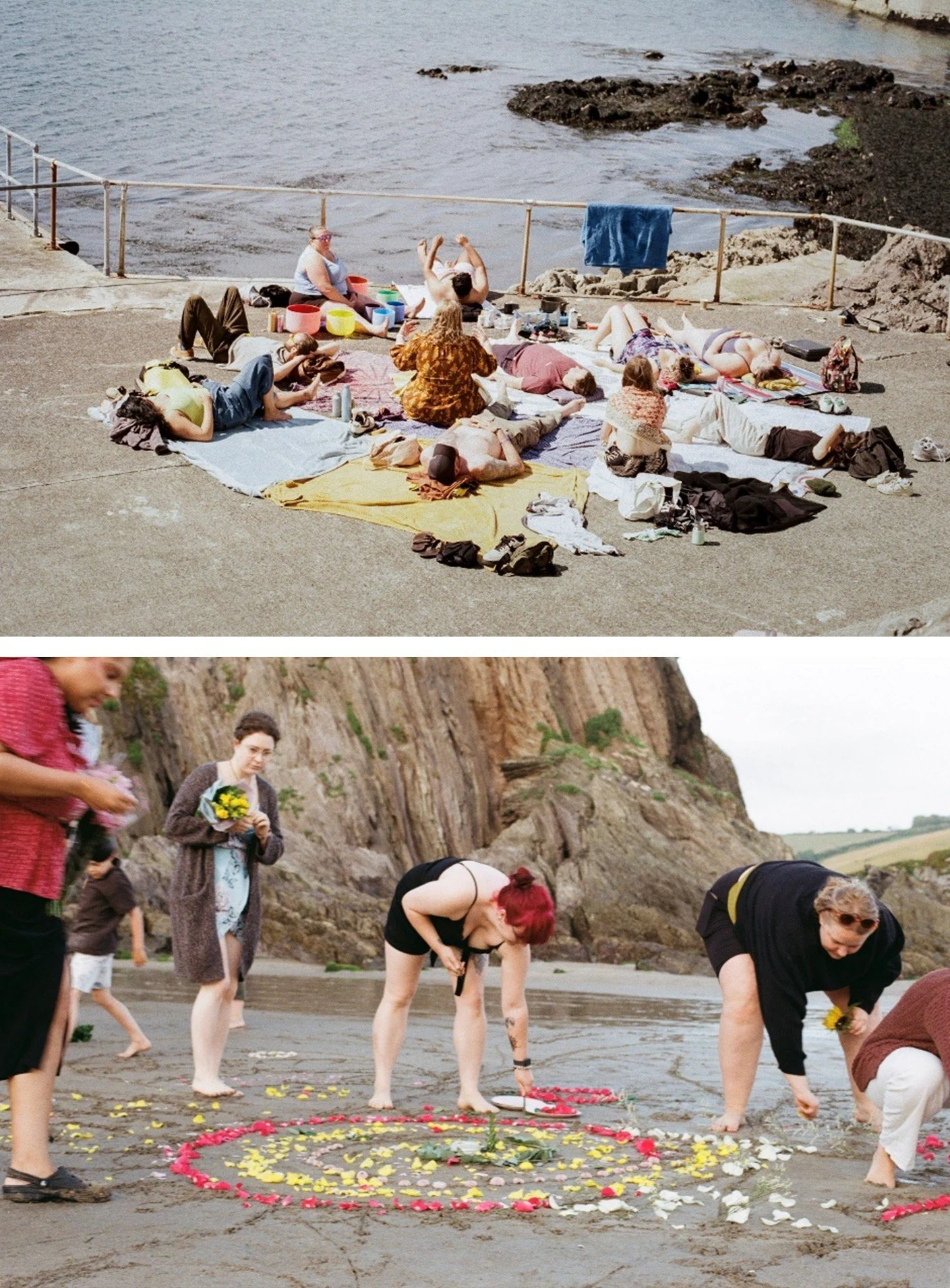
SOOP Events. Photos - Greg Johnson @gregj
ED : What I love about SOOP is how adaptive we've been and we at no point have said: ‘Oh, we've done one successful crochet skill swap. Let's do that again and again’.
We've really allowed it to be organic and grow like a garden, and that's one way we wanted to describe it. We wanted to give ourselves the freedom of being ‘In Season’, whether we've got a Season of richness or a Season of harvest or a Season of rest. For us as women and human beings as well who are running it, and any human being that also naturally goes through these Seasons, we didn't want it to be rigid and too repeated and hem ourselves in.
So we've done a variety of different things like singing bowls by the sea and a Solstice swim and crochet and collage. And there's been offshoots from it. I think there's now a photography walk that have built their own little group from it and some collage girls as well and people who meet at the swims and that was all part of our plan; this ability for people to take ownership and run with it, but also feel inspired to be brave enough to say: ‘Hey, what do I like to do? Swim? Or yoga on a Sunday?’ Let's just do that!
And we do that a little bit in our platforming. People will say: ‘Can I post in the WhatsApp group that I'm doing a free yoga thing?’ and I'm like: ‘Yes, please go for it!’ We love to share. It's like this really sharing economy.
So moving forward, we'd like to do slightly bigger events. We've talked about SOOPFEST in the Autumn, which would be up at Saviour's Hall, which is a beautiful space that you can hire. We haven't told them yet -
LB : (Laughing)
ED : So please let us know! And having one or two day events where there's workshops, where there's market stalls of people bringing their wares, people reading tarot in the corner. Then we're going to clear the decks and have a lovely big dinner and then clear the decks and have music! So yeah, possibly bigger events and I'll be honest, we're sort of - not that we’ve outgrown this space yet - but we're going to have to start getting cleverer about how to accommodate everyone who wants to join in because there was clearly a need for it.
LB : Oh, that's great because we're here now in Café Momus, surrounded by all these beautiful paintings and a lovely mixture of furniture and plants. . . . It's such an atmospheric setting, so it's great to hear how a café like this is being used by the SOOP Collective. I love your analogy there about the Seasons and how you're connecting with nature and how Plymouth is so well geographically positioned for all these opportunities. Can't wait for SOOPFEST!
What are your ideas for developing your practice as a curator and as an arts facilitator? How do you think a city like Plymouth can further support and celebrate the work of artists and creatives?
Plymouth’s got this real . . . There's almost a tangible anticipation in the air at the moment where fantastic organizations such as Nudge and Eat Work Art, the organisation I work for, are refitting spaces to accommodate creative practices. I think there's a real passion for people to inhabit spaces that need saving, spaces that need protecting. These beautiful buildings that are sort of crumbling into disarray. One amazing thing I'd love to do if I could wave my magic wand would be to create a program that could match up artists with spaces because I think there's a need. Going to Nudge's talk with British Heritage at C103, we talked about this need for housing but also this need for occupying beautiful spaces.
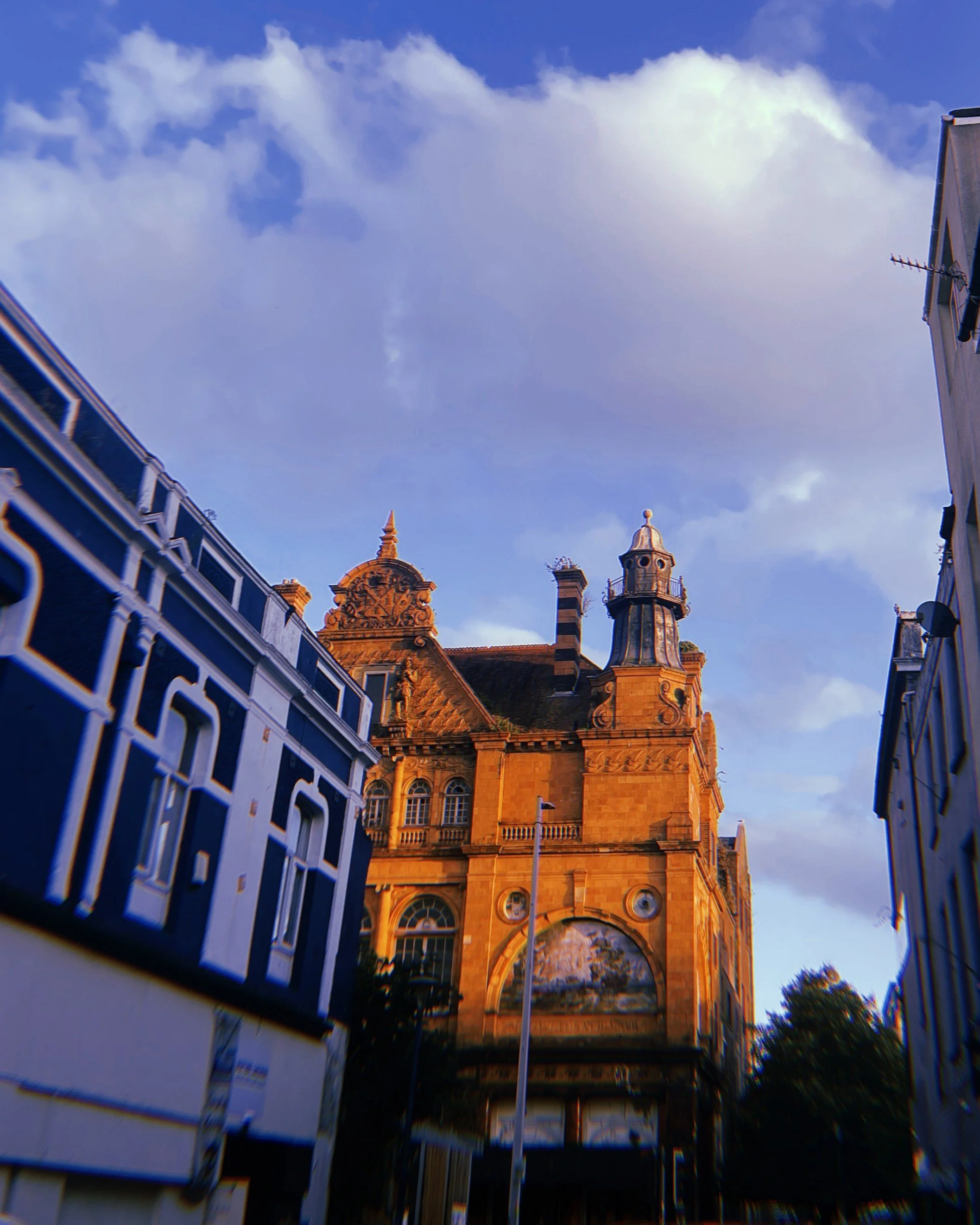
In a practical way, I think there needs to be more funding for projects like the revitalisation of Union Street that we've been seeing. I think we need people passionate about making that change. As well as fewer barriers to enact that change, which I think needs to be done on a legislative level. But that is really where I get sparkly and tingly and excited about what might come next. Definitely from my point of view, it's where you can create that magic and being fearless enough to see that and reach for it as well.
LB : So inspirational to hear. And yes, it's all about being fearless and making the magic happen. I love your concept of connecting artists to empty spaces. And when you think of all the unused spaces in Plymouth, such as Debenhams, it would just be great to imagine these places transformed into cultural hubs and community, creative-led spaces.
ED : Absolutely.
LB : Oh, Eloise, thank you so much for taking the time and joining me this evening. It's been so wonderful to hear about your experiences and thoughts about Plymouth's creative and cultural scene. Thank you for sharing those with us.
ED : Thank you so much for having me. It's been an absolute pleasure.
Refreshed and revitalised, not just from Café Momus’ menu offering, but a chance to chat and reflect on Plymouth’s cultural ecosystem, we finish sipping our coffees and selection of delicious cakes.
As we leave the cocoon-like bubble of Café Momus and step out into the street, we are greeted with a rich glowing sunset, reverberating off the old Palace Theatre’s tiled façade. Scenes of the Amada shine on, interspersed by Romanesque columns refracted in a heavenly, honeyed glow. Illuminated as though in a Turner painting - a defiant statement against the onset of decline. Weeds in the dilapidated gutters of the once magnificent theatre wave in the breeze as if in support of Eloise’s dream to connect artists with unused spaces . . . Perhaps this pride and joy of Plymouth could yet find a new purpose with a wave of Eloise’s ‘magic wand’?
Only time will tell!
Eloise’s website : www.eloisedunwellart.com
All images in this article are credited to Eloise Dunwell unless otherwise stated.
Follow SOOP On Instagram
Café Momus
Open daily 10 am – 6 pm.
14-17 Ground Floor, Manor Street, Stonehouse, Plymouth, PL1 1TL.
Phone: 07545 346755, Email: info@manorstreetgalleries.co.uk
Check out website and Instagram for upcoming exhibitions and events!
