
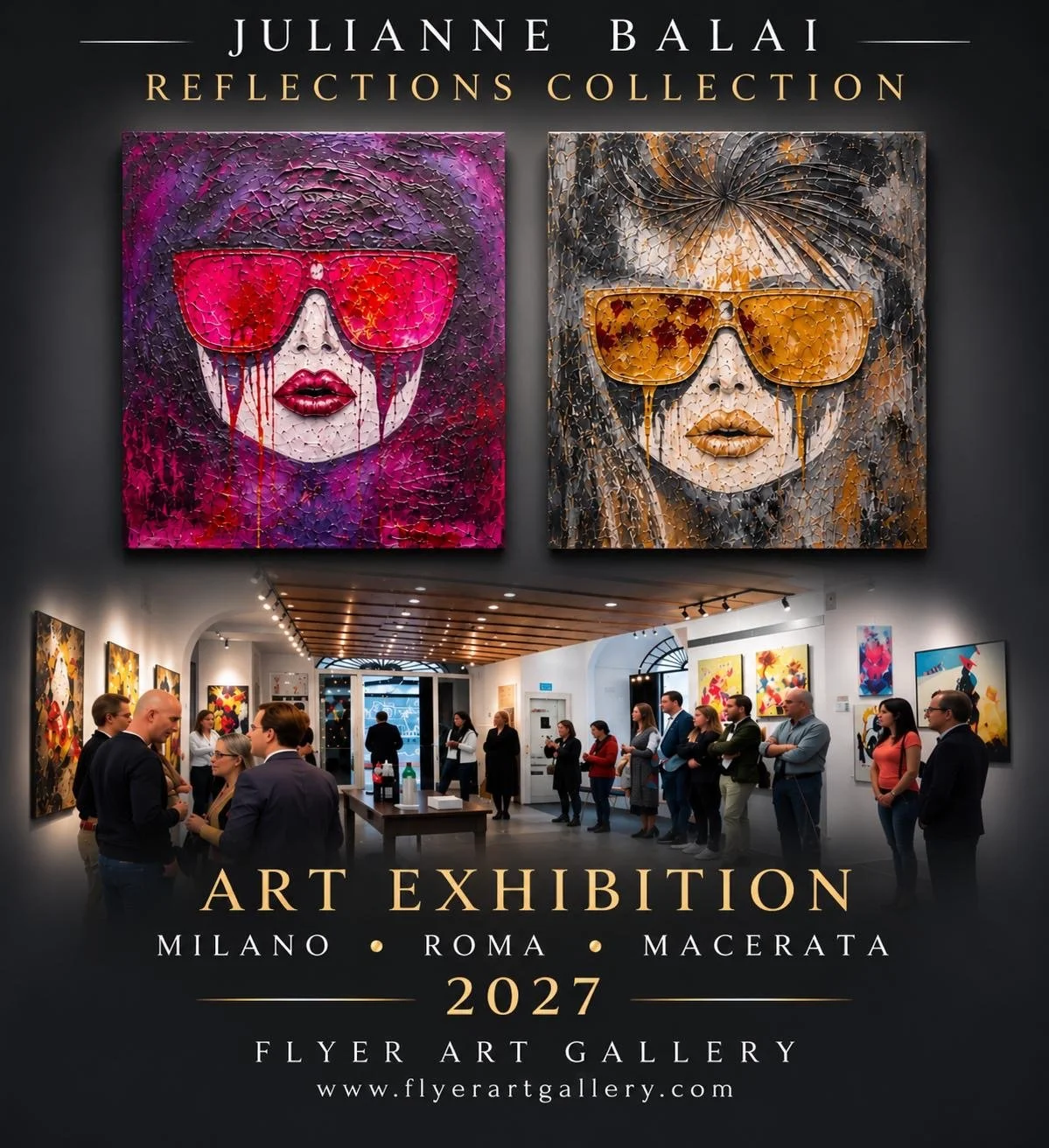
Julianne Balai’s painting Gold Rush has appeared in New York’s Times Square and is heading to Milan in March. This week, you can see it on Saint Andrew Street in the city she calls home. Bracken Jelier caught up with Julianne as her first solo exhibition enters its final days at Plymouth Art Gallery.
When I asked Julianne Balai how she’d like me to introduce her, she had a simple answer. “Yes, an artist. That’s what I call myself now.”
It’s the now that stayed with me. Julianne ran a Chelsea boutique, designed glass jewellery that featured in the Tate Gallery shop and made jewellery for Maggie Smith for a Harry Potter film. A career in interiors followed. Yet it took a move to Plymouth, the encouragement of a local shop owner and the sight of people turning up to see her paintings for Julianne to feel comfortable calling herself an artist.
With her exhibition running until Friday 27 November, I asked her about the city that gave her that confidence and which painting she’d take us to first.
What brought you to Plymouth, and what made you stay?
Julianne had been living in London when her mum died ten years ago. She’d painted before, but living in Devon gave her the space and the inclination to keep going.
“Also, I had a very close friend here who’s like my sister. And I just came to be by the sea to go and get over the grief. And that’s when I started painting to get through that process.”
“I’ve always painted, but I never took it seriously. I never decided to be an artist. And over the last 10 years, I’ve just been learning my craft and being inspired by living in Devon really. I just love it. And it brings out my creativity. It really does.”
These days, she’s often around Royal William Yard or across the water at Mount Edgcumbe, where she likes to sit and look for colours, textures and layers. The Hoe and the Barbican are regular stops too. “I just love walking around with my dog. I’ve got a dog since being here and just exploring around the seafront, really. I just love being near the sea.”
You’ve spoken about coming back to painting after losing your mum. What do you remember about the first time you wanted to paint?
It was Julianne’s 21st birthday, and her mum had asked what she wanted. Julianne remembers her answer exactly. “I want an easel with a canvas and some paints.”
“I had no idea, I’d never painted before, but I just had the urge to paint,” she told me. Her mum bought her that first easel. She also drew and painted in watercolours herself, and Julianne still has some of her work.
“So when she died, I kind of went back to that place.”
In recent years, Julianne has stepped back from a successful interiors business to give painting more of her time. “I’m so proud of the fact that that’s who I am now. That’s who I’ve chosen to be now.”
You used to show other artists’ work in your Chelsea boutique. What was it like putting your own paintings on show?
Back in Plymouth, it was Denny at Identity who first encouraged Julianne to put her paintings in front of people.
“She kept saying, ‘Look, just do an exhibition, do it in my shop.’ So that was actually my very first exhibition because I didn’t have the confidence to think that people could buy or would buy it or would maybe relate to it.”
Julianne reckons she sold around three quarters of the work she showed at Identity. What she remembers most is who turned up. “It shocked me so much. I was just humbled by... And the community supporting me and turning up and really being there to support me as an artist.”
What was it about the new Plymouth Art Gallery that made you want to have your first solo exhibition there?
“I was looking to do another exhibition and popped in. I just fell in love with it.”
Having exhibited alongside other artists, Julianne could immediately picture a show of her own there. She liked the original walls, the wine bar and the fact that it was right in the city centre. This time, she was the one doing the asking.
“So I just walked in, immediately loved it and just said, ‘Look, I’d like to do a solo exhibition here, my first solo exhibition.’”
If you were showing me around the exhibition, which work would you take me to first?
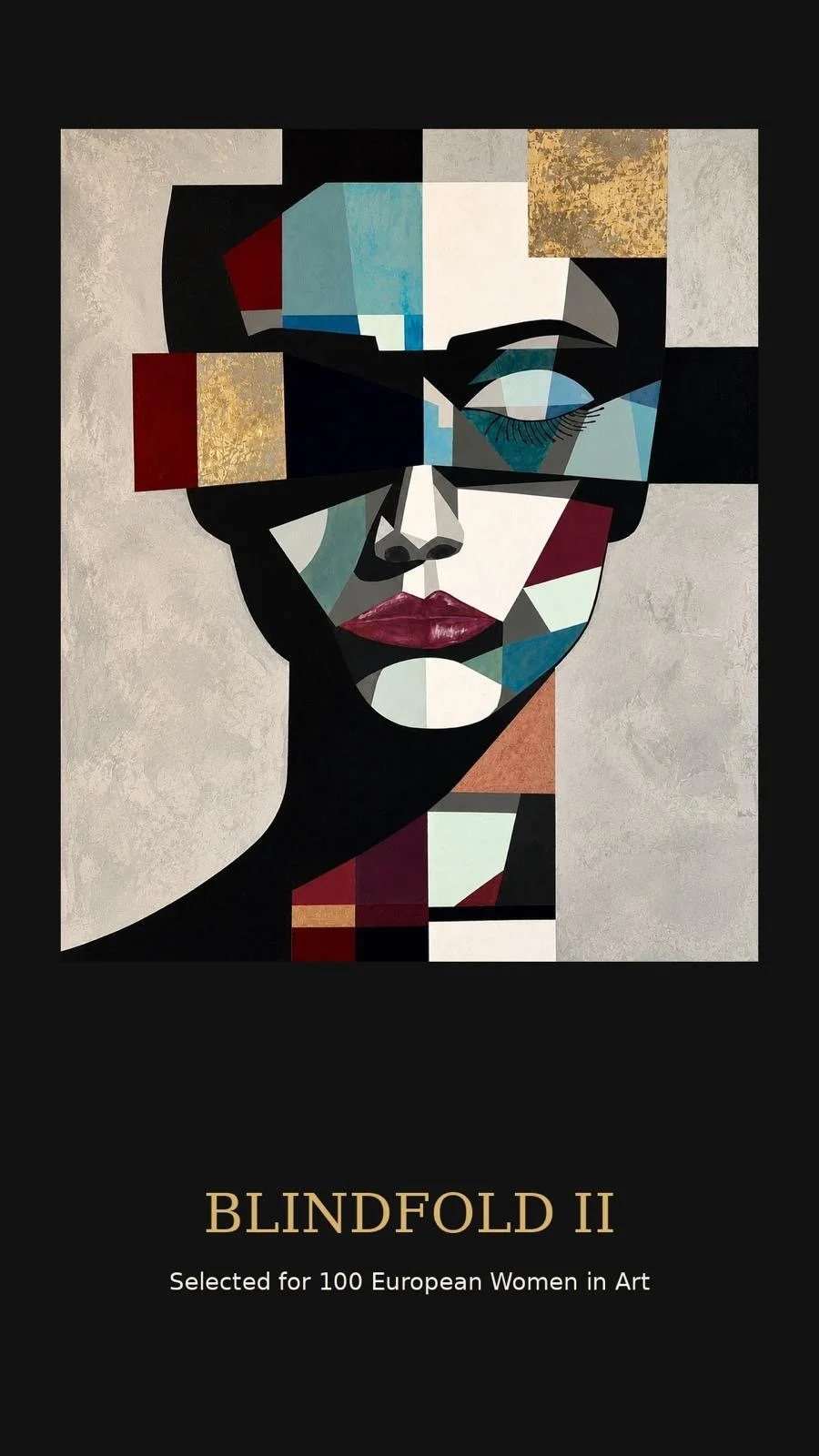
“I’ve created a collection called Behind the Masks We Wear, and it’s a collection of women with blindfolds on,” Julianne said. “Each one has been completely different than the last.”
There are three from the collection in the gallery, including two of the newest, large-scale works and a piece inspired by Frida Kahlo. The idea came from thinking about how quickly we form an impression of someone and how little that first meeting can tell us.
“When you meet someone, you get a first impression and then everyone gets judged on that image, but everyone’s got their story behind, which I find fascinating.”
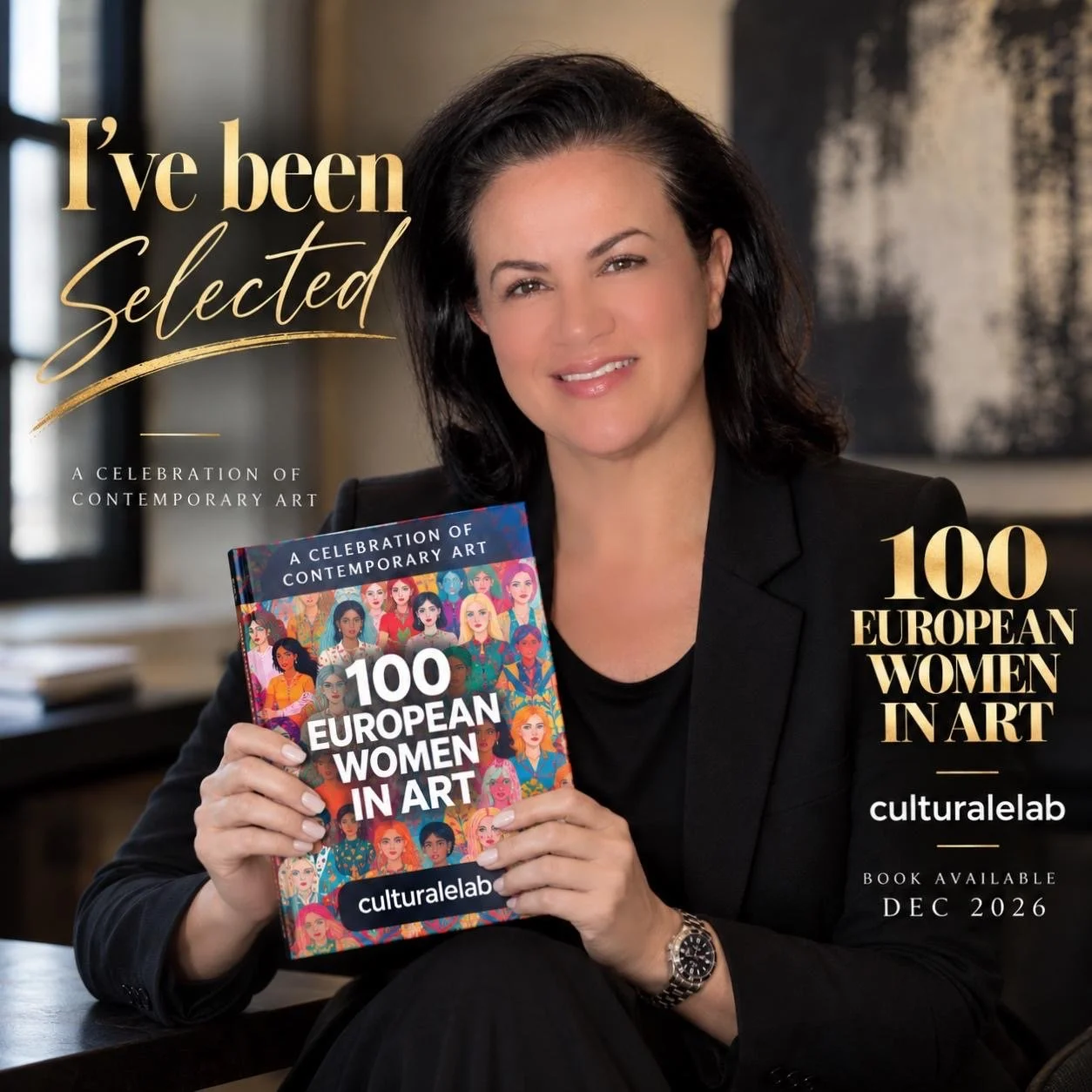
One work from the series was selected for the forthcoming book 100 European Women in Art. It belongs to a couple in Royal William Yard, who tell Julianne it’s the first thing visitors ask about when they come into their apartment.
What would you like us to notice when we get close to one of your paintings?
“I love layers. I just love putting layers and texture onto a canvas,” Julianne told me. “We just are layers and layers of different aspects of ourselves, if that makes sense.”
Look closely at the blindfolds and you’ll find fabric among the paint. Velvet, muslin and pieces of silk give the surface a depth that’s worth seeing in person.
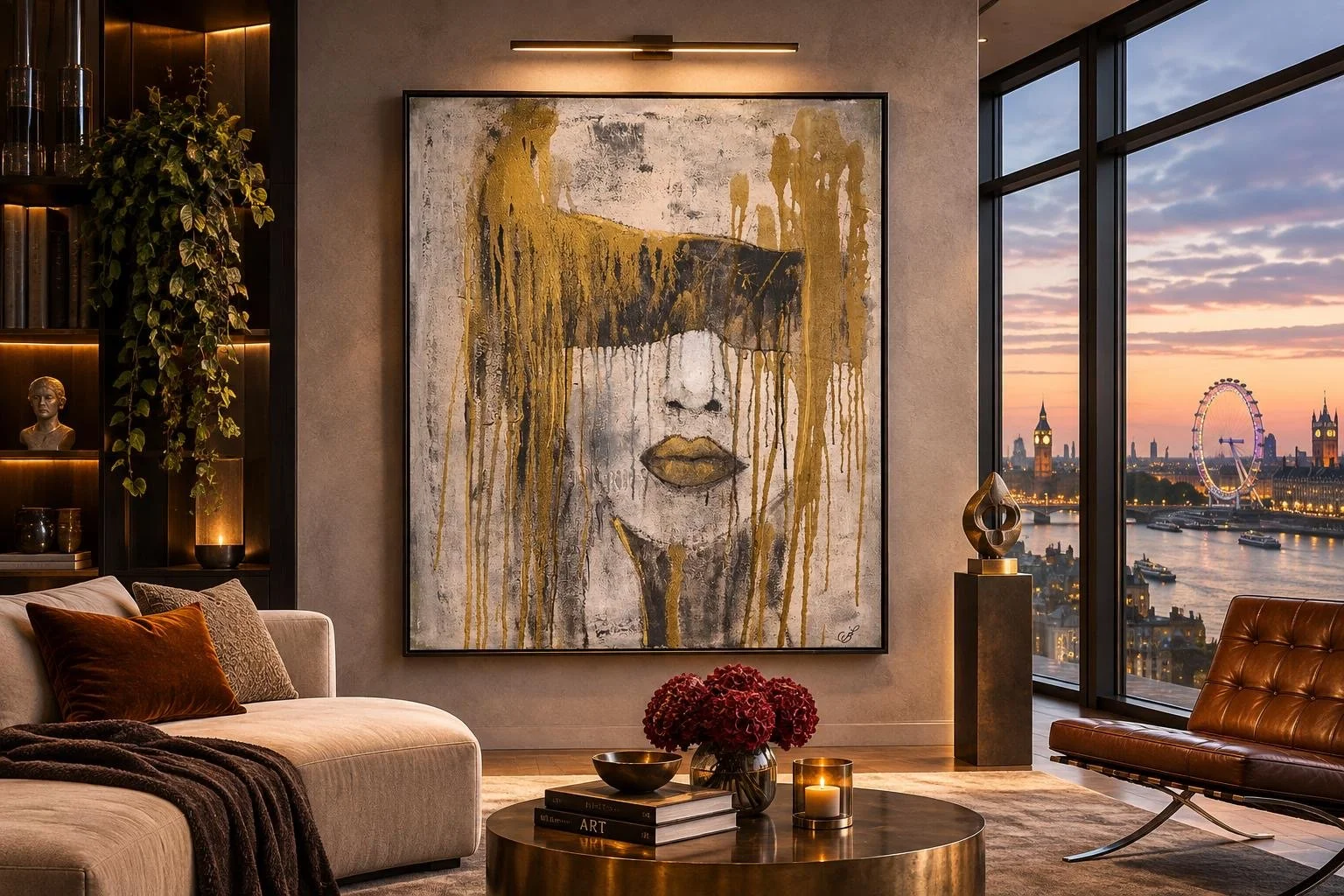
“I like to be able to touch it and feel all the different materials. I use a lot of gold leaf and liquid gold dripping from my paintings, and I love putting thick texture on.”
That instinct for what a painting can do to a room has stayed with her from her interiors days. As she put it, “I want people to walk up and have a conversation about it”.
How does it feel when a painting you’ve put so much of yourself into goes home with somebody else?
“I always get that pull of the heartstrings thinking, ‘Oh, that’s gone.’” Julianne asks buyers to send her a photograph once they’ve hung the painting, so she gets to see where it lives. She also has a rule for deciding which pieces she’s ready to part with. “If I wouldn’t have it in my home, I’m not going to show it.”
I told her about a conversation I’d had recently. My grandfather was a painter, and quite by chance I’d met someone who owned one of his paintings. Until that moment, I’d had no idea there was a little piece of him in their home. Julianne knew exactly what I meant.
“That’s what touches my heart as an artist. It’s like when I’m not here, there’s going to be a piece of me somewhere.”
Catch Julianne Balai’s first solo exhibition at Plymouth Art Gallery, 2 Saint Andrew Street, Plymouth, PL1 2AH, until Friday 27 November 2026. Look out for Gold Rush before its trip to Milan, and give yourself time to see those blindfolds up close. You can follow Julianne’s work on Instagram at @julianne_abstractart.
