
A little over a month into her residency at KARST, community reporter Victoria Lammie visits multidisciplinary artist Charlotte Henry-Stumpe in her shared studio space in Plymouth’s Stonehouse. What follows is a warm and open conversation about creative momentum, matrilineal storytelling, and the often-unseen emotional labour of emerging artists finding their place in the cultural landscape. Charlotte speaks candidly about the transition from university into professional practice, the value of shared spaces, and the urgency she feels to dismantle gatekeeping within the arts. Her work—rooted in memory, mythology, and feminist lineage—sits at the heart of this residency, where she is using her time not only to refine her own practice but to imagine new, more inclusive ways for artists to work together in Plymouth.
Can you tell me about your practice?
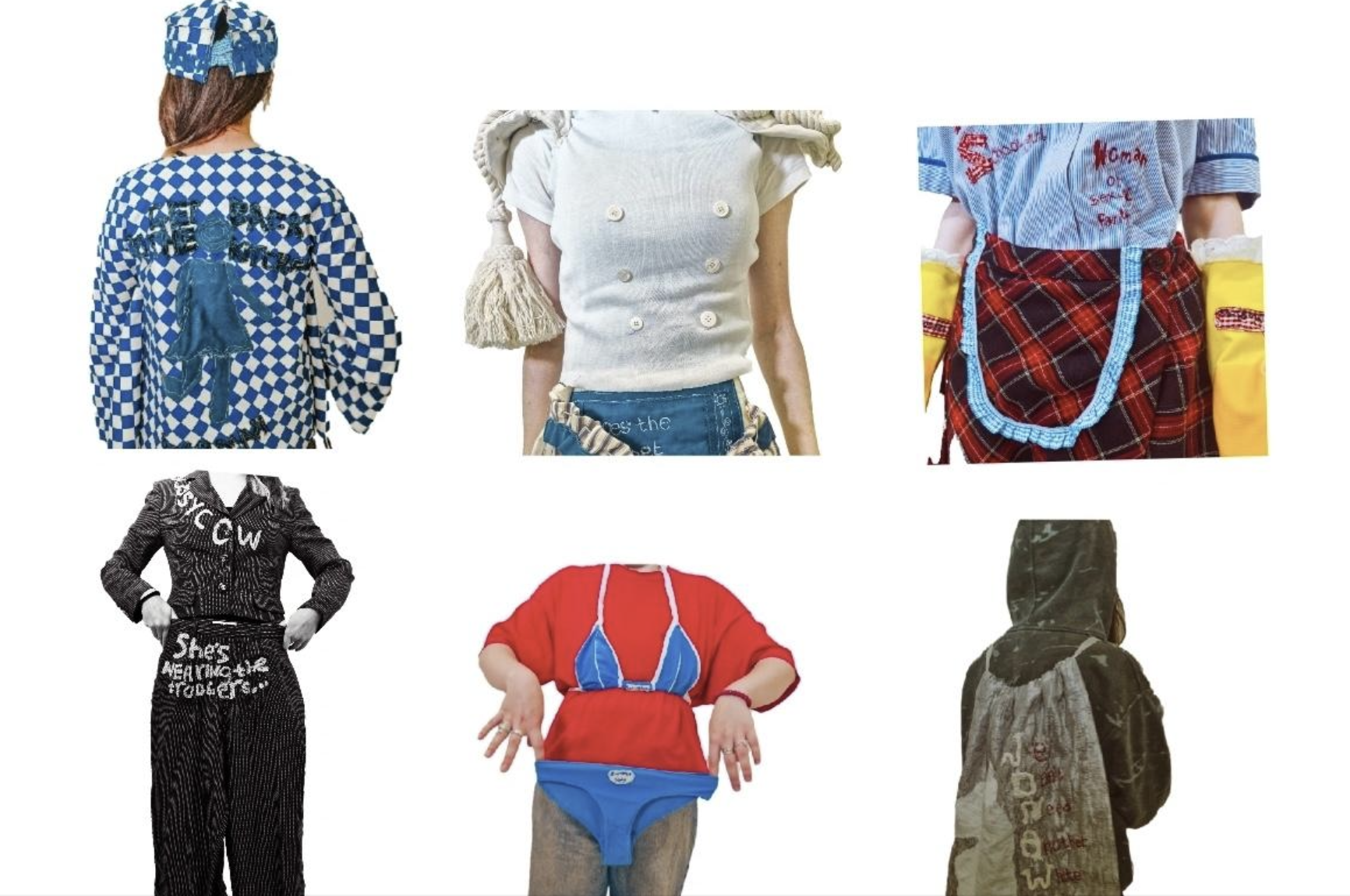
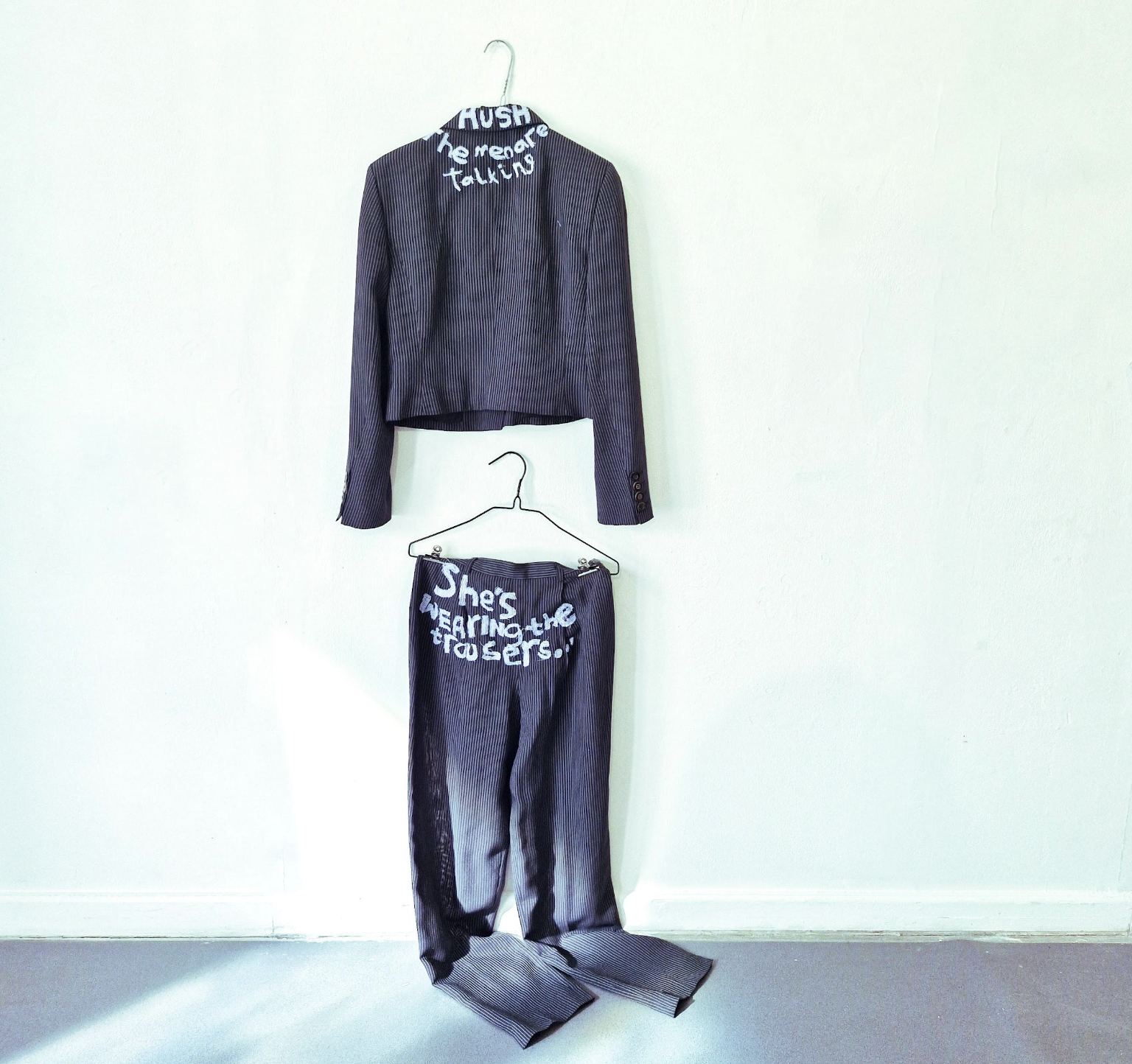
‘The forefront of my practice is all about matrilineal connections, memories, mythologies, and censored histories. I like to examine personal lived experiences but particularly within British culture and British society. I do this with assemblage and artwear, so it will be with things like sewn objects and collage but also having created these objects I like to present them as stop motion film. It’s more of an accessible medium for people rather than them having to go to an exhibition space and see it, with videos and zines they are more distributable. There's often a satirical note in my work or playing on political irony in my work. At the moment I’m hoping to subvert methods of control replaying with linguistic narratives, outdated traditions, reductive language and gender deficits. I’m working around the idea of artwear as radical intersectional intervention so the artists and theorists I like to look at for inspiration include Tai Shani, Deborah Roberts, Vaginal Davis, Lola Olufemi, Julia Skelly and Zadie Xa.’
Why did you decide to apply for a residency at KARST?
‘First and foremost we received a lot of encouragement from lecturers at Arts University Plymouth’ Charlotte goes on to tell me she has just graduated from a BA Honours Degree in Fine Art. The lecturers were very much wanting us to apply for all sorts of opportunities, we were lucky to have brilliant lecturers on Fine Art. But also this opportunity presented quite a rare chance to get a studio space straight out of university which is something that wouldn’t have been affordable or practical for me otherwise. I was also at the end of my degree and I was really getting into the flow of things and I felt more confident in my practice in terms of what I was making and I felt that if I just finished Uni and I didn’t continue with it or wasn’t motivated to keep making I would lose that momentum. So that’s the main reason that I applied, to just keep connected with my practise but also Plymouth's creative community as well, it just all works so well together.’

What does an Artist in Residency actually mean at KARST?
‘My idea of what it means to have a residency at KARST is that you are given an opportunity to make work but it’s not within certain guidelines, you don’t have to meet a brief and there’s no final project. It’s time to focus on your practice and develop what it is that you want to look at. You don’t even have to produce any work during your residency. It can be research, it could be running workshops, it could be organizing events. But it's about having the time and space given to you so that you can produce what you really want to make. Particularly at KARST it has been encouraged to spend it however you feel it would work best. It’s completely yours and you can just play, I think that’s really important when you’re picking up your practice.’
I ask Charlotte about funding?
‘This residency is an AUP X KARST collaboration. Awarded at the degree show after an interview process. It involves some form of bursary to help with material costs and the six months' access to a shared studio space is free. I am sharing with a graduate from Bath, Lily Maddocks. Although our work is very different visually and in terms of medium, we align on a lot of other things.’ Charlotte goes on to tell me how much she enjoys sharing the space with another artist.
What has stood out for you so far during your time at KARST?
‘I appreciate Charlotte has only been in residency at KARST since the start of October but I ask her to define what has stood out for her during her time there to date. ‘The amount of support that people are willing to share with me. The shared studio space with Lily that’s been really important. I was worried I was going to lose the aspect of idea sharing after graduating, because I had so many great conversations with people who were on my course and what they say does sometimes change the way you work. I don’t think I would have coped with the change in situation had I not been surrounded by artists. Also being right next to KARST gallery space is really cool! I’m just steps away from established artists who are exhibiting work all over the country. There’s something really inspiring about being able to just look to them. There’s creativity happening everywhere here.’’
What are you hoping to achieve by the end of your residency?
‘So I’m here until March. By the end of the residency I hope to have found the tools with which I can further my practice in the future. I want to hone in on my skills and appreciate that I won’t always have such a great network of artists around me all the time. Most importantly I want to break down the barriers of gate keeping within the art industry. In doing this I want to invite local artists into my studio space to create work. This could then culminate in a collaborative exhibition. I’m also working with spaces within Plymouth to help action this. I feel it’s really important for emerging artists to share opportunities and not add to the barriers of gate keeping within the industry. Breaking down the framework of that whole thing like systemic oppression is what I aim to navigate. It’s small ideas and words that prop up these bigger systems. Which is why I can’t be hypocritical with this opportunity. I hope to maintain sustainable practice and I have to recognize the advantages in my life that have got me to this point and I hope by the end of the residency that in a small way I’ve had less of a hypothetical exploration of my values but also a physical real world impact by doing this.’’
What’s next?
‘There’s going to be a residency test space. We don’t have a date confirmed but it usually involves a private view! I don't have a date confirmed for that as yet but that’s what I’m working towards at the minute. Other than that I don’t have too much planned’.
I ask Charlotte about FENSTER Project Space at KARST…
Charlotte explains FENSTER Project Space is directly outside her studio. She also tells me going forward she sees herself working on more community based projects which are less about personal experience but more about shared ones. Finally Charlotte tells me ‘I really love Plymouth and I don’t want to leave but I do think I may have to move at some point. Having this residency has really strengthened the bonds and connections I have with the city and the people within it. Even if I do move it’s always going to be somewhere that I come back to.’
I take great pleasure in flicking through Charlotte's sketch books and seeing some of her incredible work. Which is very connected to the female form, apparel and sewing techniques, her use of collage, fabric choices and applique is very reminiscent of my own very early work in fashion which I can’t help but love. Charlotte's passion for her practice is a pleasure to see, the matrilineal connections are truly brilliant and I just can’t wait to follow her journey over the coming months and see the direction in which it takes her.
You can follow her @lottiecharlottestumpe on Instagram and see her work https://www.charlottehenry-stumpe.net/
